

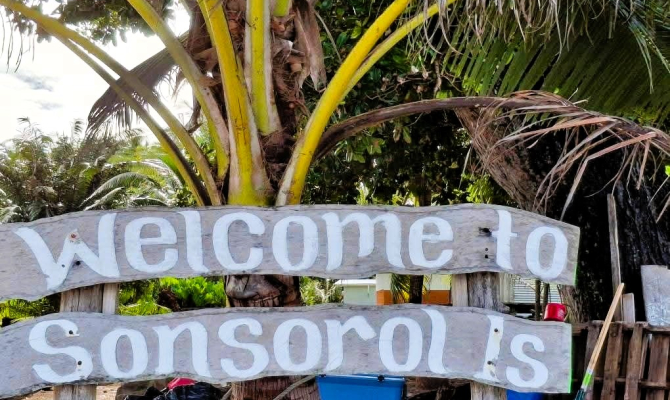
5 November 2025, Sonsorol State, Palau - In an initiative to restore ecological balance and strengthen community resilience, the Republic of Palau is leading restoration efforts to remove rats from the islands of Sonsorol, Merir, and Fanna. Scheduled for implementation in 2026, the targeted efforts aims to rejuvenate ecosystems, improve food security and support the cultural and economic wellbeing of the Sonsorol communities.
The restoration efforts are being led by the Sonsorol community in partnership with Palau’s Ministry of Agriculture, Fisheries and Environment with the Secretariat of the Pacific Regional Environment Programme (SPREP).
The SPREP led Pacific Regional Invasive Species Management Support Service (PRISMSS), with technical partners, Island Conservation, will provide on ground support, technical guidance and coordination through the PRISMSS Predator Free Pacific (PFP) Programme.
The activities, under the PRISMSS Restoring Island Resilience (RIR) project, is funded by the New Zealand Ministry of Foreign Affairs and Trade (MFAT) and the United Kingdom International Development.
For years, invasive rats, mosquitoes, fruit flies and Coconut Rhinoceros Beetles have impacted these remote islands, destroying crops, threatening native wildlife and making some islands nearly uninhabitable. These species have disrupted traditional livelihoods and undermine the health and sustainability of island ecosystems.
“This island is an important Green Sea Turtle nesting area, but living here has become very difficult because of the rats and mosquitoes,” said Ms Laura Ierago Miles, a resident of Merir.”
“The rats eat our food, even coconuts before they sprout. Once they’re gone, people will be able to return and live here again.”
The Governor of Sonsorol, Ms Lucy Pedro, emphasised the urgency of the sustainable management of invasives species on these islands and shared that, “our islands are rich with coconuts, breadfruit, and bananas, but invasive species are threatening our food and traditions.”
“We remain hopeful that, with the right support and resources, Sonsorol can be restored to its healthy, abundant state.”
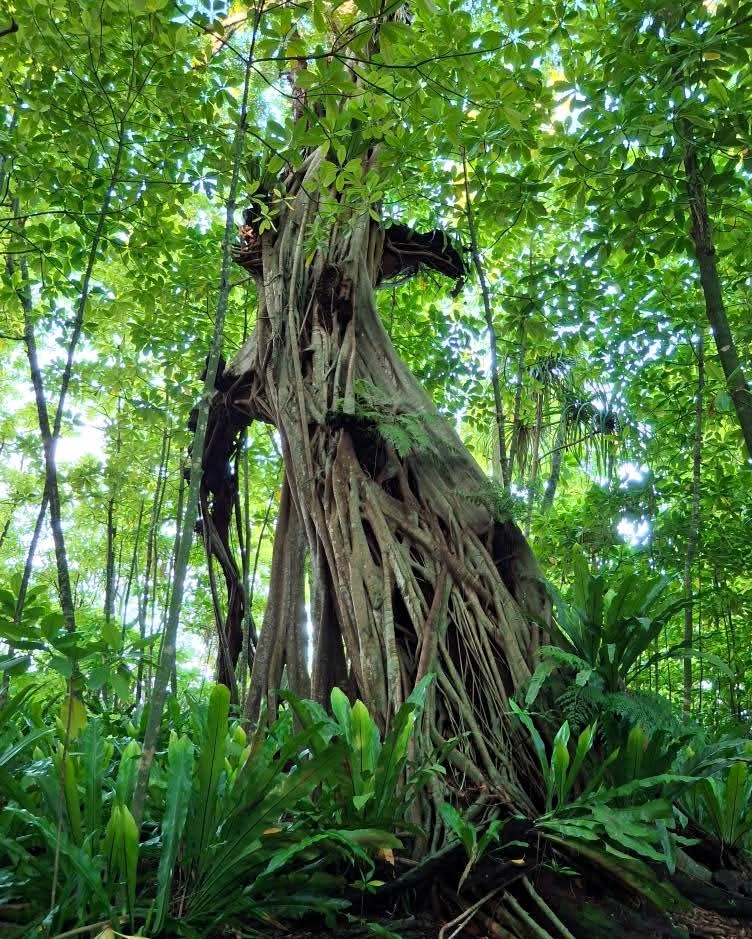

Community consultations began in 2023 and will continue through 2026, ensuring that local voices, values and traditional knowledge guide the operation. Innovative drone technology will be used to target invasive rat populations, while biosecurity measures will be adopted to prevent reinvasion and protect fragile ecosystems.
Communities will benefit from improved access to food crops and natural resources, while the reduction of mosquito and rat-borne diseases will make daily life safer and healthier. Native vegetation will rebound, enhancing climate resilience by preventing erosion and capturing carbon.
“This is more than an environmental project, it’s a community-driven movement,” said a representative from Island Conservation. “We hope to see more birds, more seedlings and a renewed sense of hope.”
“Most importantly, this transformation will allow the Sonsorolese people to reconnect with their ancestral lands, restoring not just ecosystems, but the deep cultural ties that bind people to place.”
Seabirds play a vital role in this ecological rebirth, with their nutrient-rich droppings fertilising island soils and supporting surrounding marine life creating a vital link between land and sea. The removal of Coconut Rhinoceros Beetles will allow native plants, including palm trees, to thrive once again.
SPREP Invasive Species Adviser, Mr David Moverley expressed that, “by removing invasive rats, the PRISMSS PFP programme will restore nesting grounds for seabirds, improve food security, and strengthen the natural links between land and reef.”
“Just as importantly, it will reaffirm the cultural identity of the people of Sonsorol, whose stewardship and traditional knowledge are at the centre of the operation.”
This nation-led initiative displays Palau’s strong commitment to climate resilience, biodiversity restoration and empowering island communities.
PRISMSS, alongside its technical partners and Pacific nations, will continue advancing scalable and sustainable solutions to manage invasive species and biodiversity conservation across the region.
About PRISMSS: The Pacific Regional Invasive Species Management Support Service (PRISMSS) is a coordinating mechanism designed to facilitate the scaling up of operational management of invasive species in the Pacific. PRISMSS, which is led by the Secretariat of the Pacific Regional Environment Programme (SPREP) brings together experts to provide support within the Pacific region with a focus on protection of indigenous biodiversity and ecosystem function. As a service provider, PRISMSS provides a comprehensive suite of support services in a cohesive, effective, efficient, and accessible manner to Pacific Island countries and territories.
Restoring Island Resilience (RIR): The PRISMSS - Restoring Island Resilience (RIR) is a New Zealand-PRISMSS collaboration project that aims to improve Pacific Island Countries and territories livelihoods and resilience to climate change by reducing the impact of invasive species on natural and agricultural ecosystems through the six PRISMSS programmes.
PRISMSS Powered by: New Zealand Foreign Affairs & Trade, UK International Development, GEF, United Nations Environment Programme & SPREP.
PRISMSS Partners: Birdlife International, Earth Sciences New Zealand, New Zealand Department of Conservation, Island Conservation, Bioeconomy Science Institute-Manaaki Whenua Landcare Research, Pacific Community and SPREP.
PRISMSS Programmes: Natural Enemies Natural Solutions (NENS), Predator Free Pacific (PFP), Protect Our Islands (POI), Protect Our Marine Areas (POMA), Resilient Ecosystems Resilient Communities (RERC), War On Weeds (WOWs) For additional information please contact Mr Dominic Sadler, PRISMSS Manager on dominics@sprep.org or Mr Nitish Narayan, PRISMSS Communications & Liaison Officer on nitishn@sprep.org
Island Conservation's mission is to restore islands for nature and people worldwide. We are a United States-based 501(c)(3) charitable organization with a globally distributed team—often made up of local islanders who bring deep knowledge and connection to the places where we work. Together, we collaborate with local communities, government management agencies, and conservation organizations to holistically restore islands by bringing back biodiversity, the foundation of all healthy ecosystems. We do this by removing a primary threat (introduced, damaging invasive species) and accelerating the return of native plants and animals. We utilize innovative technology and techniques to work more efficiently and showcase the many benefits of holistically restored islands for biodiversity, climate resilience, ocean health, and sustainable development across the globe. Visit us at islandconservation.org
For additional information please contact, Sally Esposito, Island Conservation, Strategic Communications Director: sally.esposito@islandconservation.org
Images: Loyola Darius, Island Conservation (Palau) and Tutii Chilton