

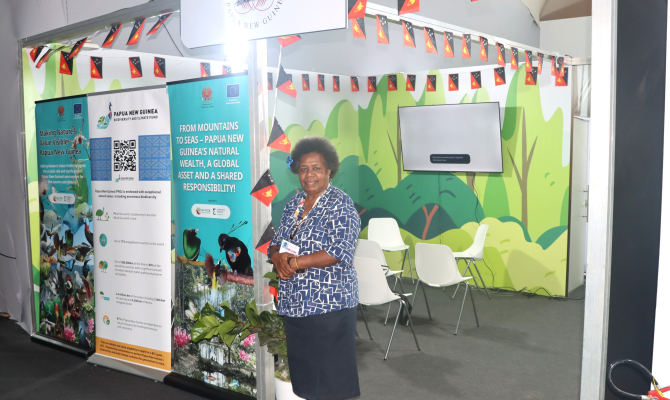
12 November 2025, Belem - From the mountains to the seas, Papua New Guinea’s (PNG) natural wealth is a global asset and a shared responsibility.
So reads a pull up banner that welcomes you when you enter PNG’s Pavilion amidst the hustle and bustle of COP30 at the Hangar Convention Center, Brazil.
Take a couple of steps further inside and you cannot miss the colourful display of one of the country’s most famous products, PNG coffee, strategically placed amongst an array of handicrafts consisting of baskets and string bags made from natural fibre.
“Welcome to the PNG Pavilion, what you see here are products that were all organically grown,” says Ms Kumaras Kay Kalim. “They form part of our natural wealth.”
Ms Kalim, a well-respected voice in the environmental space in the country of 10.8 million people, is leading the PNG Pavilion team. As the biggest Pacific Island country, PNG wants the world to know it is ready to play a big role to help other Pacific countries who continue to face the harsh realities of the climate crisis.
The Pavilion is a part of that process.
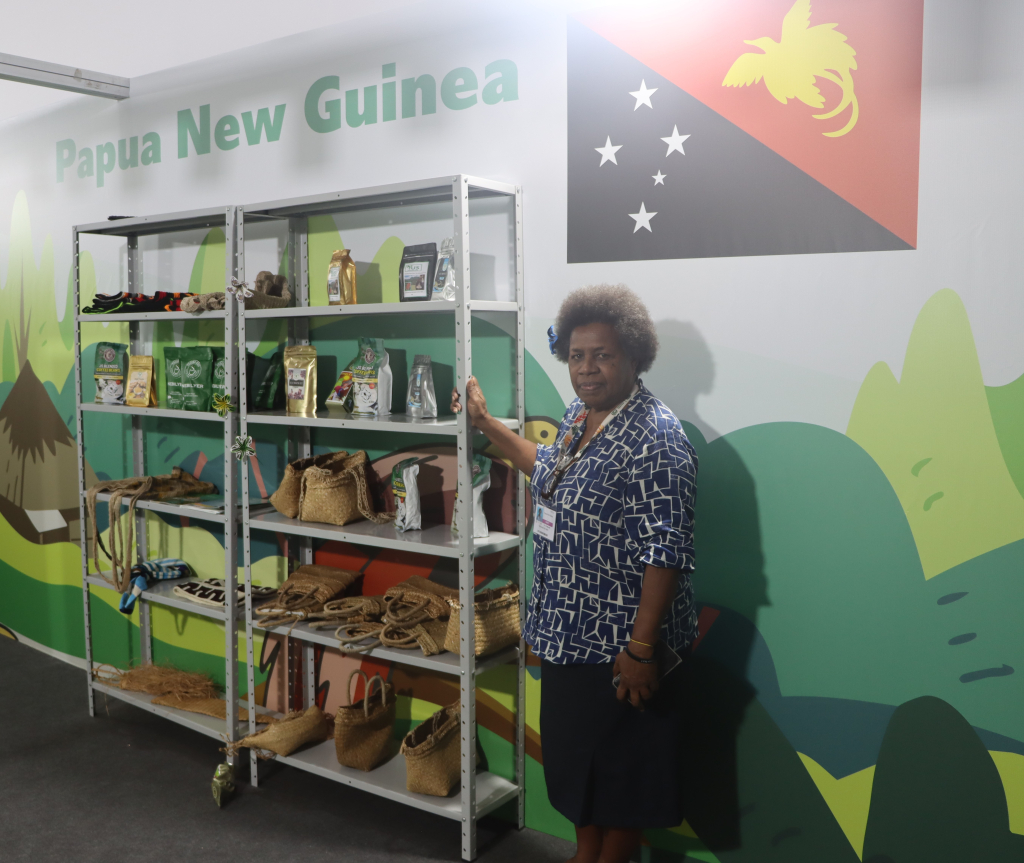
“The conservation commodities are part of sustainable livelihoods for our communities back home and it’s very important for us to showcase these to the world,” she says.
“These provide for livelihoods of our people but at the same time, sustain our forests and our natural surroundings.”
The hosting of COP in Belem, at the edge of the world’s largest tropical rainforest, is of special significance to Ms Kay and PNG.
“Knowing that we’re the third largest forest nation in the world, it’s important for us to be here and to have a presence in this space,” she says.
“From the high mountains to the seas, we have the valleys, we have the forest, we have the biodiversity. This is wealth for us and our people, and we want to be able to sustain this for the sake of our future generations.”
Critical to PNG’s ability to do this is climate finance, a key issue at COP30.
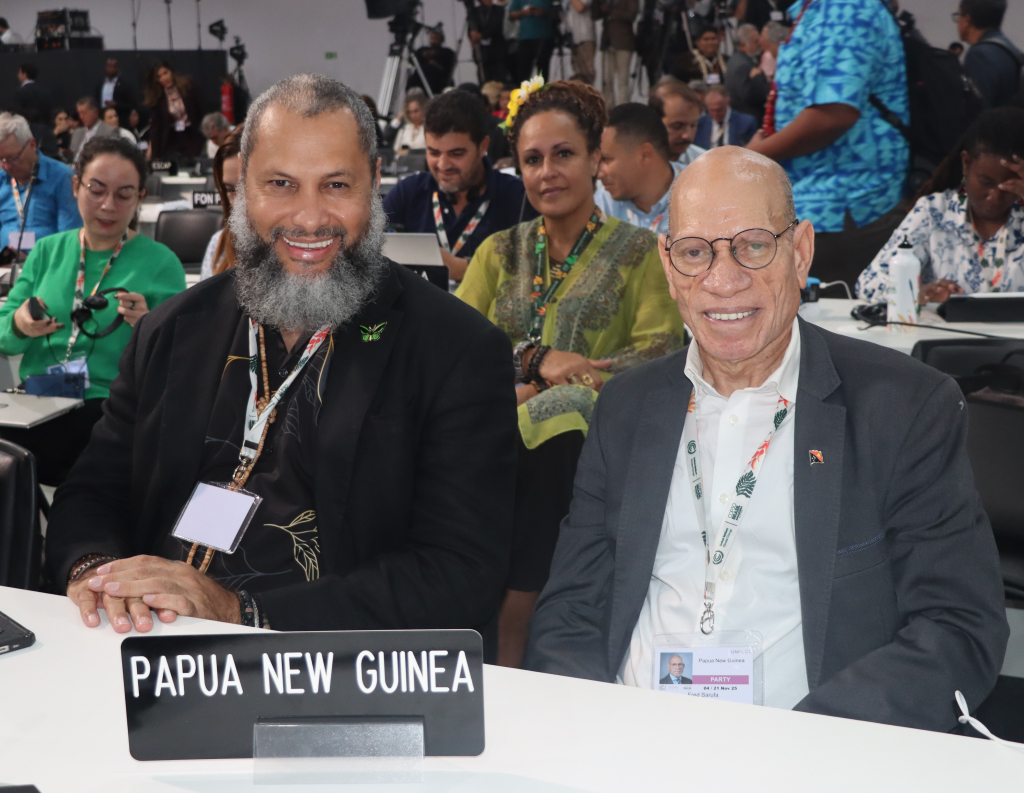
“Climate finance is important for PNG at this COP. Without climate financing, we will struggle to survive in the next fifty years and so here at COP, we are here to raise our voice to ensure the developed countries take us into consideration when they decide on these things,” says Ms Kalim.
“As Pacific countries, we are already protecting our environment but we need that climate finance to ensure we’re able to sustain the protection of our forests and environment today and well into the future.”
COP30 has been billed as a turning point – a moment of truth and a test of global solidarity. The meeting takes place against a stark backdrop: scientists say the planet is on course to temporarily breach the 1.5°C warming limit set by the Paris Agreement.
That overshoot could still be short-lived, experts warn, but only if countries act fast to ramp up efforts on cutting emissions, adapting to climate impacts, and mobilising finance.
In the next few days, climate change negotiators and delegates will review national climate plans, push for $1.3 trillion a year in climate finance, adopt new measures to help countries adapt, and advance a ‘just transition’ to cleaner economies.
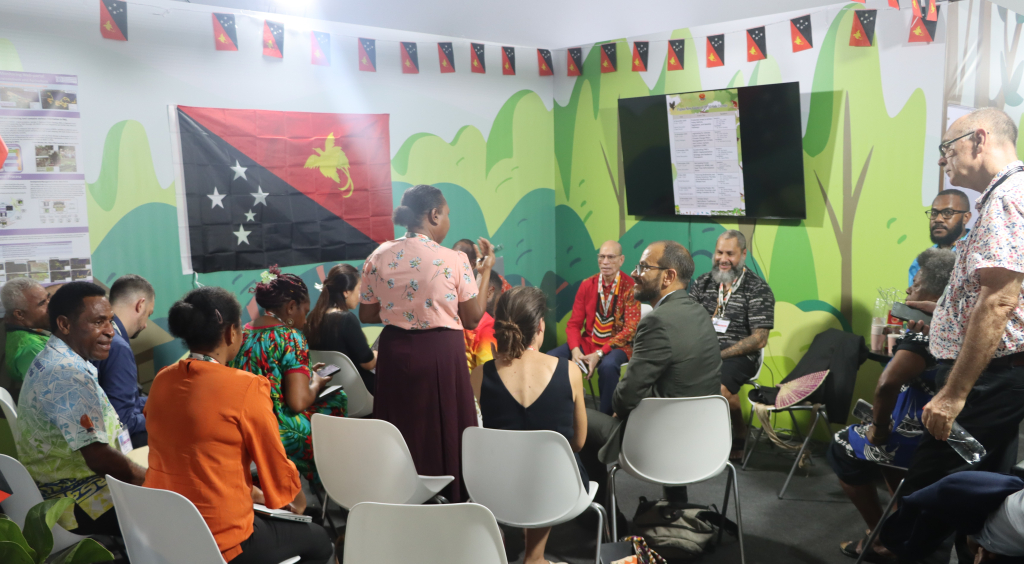
“PNG views this COP as a very important COP,” adds Ms Kalim.
“We are here to engage and be part of this process for the survival of our communities. Having been in the environment space for a long time, I work at some of the remotest parts of PNG, talking with the communities, especially mothers and children, and seeing the young generation coming up.
“I feel that we are here to build a nation for their future. Being a mother, I would really want to ensure that the decisions made today will place our children and grandchildren in a better place for tomorrow.”
The PNG Pavilion is amongst the spaces at COP30 amplifying the one Pacific Voice as Pacific delegations advocate for the survival of their communities impacted by the impacts of the climate crisis.
The 30th Conference of the Parties to the UN Framework Convention on Climate Change (UNFCCC) is taking place from 10-21 November 2025 in Belem, Brazil.
It is being attended by Pacific leaders and their delegations, who are advocating for the survival of Pacific communities who continue to be at the forefront of climate change impacts.
Support for our Pacific Islands at COP30 from members of the Council of Regional Organisations of the Pacific (CROP) is through the One CROP mechanism led by the Secretariat of the Pacific Regional Environment Programme.
Members of one CROP include: The Secretariat of the Pacific Regional Environment Programme (SPREP) – Lead, Pacific Islands Development Program, Pacific Islands Forum Fisheries Agency, Pacific Island Forum Secretariat, Pacific Community.
A key part of amplifying the One Pacific Voice at COP30 is the Moana Blue Pacific Pavilion and the Pacific Delegation Office. The Moana Blue Pacific Pavilion at COP30 is a Pacific partnership with the Governments of Australia and New Zealand managed by the Secretariat of the Pacific Regional Environment Programme (SPREP).
The Pacific Delegation Office at COP30 is a Pacific partnership with the New Zealand Government managed by the Secretariat of the Pacific Regional Environment Programme (SPREP).
To learn more about the Pacific at COP30 please visit: https://www.sprep.org/cop30