

12 June 2026, Koror, Palau - The urgent challenge of managing invasive marine species is reshaping how Pacific communities safeguard their oceans.
The Protect Our Marine Areas (POMA) programme, part of the Pacific Regional Invasive Species Management Support Service (PRISMSS), provides a regional and practical defence against organisms hitchhiking on ships and yachts, helping to prevent their spread into culturally important and community-managed marine areas.
By preventing their spread into culturally important and community-managed marine areas, the POMA programme helps protect the biodiversity, livelihoods and traditions that are inseparable from Pacific life. Grounded in prevention, early detection and capacity building, the programme transforms marine biosecurity into a tangible, community-led practice that strengthens resilience across the region.
Marine invasive species are often invisible to the eye, dispersed by currents and vessels, and once established are nearly impossible to eradicate. For the Pacific, where ecosystems are isolated and rich in endemic species, the stakes are higher. Heavy maritime traffic between vulnerable islands and climate-driven shifts in species ranges compound the risks, making marine biosecurity a frontline issue for communities that depend on healthy oceans.
The technical lead for the PRISMSS POMA programme, Earth Sciences New Zealand, works in prevention, early detection, and capacity building. Its practical pillars focus on supporting local stakeholders with marine invasive surveys, species identification, and identifying potential pathways from high-risk areas to high value areas.
These measures are designed to stop invasive species before they spread into community-managed reefs, aquaculture zones and cultural fishing grounds. The programme also invests in capacity building, equipping fisheries officers, environment staff, divers and community with the skills to detect and respond to incursions.
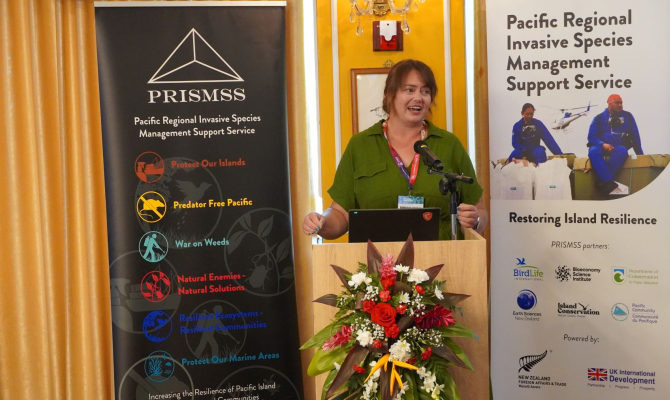
POMA technical lead, Ms. Kimberley Seaward of Earth Sciences New Zealand, during the recently held 7th Pacific Invasives Learning Network (PILN) meeting in Palau commented that, “the relevance of POMA to the Pacific lies in its ability to turn a regional challenge into a practical, community-led response”
Ms Seaward informed attending country delegates that the Pacific Marine Biosecurity Toolkit is central to the POMA programmes hands-on approach and includes guidance documents on biofouling assessment, ballast water management, sampling protocols and management strategies, as well as species identification guides for 25 priority marine non-indigenous species per country.
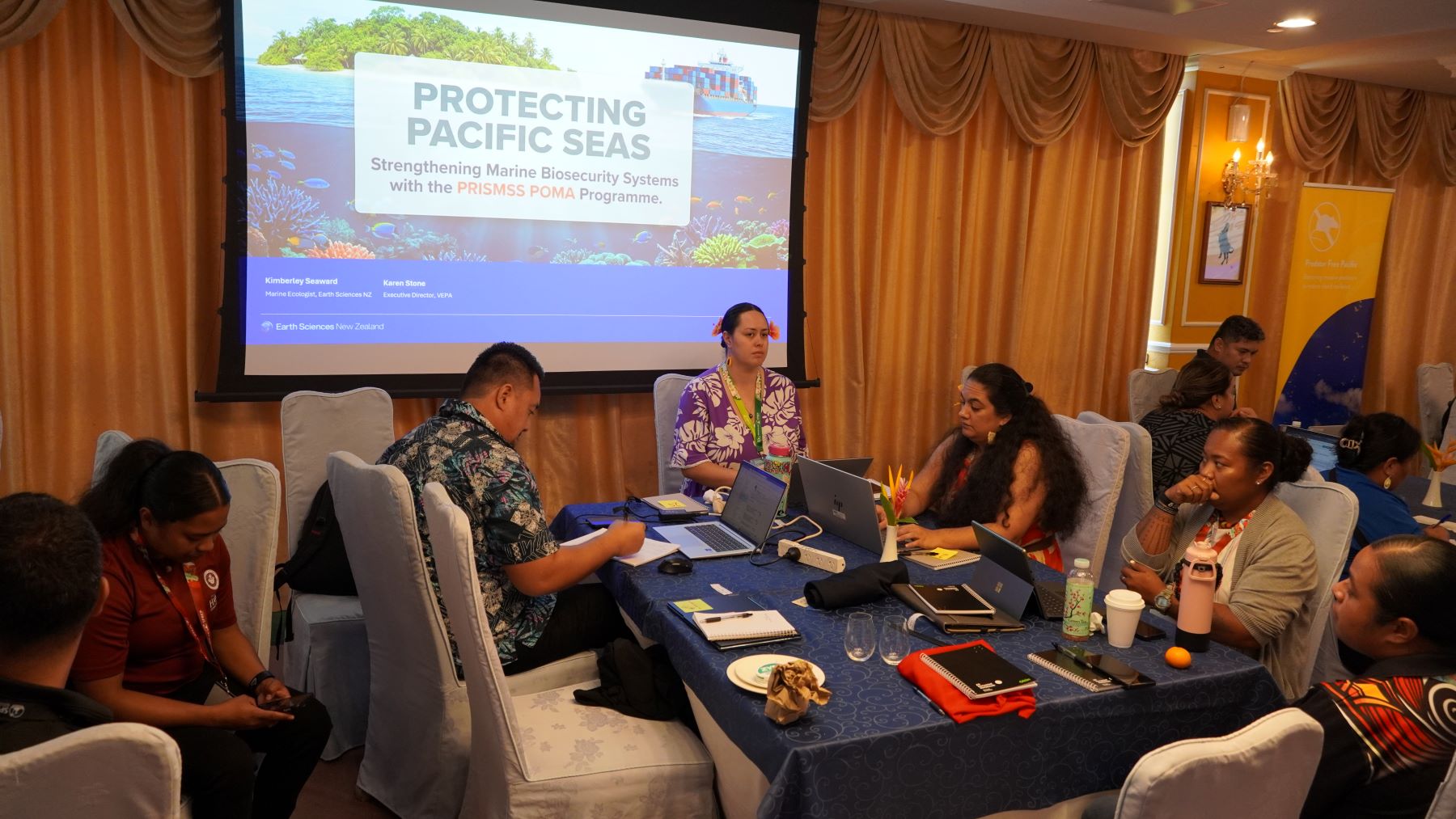
Templates for rapid assessment surveys and datasheets for specimen preservation make it easier for communities to turn observations into evidence that can be verified and acted upon while the PRISMSS Navigator portal connects countries and communities with technical partners, enabling requests for diver training, baseline port surveys, or equipment support to be matched with expertise and funding pathways.
“This toolkit empowers communities and stakeholders to act immediately by prioritising surveillance at ports and marinas, using rapid assessment templates, applying hull and ballast risk tools and adopting layered defences across pre-border, border, and post-border measures.”
“The emphasis on the precautionary principle means that where irreversible harm is possible, management action should not wait for perfect data.”
Capacity building is central, with in-country training for fisheries and environment staff, dive and intertidal survey skills, and community engagement. The POMA programme worked in the Vava’u, Tonga where local staff and community partners were trained, port surveys completed, and 102 specimens collected for a combination of morphological and molecular identification.
These outcomes feed directly into national risk assessments and policy advice, strengthening local stewardship and regional resilience. The Vava’u case study illustrates how targeted training and rapid surveys translate into actionable data, building both scientific knowledge and local capability and highlights the growing regional collaboration and commitment to marine biosecurity.
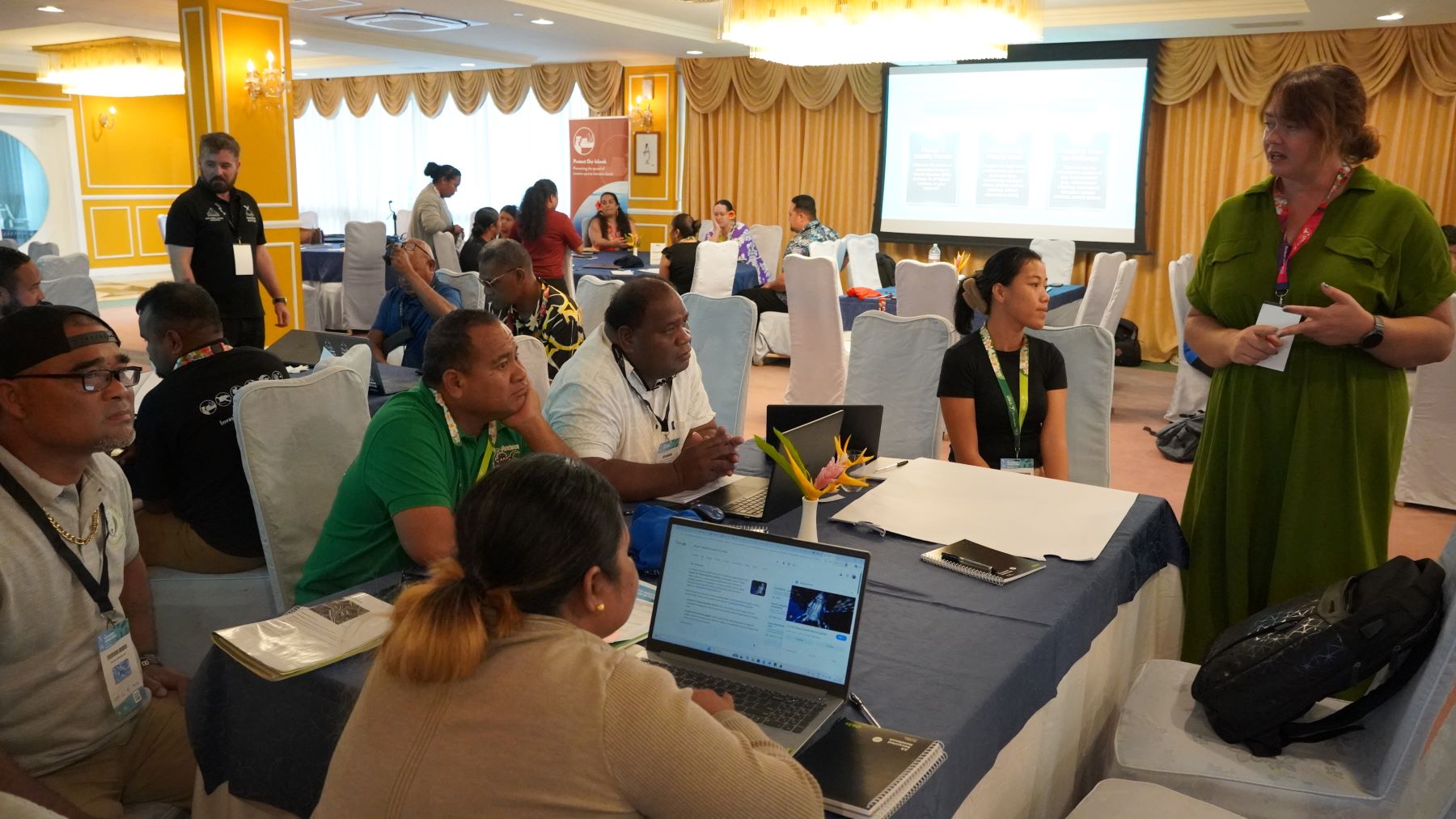
While challenges remain, the POMA programmes layered approach, combining both morphological and molecular species identification methods, specimen collection, photographic records and local ecological knowledge reduces uncertainty and strengthens defences.
PRISMSS Programme Manager, Mr Dominic Sadler, commented that “by equipping Pacific communities with practical tools, training and pathways to technical support, the POMA programme ensures that marine biosecurity is not an abstract concept but a lived, actionable practice safeguarding biodiversity, livelihoods and cultural heritage across the region.”
“The programme’s relevance is deeply tied to the Pacific’s unique vulnerabilities and strengths as isolated ecosystems and high endemism mean that the introduction of even a single invasive species can have irreversible consequences.”
“But yet the region’s strong traditions of community stewardship and cultural connection to the ocean provides a powerful foundation for action.”
The POMA programme builds on this foundation by combining science, capacity building and local knowledge, ensuring that communities are not only aware of the risks but actively engaged in defending their seas.
About PRISMSS: The Pacific Regional Invasive Species Management Support Service (PRISMSS) is a service designed to facilitate the scaling up of operational management of invasive species in the Pacific. PRISMSS brings together experts to provide support within the Pacific region with a focus on protection of indigenous biodiversity and ecosystem function. As a service provider, PRISMSS provides a comprehensive suite of support services in a cohesive, effective, efficient, and accessible manner to Pacific Island countries and territories.
Restoring Island Resilience (RIR): The PRISMSS - Restoring Island Resilience (RIR) is a New Zealand-PRISMSS collaboration project that aims to improve Pacific Island Countries and territories livelihoods and resilience to climate change by reducing the impact of invasive species on natural and agricultural ecosystems through the six PRISMSS programmes.
PRISMSS Powered by: New Zealand Foreign Affairs & Trade, United Kingdom International Development, GEF, United Nations Environment Programme & SPREP.
PRISMSS Partners: Bioeconomy Science Institute NZ, Birdlife International, Earth Sciences New Zealand, New Zealand Department of Conservation, Island Conservation, the Pacific Community and SPREP.
PRISMSS Programmes: Protect Our Islands (POI), Predator Free Pacific (PFP), War on Weeds (WOW), Natural Enemies Natural Solutions (NENS), Resilient Ecosystems Resilient Communities (RERC) and Protect Our Marine Areas (POMA).
For additional information please contact Mr Dominic Sadler, PRISMSS Manager on dominics@sprep.org or Mr Nitish Narayan, PRISMSS Communications & Liaison Officer on nitishn@sprep.org