

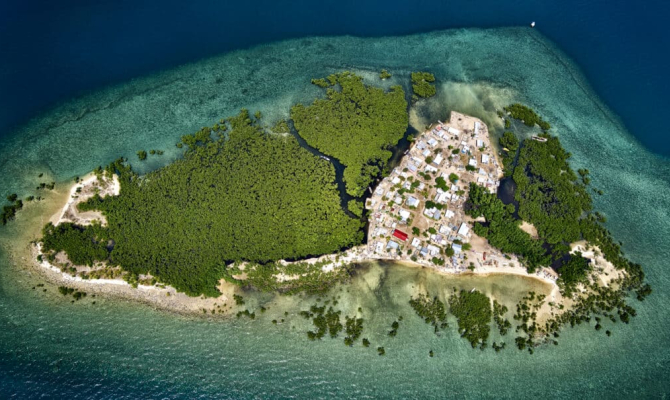
15 December 2025, Apia - The collective effort to strengthen Ocean resilience and community well-being across the Pacific has been fortified through the signing of the Pacific Ocean Initiative – Sustainable Protection and Management of Coastal and Marine Ecosystems for Community Resilience, by the Secretariat of the Pacific Regional Environment Programme (SPREP) and the Agence Française de Développement (AFD).
Backed by an €8 million AFD grant over five years and signed in December 2025, the Pacific Ocean Initiative is a major regional programme designed to protect coastal and marine biodiversity, strengthen ecosystem resilience, and support sustainable development across Pacific Island countries and territories.
It brings together SPREP and the Pacific Community (SPC) to coordinate and implement activities with Pacific governments, scientific and technical partners, Non-Governmental and Civil Society Organisations to address shared Ocean challenges, protect biodiversity, and ensure food and economic security for Pacific communities.
The new regional initiative will benefit 18 eligible Pacific Island countries and territories: Fiji, Kiribati, Federated States of Micronesia, Marshall Islands, Solomon Islands, Nauru, Niue, Palau, Papua New Guinea, Samoa, Tonga, Tuvalu, Vanuatu, Tokelau, Timor-Leste, New Caledonia, French Polynesia, and Wallis and Futuna.
SPREP Director General, Mr Sefanaia Nawadra, commends and acknowledges this new partnership.
“The Pacific Ocean Initiative represents a bold and collective commitment to safeguard the ecosystems that sustain our communities, cultures, and economies,” he said.
“Together with AFD and SPC, SPREP is committed to ensure our coastal and marine resources continue to support the well-being of Pacific people for generations to come.
“By fostering knowledge sharing and regional collaboration, this programme aims to strengthen the capacity of Pacific nations to protect, sustainably manage and restore their coastal and marine ecosystems and resources, contributing to advance our Members’ regional priorities and frameworks such as the Pacific Coral Reef Action Plan, the Pacific Islands Regional Marine Species Programme, and the Pacific Islands Framework for Nature Conservation and Protected Areas.”
Head of AFD in Fiji, Ms Elodie Vitalis, also underscored the significance of this joint commitment.
“Protecting the Pacific Ocean means safeguarding the beating heart of this region. Together with SPREP and SPC, we are joining forces to restore vital ecosystems, support the communities whose livelihoods depend on the ocean, and strengthen the capacity of Pacific Island countries to face the impacts of climate change. AFD is proud to support an initiative that is truly Pacific-led and Pacific-grown, ensuring that the ocean remains a source of balance, prosperity, and intergenerational transmission for years to come.”
The Pacific Ocean: A Global Treasure
The Pacific Ocean is the world’s largest, covering one-third of the Earth’s surface and comprising 21 Countries and Territories representing approximately 30,000 islands, with Exclusive Economic Zones covering around 30 million square kilometres. Home to some of the most diverse and biologically rich coastal and marine ecosystems in the world, these environments are increasingly pressured by human activity and climate change, threatening both biodiversity and the livelihoods of communities that depend on marine resources.
The Pacific Ocean Initiative aims to contribute to the Blue Pacific 2050 Strategy, which outlines an ambitious vision for the region: to become a model of sustainability and resilience in the face of 21st-century challenges. The strategy emphasises responsible management of natural resources and the development of prosperous and resilient communities, highlighting the critical need to protect marine biodiversity and sustainably manage fishery resources.
Strengthening Regional and Local Capacities
The overall objective of the Pacific Ocean Initiative is to enhance the resilience of marine and coastal biodiversity and ecosystems, ensuring that Pacific communities can continue to rely on these resources in the face of environmental and climate challenges. The specific objective is to share and strengthen regional and local expertise for sustainable management of marine and coastal resources, fostering collaboration among Pacific Island Countries and Territories.
The initiative is structured around two technical components and one management component:
Component 1: Strengthening regional collaboration and national capacities for biodiversity conservation and protection of critical marine and coastal ecosystems.
Component 2: Supporting community-level co-management of coastal and marine resources through ecosystem-based coastal fisheries management.
Component 3: Project management, monitoring, and evaluation, ensuring effective delivery and long-term sustainability.
SPREP will lead Components 1 and 3, while SPC will lead implementation of Component 2.
Among key expected results, the Pacific Ocean Initiative aims to strengthen national and regional capacity for sustainable ecosystem governance through knowledge exchange, networking, and shared expertise.
It will support the development of a regional community of practice for coral reef monitoring, enhance coral restoration outcomes by integrating inter-reef ecological connectivity, and promote healthier, more resilient communities through sustainable management of marine and coastal resources including coastal fisheries.
A Forward-Looking Partnership for the Pacific
Given the vast geographic scope and complex environmental pressures in the region, a regional and collaborative approach led by SPREP and SPC will enable countries and communities to strengthen capacities, take coordinated action to address common challenges, maximizing the social and economic benefits of sustainable ecosystem management.
The Pacific Ocean Initiative underscores the partnership between SPREP, SPC and France through AFD in supporting Pacific-led ocean and environment priorities. Together with beneficiary countries and technical partners, the initiative will help ensure the region’s marine ecosystems are sustainably managed, resilient to climate change, and capable of supporting prosperous and sustainable communities.
For more information, contact SPREP – Dr. Nicolas ROCLE, Marine Environment and Conservation Specialist, nicolasr.ext@sprep.org or AFD – Augustin CHABASON, chabasona@afd.fr
PHOTO CREDIT: Stuart Chape