

14 November 2025, Belem - The Secretariat of the Pacific Regional Environment Programme (SPREP) has echoed the growing chorus from its Pacific membership calling for grant-based financing to aid the devastating impacts Pacific communities face as a result the triple planetary crisis.
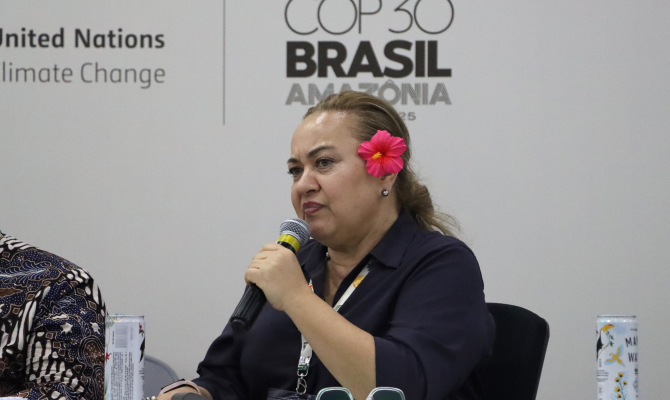
As climate change negotiations ramp up in Belem Brazil, SPREP’s Head of Delegation at COP30 and Director of Climate Change Resilience, Ms Tagaloa Cooper said that from the Pacific’s experience, blended finance has had limited success.
“For Pacific SIDS, adaptation is central. Our countries face high debt burdens and shrinking fiscal space,” said Ms Cooper. “In such contexts, adaptation finance must be grant-based. Experience shows that blended finance has had limited success in the Pacific. It is therefore crucial that MDBs (Multilateral Development Banks) and climate funds recognise the need for simplified, tailored, and predictable access modalities for our region.”
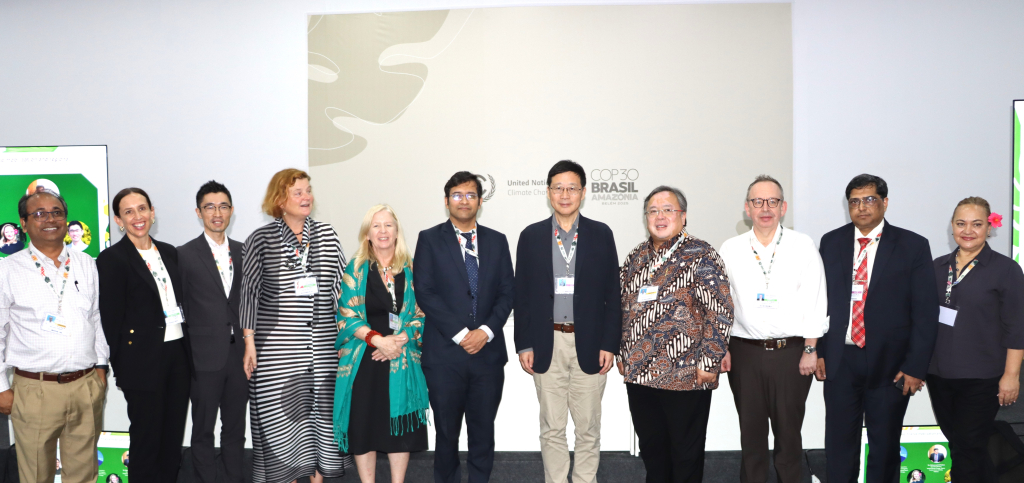
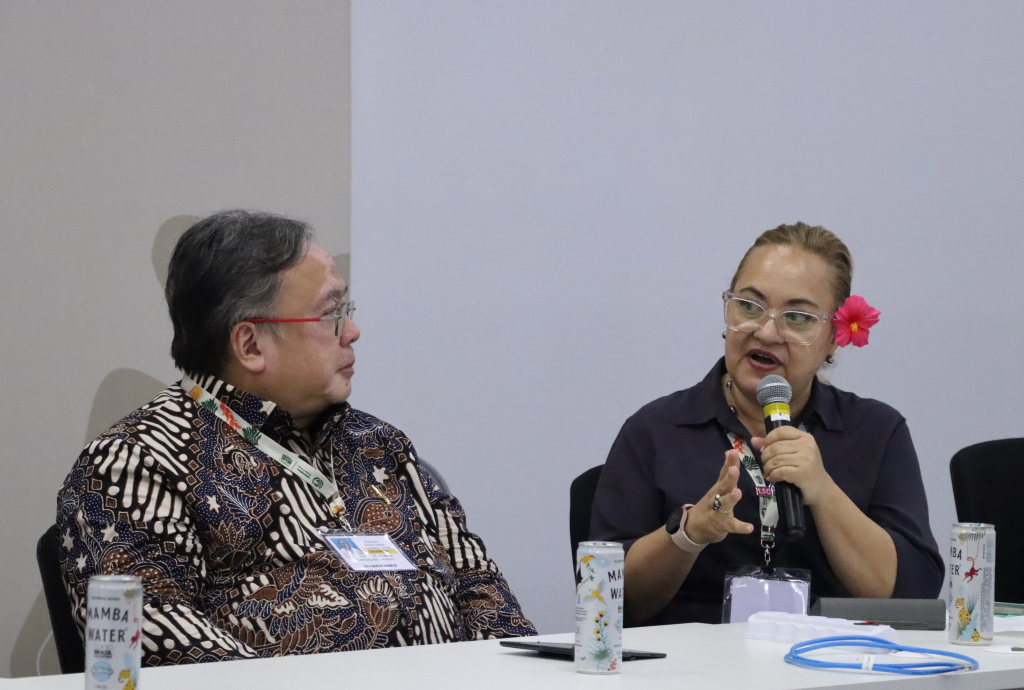
Ms Cooper made the call when SPREP took the spotlight during the “From Pledges to Projects: Bridging the NDC-Investment Gap in Asia” side event on the margins of COP30.
She joined other speakers including Mathias Corman, Secretary General Organization for Economic Co-operation and Development (OECD), Mathilde Mesnard, Deputy Director Environment, OECD, Yevgeniy Zhukov, Director General, Climate Change and Sustainable Development Department, ADB, Noelle O'Brien, Director, Climate Change, ADB, Dr. Md Golam Rabbani, Associate Director, Climate Hub, Bangladesh NGOs Network for Radio and Communication (BRAC) and BRAC International.
With the submission of new Nationally Determined Contributions (NDCs) in 2025, at COP30 in Brazil, attention is now on turning these pledges into implementable, investable and impactful climate action.
Despite growing momentum, many countries, especially those most vulnerable to climate change, face systemic barriers such as limited institutional capacity, fragmented planning systems, and constrained access to finance.
According to Ms Cooper, the implementation of NDCs in the Pacific is not only about climate ambition but about ensuring the survival of our communities. With a mandate to promote cooperation in the Pacific region to protect and improve the environment, and ensure sustainable development for present and future generations, SPREP is an implementing partner of the Pacific NDC Hub where the Secretariat has supported member countries in translating their NDCs into tangible action. “This is always country-led and context-specific. For example, we have supported the installation of biogas systems in boarding schools in Vanuatu, developed a national GHG data repository for Tuvalu to enhance reporting, and supported agroforestry implementation in Samoa,” she said.
“To complement this, we provide annual training for NDC focal points, covering themes such as aligning NDCs and NAPs, and integrating nature-based solutions. These regular convenings enable the exchange of tools, data, and country experiences; critical for strengthening national investment and implementation planning.”
On financing, she told the audience of Government officials, climate finance practitioners, development partners, project developers, policy advisors, and civil society actors that while it is essential for climate finance to align with NDCs, Pacific SIDS face serious capacity constraints even in updating their NDCs.
“SPREP and other regional partners are doing our part to provide technical support, but there is a clear need for dedicated grant financing - both for NDC development and for implementation.”
Regional collaboration is essential, she added.
“Through the Pacific NDC Hub, four regional organisations including SPREP work closely to deliver coordinated support to all 14 NDC Hub member countries in the Pacific. Beyond the Hub, SPREP has also established Tomai Pacifique -a platform that mobilises Pacific expertise through a regional roster of climate consultants and provides countries with rapid technical assistance upon request.
“These regional mechanisms reflect our collective commitment to accelerate project development and delivery. But to scale what works, we need long-term, flexible and country-driven partnerships that reflect the realities of our region.”
The 30th Conference of the Parties to the UN Framework Convention on Climate Change (UNFCCC) is taking place from 10-21 November 2025 in Belem, Brazil.
It is being attended by Pacific leaders and their delegations, who are advocating for the survival of Pacific communities who continue to be at the forefront of climate change impacts.
Support for our Pacific Islands at COP30 from members of the Council of Regional Organisations of the Pacific (CROP) is through the One CROP mechanism led by the Secretariat of the Pacific Regional Environment Programme.
Members of one CROP include: The Secretariat of the Pacific Regional Environment Programme (SPREP) – Lead, Pacific Islands Development Program, Pacific Islands Forum Fisheries Agency, Pacific Island Forum Secretariat, Pacific Community.
A key part of amplifying the One Pacific Voice at COP30 is the Moana Blue Pacific Pavilion and the Pacific Delegation Office. The Moana Blue Pacific Pavilion at COP30 is a Pacific partnership with the Governments of Australia and New Zealand managed by the Secretariat of the Pacific Regional Environment Programme (SPREP).
The Pacific Delegation Office at COP30 is a Pacific partnership with the New Zealand Government managed by the Secretariat of the Pacific Regional Environment Programme (SPREP).
To learn more about the Pacific at COP30 please visit: https://www.sprep.org/cop30