

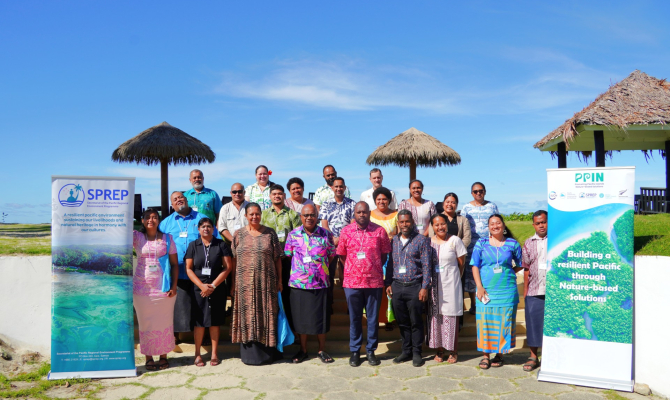
Government representatives from Fiji, Tonga, and Vanuatu, together with regional organisations and development partners, came together to reflect on the progress of the Promoting Pacific Islands Nature-based Solutions (PPIN) project and identify the next steps for strengthening Nature-based Solutions (NbS) across the Pacific.
Hosted by the Secretariat of the Pacific Regional Environmental Programme (SPREP), the PPIN-SPREP Regional Reflection Event provided an opportunity for countries to share experiences, lessons learned, and practical achievements, while exploring how NbS can be more effectively integrated into national policies, planning, and implementation.
"One of the clearest lessons emerging from PPIN is that Fiji, Tonga, and Vanuatu are not starting from zero. NbS are already reflected through our traditional knowledge, community stewardship, and ecosystem management practices,” said Ms. Utulei Lui the PPIN Coordinator for SPREP.
“The opportunity now is to strengthen those existing foundations by building the policies, partnerships, financing, and institutions needed to move from policy recognition to implementation – supporting the ongoing of real actions on the ground."
Representing Tonga's Ministry of Agriculture, Food, and Forest, CEO Mr. Elisaia Ika, reflected on how the PPIN project has reinforced long-standing Pacific approaches to environmental management.
"We've seen that NbS are not new; they are the formalisation of the sustainable practices our communities have long embraced. By strengthening regional partnerships, building coordination, and investing in implementation, we can turn policy into action," said Mr. Ika.
Mr Heimuli Likiafu, Head of Forestry Tonga, also highlighted the importance of stronger institutional coordination, financing, and evidence-based decision-making to support future implementation. During the discussions, participants emphasised opportunities to build on the partnerships established through PPIN by developing biodiversity finance proposals, establishing national technical coordination mechanisms, and integrating NbS into upcoming national strategies and sector plans.
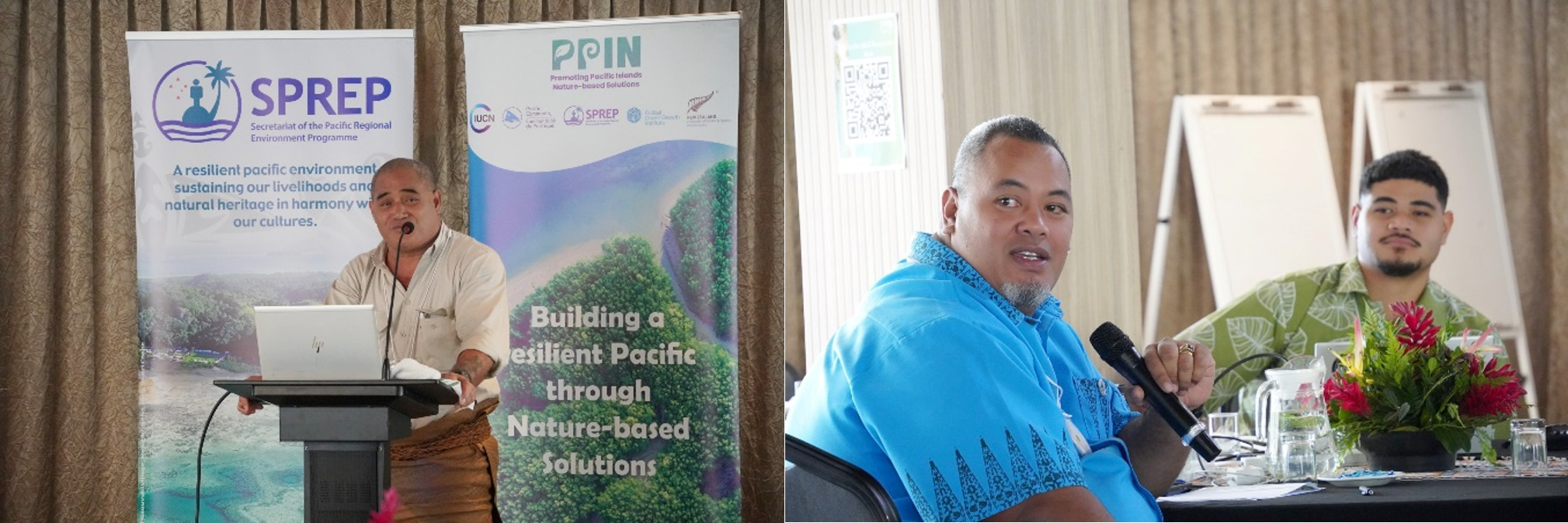
From Tonga's Department of Environment, Conservation Officer, Mr. Mo'ale Falefoonoi said regional collaboration had opened new opportunities for scaling NbS.
He said, "Regional collaboration through PPIN has helped Tonga identify opportunities, partnerships, and investments needed to scale NbS. The future now lies in better data and sustainable financing that supports our people and natural environment."
Fiji representatives reflected on the project's contribution to strengthening policy frameworks across the forestry and environmental sectors, while reinforcing existing sustainable resource management approaches.
Dr. Alivereti Naikatini of Fiji's Ministry of Forestry said the project has helped position NbS as an extension of practices already familiar to Pacific communities.
"Fiji's participation in PPIN has reinforced that NbS builds on the sustainable forestry practices we already know. Now it's time to translate our shared progress into action that safeguards our forests and creates lasting value for the next generation," said Mr. Naikatini.
The event also highlighted Fiji's progress in strengthening the enabling environment for Nature-based Solutions through the SPREP-PPIN Project. Discussions focused on the next phase of implementation, including the need for stronger partnerships, financing, technical capacity, and evidence-based decision making.
Representing Fiji's Ministry of Environment and Climate Change, Ms. Michelle Baleikanacea highlighted the importance of building on these foundations. She said, "The SPREP-PPIN Project has helped strengthen Fiji's policy foundations for Nature-based Solutions. Looking ahead, our focus is on expanding collaboration, improving access to climate and biodiversity finance, strengthening technical capacity, and ensuring that traditional knowledge and scientific evidence continue to guide implementation."
While Fiji and Tonga shared national experiences during the event, Vanuatu's participation reinforced the importance of community-led approaches and customary governance in advancing NbS.
Across all three countries, participants recognised that Pacific communities already possess deep knowledge of ecosystem stewardship, and future investments should build upon these strengths while improving policy coordination and institutional support.
A recurring message throughout the event was the value of regional partnerships. The collaboration between governments, regional organisations, and development partners has enabled countries to exchange knowledge, strengthen policy development, and create practical pathways for implementation. Participants agreed that continuing these partnerships will be essential for mobilising finance, improving technical capacity, and accelerating the uptake of NbS across the region.
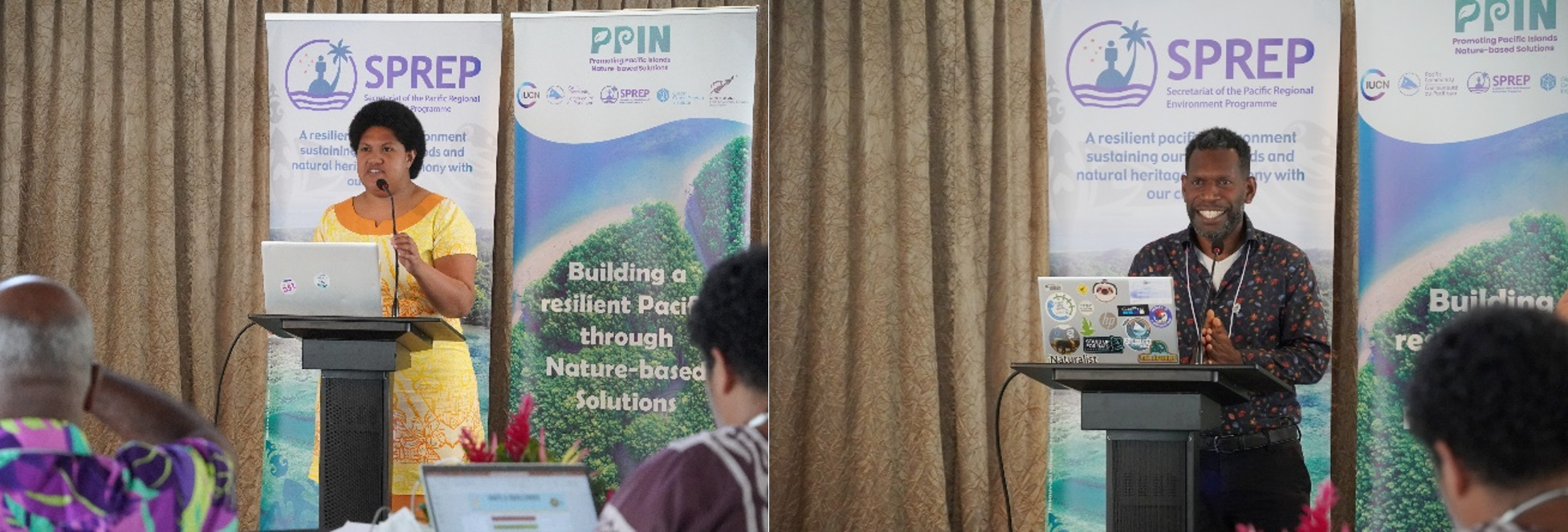
Looking ahead, countries highlighted the need for stronger monitoring systems, improved access to biodiversity finance, pilot demonstration projects, and continued regional learning to ensure that NbS become an enduring part of Pacific development.
The PPIN-SPREP Regional Reflection Event concluded with a shared commitment to move beyond policy development towards implementation, leverage it further at bilateral and regional level facilitated through platforms such as the 11th Nature Conference and the 17th Conference of the Parties for Convention of Biological Diversity (CBD COP 17) ensuring that NbS continue to strengthen the resilience of Pacific communities, safeguard biodiversity, and support sustainable livelihoods for generations to come.
The PPIN project is funded by the Government of New Zealand through the Ministry of Foreign Affairs and Trade. It seeks to support the development of policy and legislation for NbS, build regional awareness and capacity, and strengthen regional cooperation amongst Pacific Island countries on NbS. PPIN is managed by the International Union for Conservation of Nature, in partnership with the Pacific Community, SPREP, and the Global Green Growth Institute.