

28 August 2026, Lenakel, Tanna – For coastal communities in West Tanna, protecting marine resources means thinking beyond the ocean.
As communities commit their coastal areas to marine conservation, they are also exploring alternative ways to support their families and generate income. Small livestock farming is emerging as one promising option.
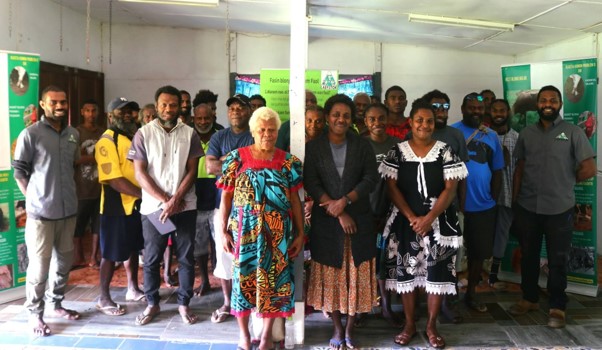
From 15 to 26 June 2026, over 50 community members from across the 14 tribes of West Tanna participated in small livestock training held at Loukatai Village and Lenakel Town.
The five-day training, delivered twice back-to-back, was organised as part of planned activities under the Pacific Ecosystem-based Adaptation to Climate Change (PEBACC+) project in partnership with the Vanuatu Government.
Participants included 24 youth, 19 men and nine women, representing communities including Lounelapen, Letekren, Leniai, Lounapkiko, Tanna Sul, Lowinio, Isini, Lenmaot and Iru.
For Leitau Natuman, a resident farmer from Lounelapen, the training provided an opportunity to gain knowledge she had never previously accessed. She said, “I, for one, have never attended such training before and it is very much an eye-opener for us.”
The training comes at an important time for communities seeking to balance conservation with their livelihood needs.
The PEBACC+ project is supporting communities to explore alternative livelihood options that can complement marine conservation, particularly where coastal fisheries may eventually be closed or restricted to allow marine resources to recover.
For experienced small livestock farmer and meat supplier Kennedy Iarapia, strengthening local livestock production could also help address the high cost of bringing meat to Tanna from other islands.
He said, “The resource is very scarce on the island as I have to buy meat from the northern islands and have it shipped all the way to Tanna; and this is a very costly exercise. We need young people to seriously invest in the livestock industry.”
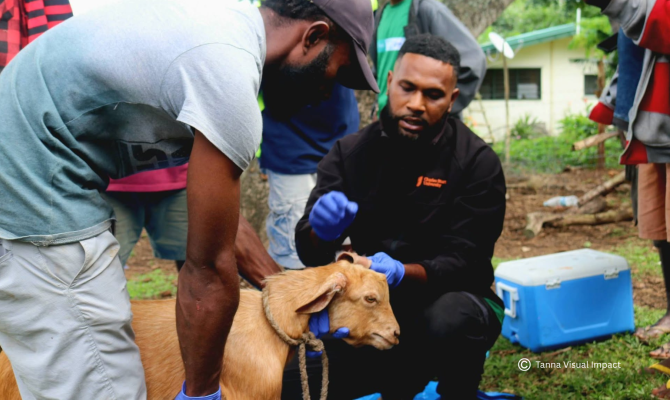
For many participants, the highlight of the training was getting out of the classroom and seeing practical examples of improved farming techniques.
During field visits, participants observed integrated fish farming, backyard gardening and small livestock farming at household level.
The visits generated strong interest, with participants able to see first-hand how different farming activities could be combined to support household food production and livelihoods.
The practical demonstrations were particularly valuable for participants attending their first livestock training.
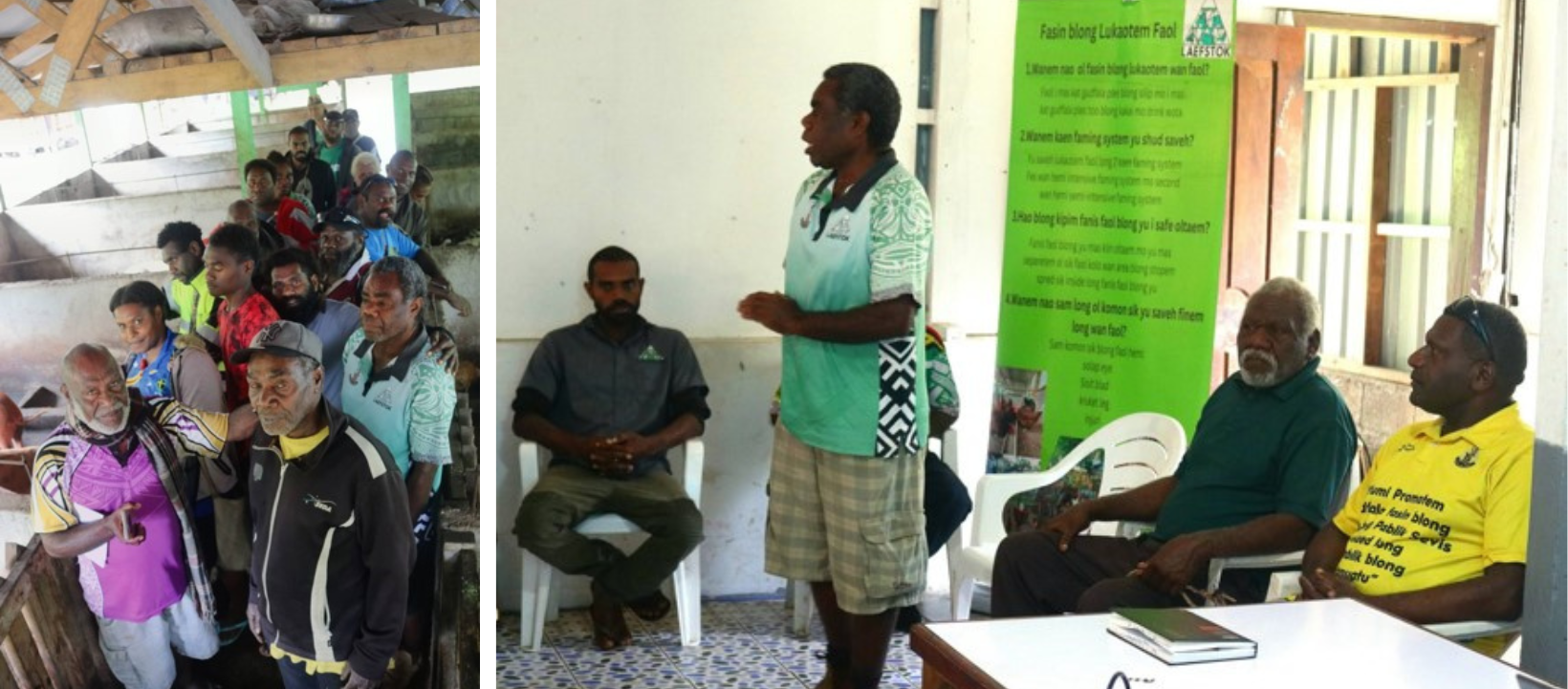
Chief Peter Marcel, Chairman of the Nikoletan Council of Chiefs, Tanna, encouraged young people to make use of opportunities to gain knowledge and develop new livelihood skills.
“This is a very important training for you, the young generation. In my time, when growing up, resources were abundant, and life was simple and easy. Now, with an increased population, you have to tread wisely and utilise all available knowledge and information to guide your existence,” said Chief Marcel.
The training was delivered by local government livestock officers, with support from the Secretariat of the Pacific Regional Environment Programme (SPREP) through the PEBACC+ project funded by the Kiwa Initiative and the French Facility for Global Environment.
The training reflects the broader objectives of the PEBACC+ project to strengthen climate resilience and support sustainable livelihood options for communities across the Pacific.
William Bani, SPREP’s PEBACC+ Country Coordinator, said, “For West Tanna communities, conserving coastal resources and strengthening livelihoods do not have to be competing priorities.
“By developing skills in small livestock farming and other complementary livelihood activities, communities can build greater resilience while continuing to protect the marine resources on which their future depends.”
PEBACC+ is a regional project implemented by SPREP and funded by the Kiwa Initiative through its donors the European Union, Agence Française de Développement (AFD), Global Affairs Canada, Australian Government Department of Foreign Affairs and Trade (DFAT) and New Zealand Ministry of Foreign Affairs and Trade (MFAT), with co-financing from French Facility for Global Environment (FFEM).
The project aims to develop, sustain, and institutionalize ecosystem-based approaches in Fiji, New Caledonia, Wallis and Futuna, Solomon Islands and Vanuatu. These efforts will strengthen the resilience of ecosystems, local economies, and communities against the impacts of climate change.
For more information, please contact: Setaita Tavanabola, Communications Officer, PEBACC+ Project, SPREP; email: setaitat@sprep.org or visit www.sprep.org/pebacc-plus