

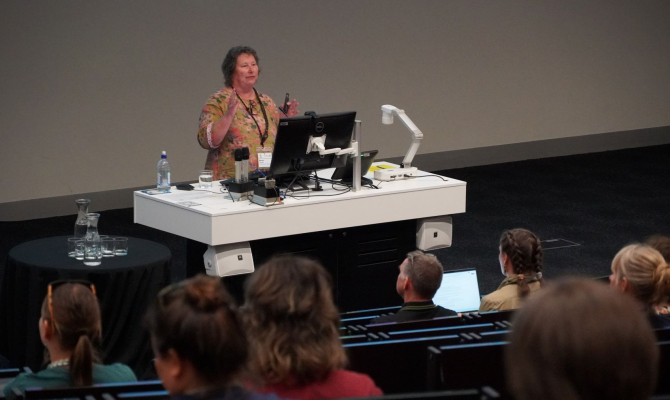
The Island Invasives Conference 2026 held from 9-13 February at Waipapa Taumata Rau, University of Auckland, brought together more than 300 of the world’s leading scientists, conservation practitioners, Indigenous knowledge holders, and policy experts to share the latest research and innovation in invasive species management.
Returning to Auckland to mark its 25th anniversary, the conference serves as the global forum for advancing the science and practice of eradicating invasive species from islands and island-like ecosystems.
With experts attending from across the Pacific, Caribbean, Mediterranean, Atlantic and Indian Ocean regions, the gathering highlights both the scale of the global challenge and the collective commitment to protecting island biodiversity.
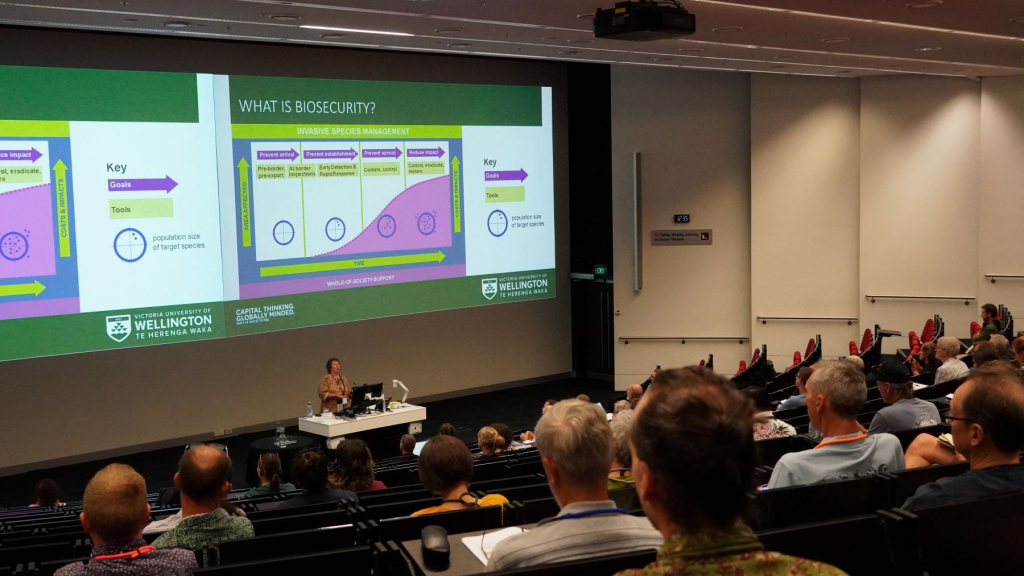
New Zealand, long recognised as a world leader in island restoration, is once again hosting the event, showcasing its extensive experience and national commitment to ecological resilience and conservation science.
For Pacific Island nations, the conference carried particular significance. Islands in the Pacific hold some of the planet’s highest concentrations of endemic species, yet they remain acutely vulnerable to the introduction and spread of invasive plants and animals.
These threats are intensified by climate change, increasing trade, and more frequent extreme weather events. With an alarming 45% of Pacific species now at risk of extinction, and invasive species recognised as the single greatest threat to their survival, strengthening inter-island and national biosecurity systems has become an urgent regional priority.
A key highlight of the programme on the opening day of the week-long conference was the presentation “Challenges and Opportunities for Inter-Island Biosecurity in the Developing Pacific Islands Region,” delivered by Dr Monica Gruber of Te Herenga Waka – Victoria University of Wellington.
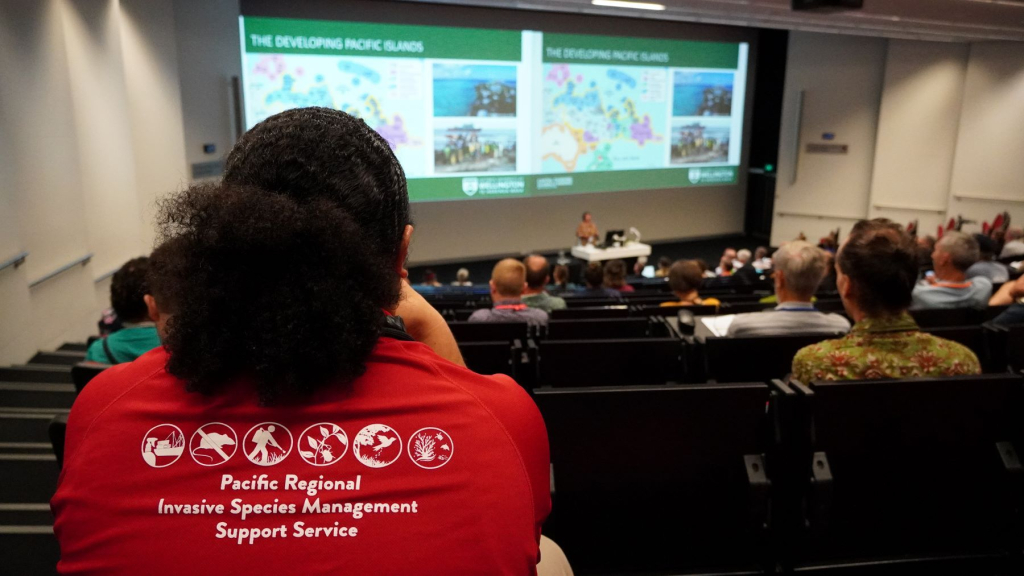
The session offered an in-depth examination of how biosecurity currently functions across Pacific Island countries, the gaps that persist and the urgent need for more coordinated approaches to prevent the movement of invasive species between islands.
A highlight was the three-tier framework that demonstrates how biosecurity risk is managed at multiple levels. At the national level, many Pacific countries operate Tier 1 biosecurity systems that focus on international borders and threats relating to agriculture, health, and trade, supported by national legislation and international conventions.
In contrast, Tier 2 domestic frameworks, which should coordinate internal surveillance and response across ministries such as environment, health and agriculture, often remain underdeveloped due to inconsistent regulations, limited resources and a lack of internal coordination.
Dr Gruber shared that, “the most critical level, Tier 3 inter-island biosecurity, is also the least resourced despite being vital for island nations, local communities frequently shoulder the responsibility but lack the sustained funding, staffing, and regulatory backing required to prevent invasive species from spreading between islands.”
Dr Gruber emphasised three major challenges that continue to hinder progress across the region. The first being the absence of sustainable long-term funding. “While a few jurisdictions such as Palau and Pitcairn have developed strong frameworks supported by targeted funding, these remain exceptions as most Pacific countries depend on short-term or donor-driven financing that cannot support the continuous vigilance that effective biosecurity demands.”
Secondly it was highlighted that the difficulty of demonstrating the everyday benefits of biosecurity. “Because successful biosecurity prevents harmful species from ever arriving, its impact is often invisible and this makes it harder to secure political support or community buy-in unless the tangible benefits, such as protecting food security or avoiding major economic losses, are clearly communicated.”
The third challenge lies in differing levels of capability and capacity. Although national agencies increasingly hold technical expertise, their capacity to operationalise and sustain this expertise, especially in remote and outer island communities, is often limited. Many local areas lack trained personnel, laboratory access, and sufficient operational resources to implement plans consistently.
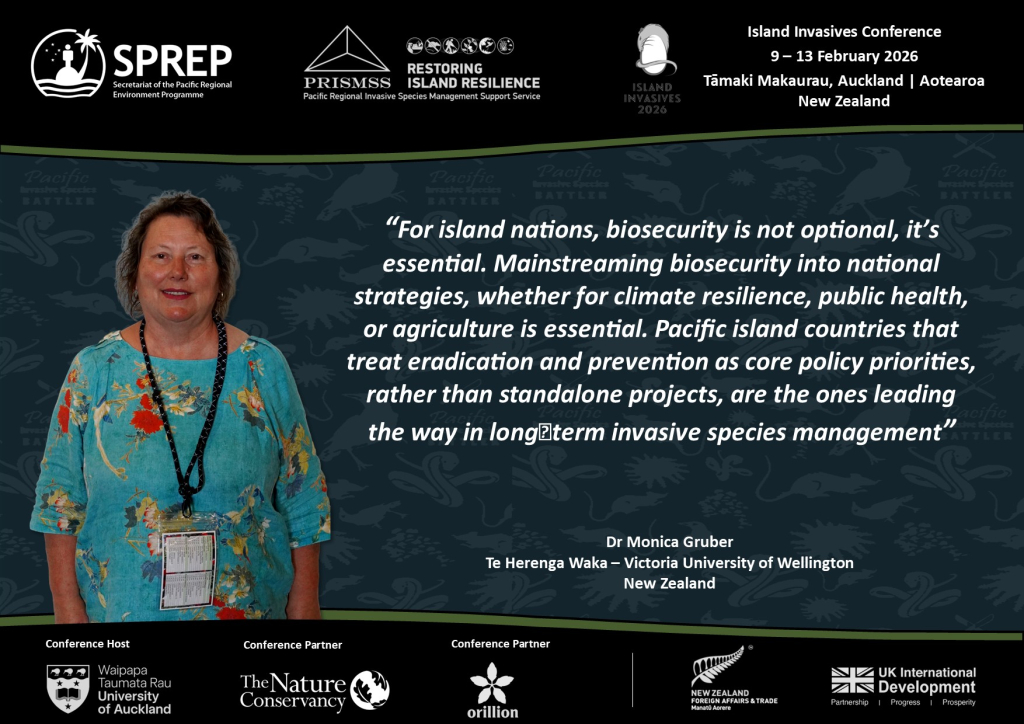
Despite these challenges, a hopeful and forward-looking path emphasised that integration and partnership will be essential going forward, with NGOs, governments, research institutions, and community groups needing to coordinate more closely to share resources and improve outcomes.
“The importance of mainstreaming biosecurity within national development priorities, including climate adaptation, public health, agriculture, and environmental protection, noting that countries that have embedded eradication and prevention efforts into wider policy frameworks show greater long-term success”, shared Dr Gruber.
A recommendation was for sustainable financing mechanisms, such as dedicated trust funds, that ensure ongoing support for prevention, rapid response and eradication.
“Models like Palau’s PAN Trust Fund demonstrate how reliable financial structures can enable communities to carry out consistent and effective biosecurity and conservation actions.”
The event reinforces the Pacific’s central role in shaping global conversations about biodiversity conservation and biosecurity, ensuring that regional realities, geographic isolation, cultural ties to land and ocean and unique ecological vulnerabilities remain at the forefront of scientific and policy discussions.
SPREP Invasive Species Adviser, Mr David Moverley, reflected on the insights shared, “they reinforce a clear and urgent message that with strategic investment, stronger partnerships, improved capacity, and community centred approaches, Pacific Island nations can build robust and resilient inter island biosecurity systems capable of protecting biodiversity, strengthening livelihoods, and preserving the natural heritage of Pacific peoples.”
“As invasive species intensify under climate change and other pressures, this conference is vital for fostering knowledge exchange,” Mr Moverley added.
“Through our six PRISMSS programmes, we will continue to work with our technical partners and donors to accelerate biosecurity innovation and protect the ecological, cultural, and economic foundations of Pacific life.”
Technical partners of PRISMSS will also present papers on invasive species management throughout the week.
Island Invasives 2026 runs from 9–13 February 2026 in Tāmaki Makaurau (Auckland), Aotearoa New Zealand, hosted by the University of Auckland. The conference goal is knowledge transfer to accelerate uptake of eradication methodologies and enhance biodiversity and the lives of people on islands around the world.
With more than 300 experts from regions as diverse as the Pacific, Caribbean, Mediterranean, and the Indian Ocean, the conference is showcasing cutting edge methodologies, case studies, and emerging technologies, all aimed at protecting island biodiversity and improving community livelihoods. New Zealand, globally recognised for its leadership in island restoration, hosts the event as a demonstration of national commitment to ecological resilience, conservation science, and large scale eradication success.
About PRISMSS: The Pacific Regional Invasive Species Management Support Service (PRISMSS) is a service designed to facilitate the scaling up of operational management of invasive species in the Pacific. The SPREP Center of Excellence, PRISMSS brings together experts to provide support within the Pacific region with a focus on protection of indigenous biodiversity and ecosystem function. As a service provider, PRISMSS provides a comprehensive suite of support services in a cohesive, effective, efficient, and accessible manner to Pacific Island countries and territories.
Restoring Island Resilience (RIR): The PRISMSS - Restoring Island Resilience (RIR) is a New Zealand-PRISMSS collaboration project that aims to improve Pacific Island Countries and territories livelihoods and resilience to climate change by reducing the impact of invasive species on natural and agricultural ecosystems through the six PRISMSS programmes.
PRISMSS Powered by: New Zealand Foreign Affairs & Trade, UK International Development, GEF, United Nations Environment Programme & SPREP.
PRISMSS Partners: Bioeconomy Science Institute, Birdlife International, Earth Sciences New Zealand, New Zealand Department of Conservation, Island Conservation, the Pacific Community and SPREP.
PRISMSS Programmes: Protect Our Islands (POI), Protect Our Islands (POI), War On Weeds (WOWs), Natural Enemies Natural Solutions (NENS), Resilient Ecosystems Resilient Communities (RERC) and Protect Our Marine Areas (POMA).
For additional information please contact Mr Dominic Sadler, PRISMSS Manager on dominics@sprep.org or Mr Nitish Narayan, PRISMSS Communications & Liaison Officer on nitishn@sprep.org