

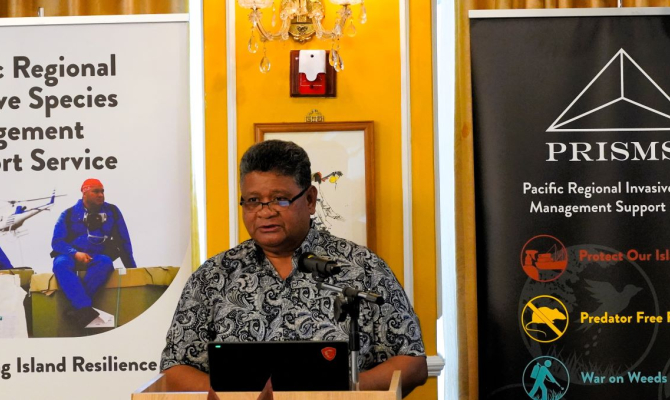
19 May 2026, Koror - The Pacific Invasive Learning Network (PILN) has convened its seventh meeting in Koror, gathering participants from across the region to address one of the Pacific’s most pressing environmental challenges, invasive species management. Coincidentally, the inaugural PILN meeting was held in Palau 20 years ago, in 2006, making this return both symbolic and significant. The gathering reflects PILN’s mission to empower effective invasive species management through a participant-driven network that meets priority needs, rapidly shares skills and resources, connects practitioners to technical expertise and accelerates on-the-ground action.
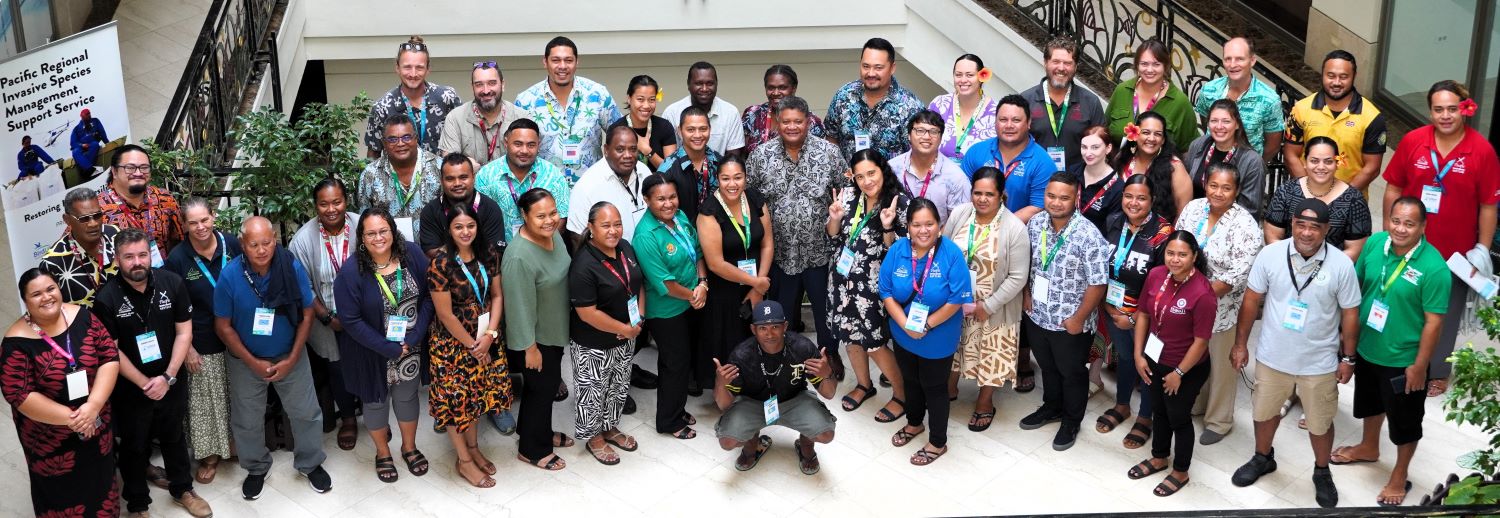
More than 50 invasive species professionals and practitioners from across the Pacific region have come together to share successes, identify sustainable solutions, address critical issues, and discuss ways to invigorate future networking and collaboration between Pacific Island Countries and Territories (PICTs).
The PILN meeting, hosted by the government of Palau from 18-22 May 2026, is made possible with funding support from the New Zealand Ministry of Foreign Affairs and Trade, the United Kingdom International Development, the Secretariat of the Pacific Regional Environment Programme (SPREP) and the Pacific Regional Invasive Species Management Support Service (PRISMSS). Throughout the meeting, participants will be exchanging success stories, country progress and updates and case studies that highlight how different islands have managed invasive species in their own contexts. These accounts not only celebrate achievements but also provide practical lessons that can be adapted elsewhere. Discussions are centering on ways to expand technical support in the field, ensuring that best practices and proven management approaches are promoted and strengthened across the region.
Palau is playing a central role in this event, offering site visits that allow participants to see firsthand how invasive species are being managed locally. These visits are also an opportunity to experience Palau’s culture and celebrate the collective progress made in protecting biodiversity. Hon. Gustav Aitaro, Minister of State, on behalf of the Ministry of Agriculture, Fisheries and the Environment and the Government of the Republic of Palau, welcomed regional delegates to Palau for the 7th Pacific Invasive Learning Network (PILN) Meeting.
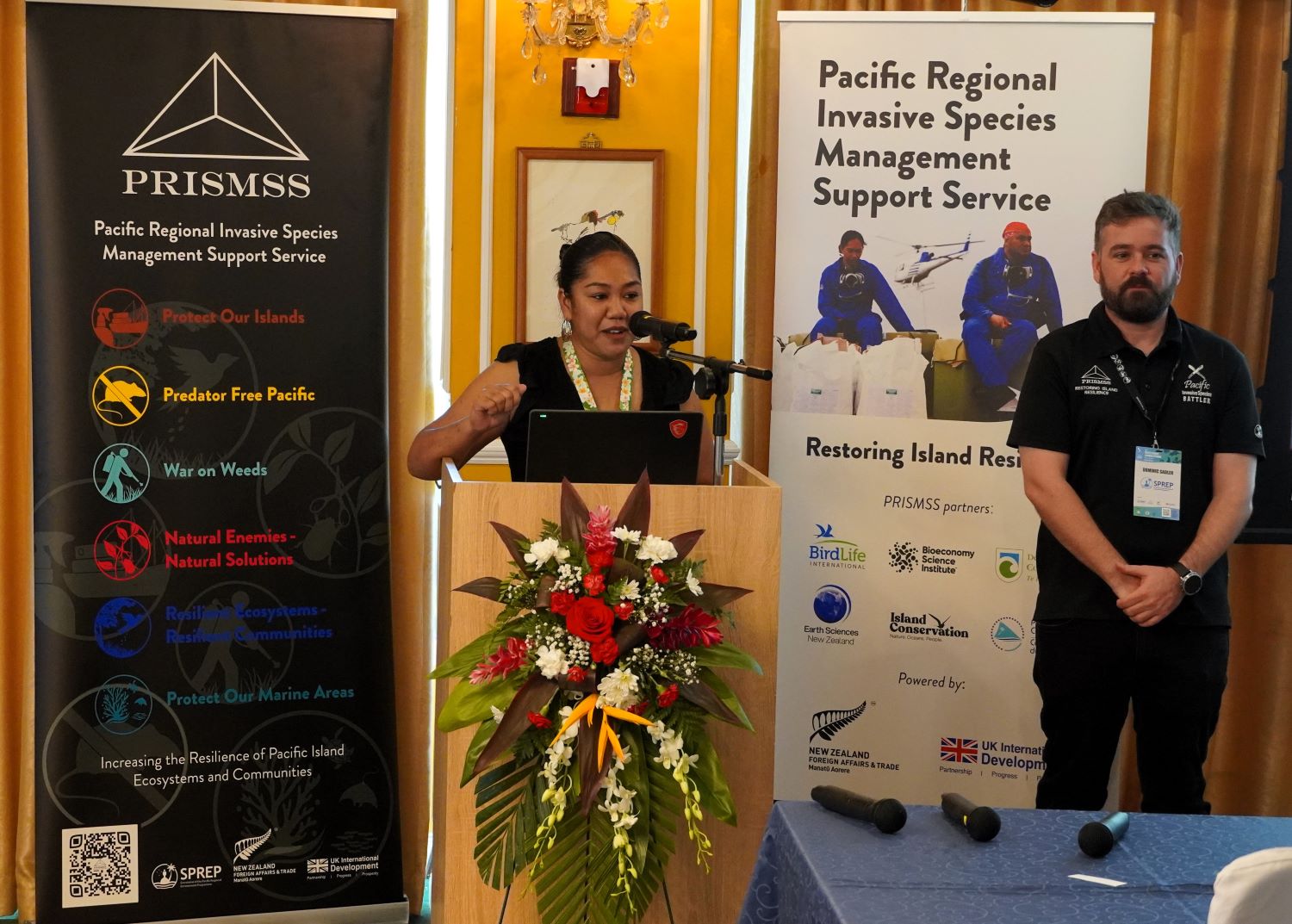
“We are deeply grateful to SPREP for entrusting Palau with the opportunity to host this important regional gathering and for its continued partnership and leadership in advancing invasive species management throughout the Pacific.” The Hon Minister added that, “Palau sincerely appreciates SPREP’s support through important regional initiatives and projects such as Predator Free Pacific, Resilient Ecosystems Resilient Communities, and the return of the War on Weeds program to Palau after a 15-year hiatus.”
“These initiatives have strengthened our national capacity, supported on-the-ground action, and reinforced the importance of regional collaboration in protecting our islands, biodiversity, livelihoods, and communities from the growing threats posed by invasive species.” “We are especially pleased that participants will have the opportunity not only to engage in technical discussions and practical exercises, but also to learn from Palau’s experiences through site visits and cultural exchanges.” The Hon Minister Aitaro concluded by commenting that, “as island nations, we all face similar environmental challenges, and gatherings such as this allow us to learn from one another, strengthen partnerships, continue building resilient ecosystems and resilient communities across the Pacific, as our motto in my ministry says, a strong community is a strong country.”
SPREP Invasive Species Adviser, Mr David Moverley, commented that, “this PILN meeting is focused on invigorating future networking and collaboration amongst Pacific Island Countries and Territories, As PILN marks two decades since its inception, this meeting not only reflects on past achievements but also sets the stage for the future.” “The network’s role in enhancing invasive species management across the Pacific remains vital and by sharing technical expertise, exchanging information, and building on successful management approaches, we are enabling the country delegates to strengthen regional resilience against invasive species.”
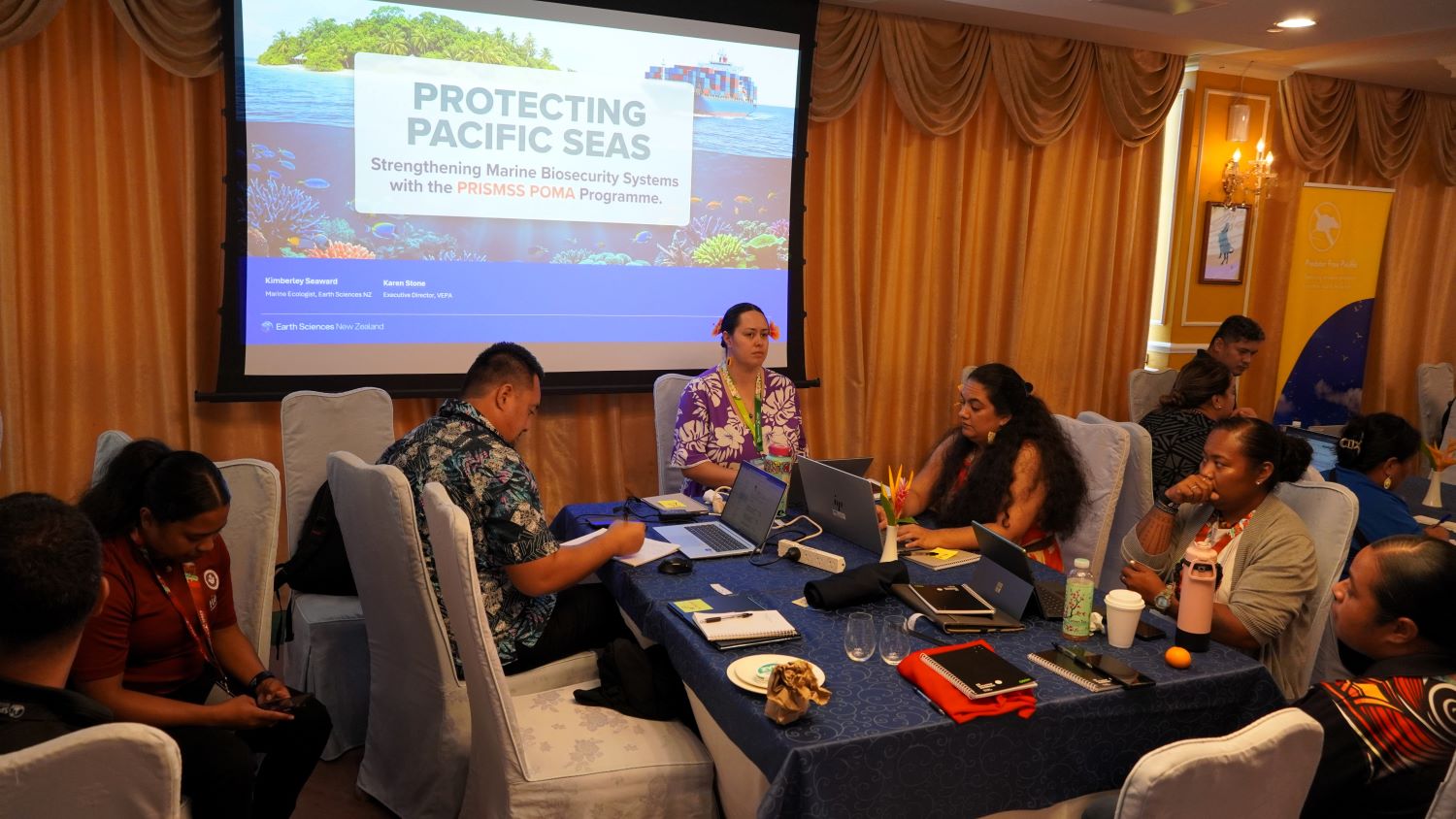
“The seventh PILN meeting in Palau underscores the importance of unity, knowledge-sharing, and action in safeguarding the Pacific’s ecosystems and cultural heritage.” By continuing to foster collaboration, build capacity, and accelerate action, PILN ensures that the Pacific islands are better equipped to protect their biodiversity, cultural heritage, and communities from invasive species. The spirit of unity and shared learning that began in Palau in 2006 continues to guide the network forward, reinforcing its vision of resilient ecosystems and resilient communities across the Pacific.
About PRISMSS: The Pacific Regional Invasive Species Management Support Service (PRISMSS) is a service designed to facilitate the scaling up of operational management of invasive species in the Pacific. PRISMSS brings together experts to provide support within the Pacific region with a focus on protection of indigenous biodiversity and ecosystem function. As a service provider, PRISMSS provides a comprehensive suite of support services in a cohesive, effective, efficient, and accessible manner to Pacific Island countries and territories.
Restoring Island Resilience (RIR): The PRISMSS - Restoring Island Resilience (RIR) is a New Zealand-PRISMSS collaboration project that aims to improve Pacific Island Countries and territories livelihoods and resilience to climate change by reducing the impact of invasive species on natural and agricultural ecosystems through the six PRISMSS programmes.
PRISMSS Powered by: New Zealand Foreign Affairs & Trade, United Kingdom International Development, GEF, United Nations Environment Programme & SPREP. PRISMSS Partners: Bioeconomy Science Institute NZ, Birdlife International, Earth Sciences New Zealand, New Zealand Department of Conservation, Island Conservation, the Pacific Community and SPREP.
PRISMSS Programmes: Protect Our Islands (POI), Predator Free Pacific (PFP), War on Weeds (WOW), Natural Enemies Natural Solutions (NENS), Resilient Ecosystems Resilient Communities (RERC) and Protect Our Marine Areas (POMA). For additional information please contact Mr Dominic Sadler, PRISMSS Manager on dominics@sprep.org or Mr Nitish Narayan, PRISMSS Communications & Liaison Officer on nitishn@sprep.org