

By Ednal Palmer, In-Depth Solomons
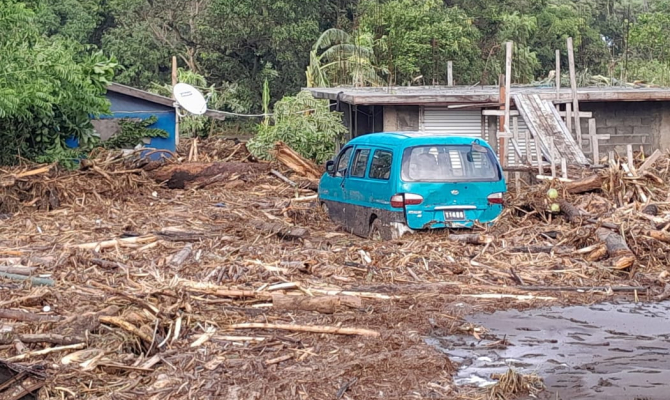
Vanuatu has cemented its place as a Pacific and global frontrunner in climate action, becoming the first Pacific Island nation to adopt a national Loss and Damage policy with a detailed 10-year Implementation Roadmap.
Speaking at the Climate-Induced Pacific Regional Loss and Damage Dialogue in Apia, Samoa, Vanuatu climate change and marine conservation expert, Dr Christopher Bartlett outlined how the policy addresses the most urgent and complex climate challenges—ranging from slow-onset impacts and non-economic losses, to research, finance, and governance.
“The policy sets out a range of targets and actions which address slow-onsetting path, non-economic losses and damages, research, finance, and everything Vanuatu is planning to do in the next 10 years,” Dr Bartlett told nearly 100 delegates from across the Pacific.
Hosted by the Secretariat of the Pacific Regional Environment Programme (SPREP) in partnership with Climate Analytics, the week-long dialogue brings together Pacific governments, civil society, academia, NGOs, and the private sector to advance regional priorities on Loss and Damage.
Dr Bartlett praised the strong governance and institutional innovation of Pacific Island countries, noting that many have embedded Loss and Damage targets into their Nationally Determined Contributions (NDCs) under the Paris Agreement.
However, he also issued a stark reminder: “Are those NDCs enough? Are they actually lowering greenhouse gas emissions to the level we need, to keep us below 1.5°C? The signs are not showing that action is forthcoming.”
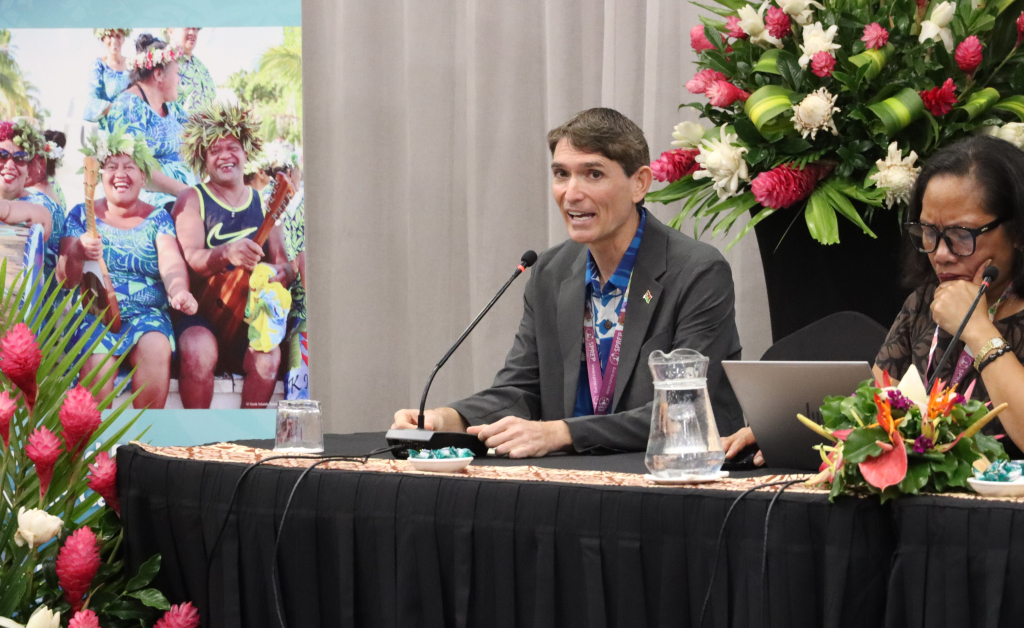
He added that Vanuatu’s upcoming NDC, set for release within weeks, will earmark 45% of its climate finance needs for Loss and Damage.
“We need every country to show their highest ambition,” Dr Bartlett said. “The Pacific has a real chance to make the world see Loss and Damage as an integral part of NDCs.”
The Paris Agreement (Article 4) requires each Party to prepare, communicate, and maintain successive NDCs to reduce emissions and adapt to climate change impacts. But for the Pacific, Dr Bartlett stressed, leadership must also mean justice.
“We are at the cutting edge of innovation, leadership, advocacy, and motivation—but that’s not enough,” he said. “We must ensure our people stop carrying the burden of Loss and Damage, and that those responsible are held accountable.”
The Pacific Regional Loss and Damage Dialogue 2025 aims to deepen understanding and awareness of Loss and Damage in the Pacific, showcase good practices and tackle challenges in emerging initiatives, boost the capacity of governments, civil society, and the private sector to access funding and technical support and identify viable pilot projects tailored to Pacific realities.
It also aims to amplify Pacific voices globally, ensuring the lived realities of communities drive decision-making.
As climate change intensifies, Vanuatu’s pioneering policy could become a blueprint for other nations, reinforcing the Pacific’s moral authority in climate negotiations and its demand for climate justice.
“The Pacific has some of the most ambitious NDCs in the world,” Dr Bartlett said. “Now, we must turn ambition into action—and hold those responsible accountable.”
The Pacific Regional Loss and Damage Dialogue 2025 is held from 11-12 August at Taumeasina Island Resort. It follows the inaugural Pacific Youth Dialogue on Loss and Damage, held from 7- 8 August, at the same venue in Samoa.
The Pacific Regional Loss and Damage Dialogue 2025 and the inaugural Pacific Youth Dialogue on Loss and Damage are made possible with funding support from the Loss and Damage Capability and Capacity (LDCC) Project with the Government of New Zealand.
Hosted by the Secretariat of the Pacific Regional Environment Programme (SPREP), the dialogues bring together Pacific governments, youths, civil society, academia, NGOs, and the private sector to collectively advance the region’s priorities on Loss and damage.
This story was produced by the Pacific Media Team covering the meetings. Their attendance is made possible with funding support from the Loss and Damage Capability and Capacity (LDCC) Project with the Government of New Zealand.
For more information, please contact SPREP Climate Change Adaptation Adviser, Ms Filomena Nelson filomenan@sprep.org , SPREP Climate Change Loss and Damage Officer, Ms Jessica Rodham jessicar@sprep.org or Media and Public Relations Officer, Mr Keni Lesa sosikenil@sprep.org
Photo credit Main photo: VBTC