

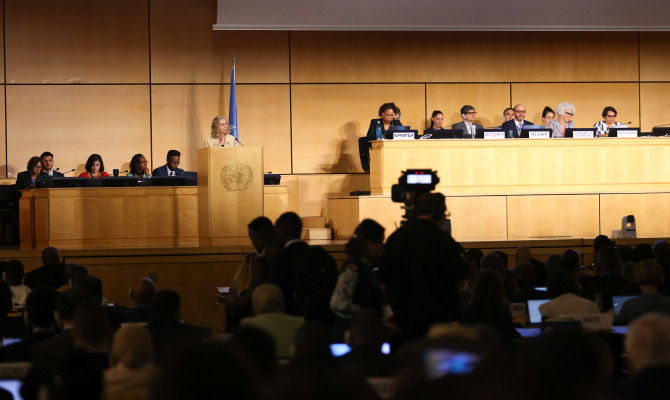
Inside the historic halls of the former League of Nations, the birthplace of modern multilateralism, delegates from around the world reconvened today for the final global plastic treaty negotiations, a once-in-a-generation opportunity to tackle the plastic crisis.
Opening the second part of the fifth session of the Intergovernmental Negotiating Committee (INC-5.2), Chair Ambassador Luis Vayas Valdivieso of Ecuador reminded delegates of the monumental task before them.
“For the first time in history, the world is within reach of a legally binding international instrument to end plastic pollution,” said Ambassador Valdivieso. “We are facing a global crisis. Plastic pollution is destroying ecosystems, contaminating our oceans and rivers, threatening biodiversity, endangering human health, and placing an unfair burden on the world’s most vulnerable. The urgency is real.”
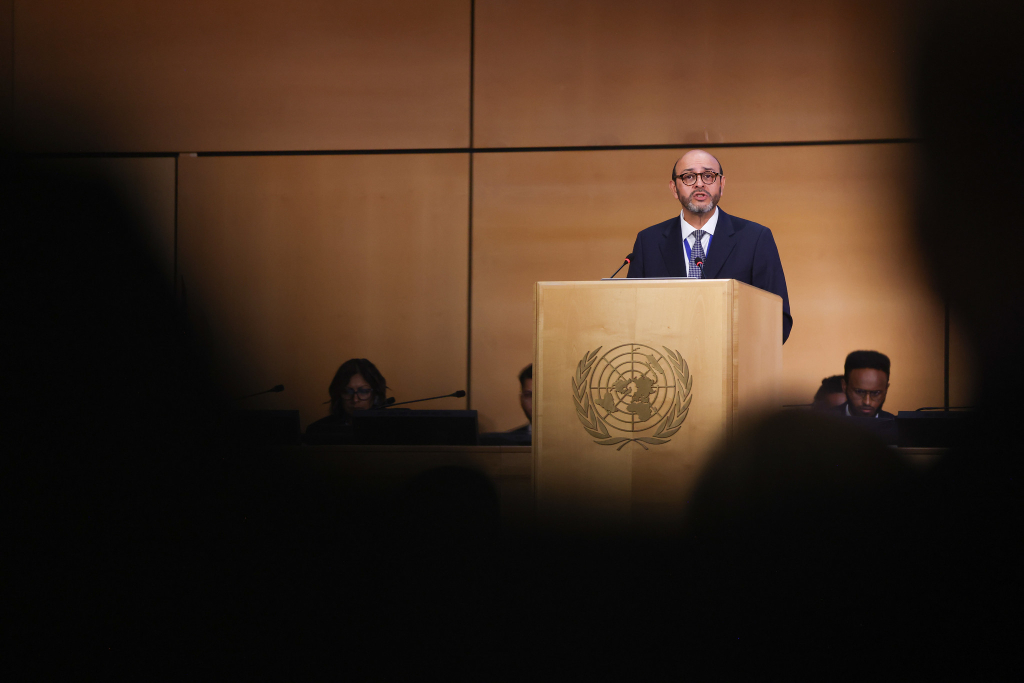
More than 3,700 participants from 184 countries are attending the negotiations at the Palais des Nations in Geneva, Switzerland, including a strong delegation of Pacific Small Island Developing States (PSIDS), who continue to lead calls for a high ambition treaty that addresses the full lifecycle of plastics.
The previous session, held in Busan, South Korea in November last year, ended in a deadlock, prompting the committee to suspend talks and reconvene in 2025. Since then, a series of informal ministerial meetings, regional consultations, and Heads of Delegations meetings have sought to bridge differences on key issues.
Some of these contentious issues include whether the treaty should cover the full life cycle of plastics; not just plastic waste; how to regulate chemicals of concern in plastic products; and what level of finance and support will be provided to developing countries, especially for SIDS.
In a written statement submitted to the plenary, the Alliance of Small Island States (AOSIS), representing the interests of the 39 small island and low-lying coastal developing states, made a firm call for a treaty rooted in accountability, ambition, and action.
“The clock is now ticking louder. The final treaty must match the urgency felt every day on SIDS ocean and coastlines - and deliver the ambition, funding, and international cooperation needed to turn the tide,” the statement said.
The plastic pollution crisis has placed Pacific communities at the forefront of impacts despite the region contributing less than 1.3 per cent to global plastic pollution. Plastics wash ashore daily on remote islands and atolls, choke coral reefs, threaten traditional food systems, and infiltrate marine life central to Pacific diets and culture.
PSIDS are calling for a legally binding treaty that addresses the entire lifecycle of plastics—from production to disposal, a cap on plastic production, phasing out of harmful products and toxic chemicals in plastics, and fair and accessible financing mechanisms to support implementation.
The Executive Director of United Nations Environment Programme, Ms Inger Andersen urged negotiators to rise above divisions and act collectively.
“Plastic pollution is already in nature, in our oceans and even in our bodies,” she said.
“If we continue on this trajectory, the whole world will be drowning in plastic pollution – with massive consequences for our planetary, economic and human health. But this does not have to be our future. Together, we can solve this challenge. Agreeing a treaty text is the first step to beating plastic pollution for everyone, everywhere.”.
Speaking from the UN building with clear views of the Alps, she added, “when you walk a precarious path, you walk together. And indeed, you are bound together as you navigate this path. Because the only way to reach the destination is by going together.”
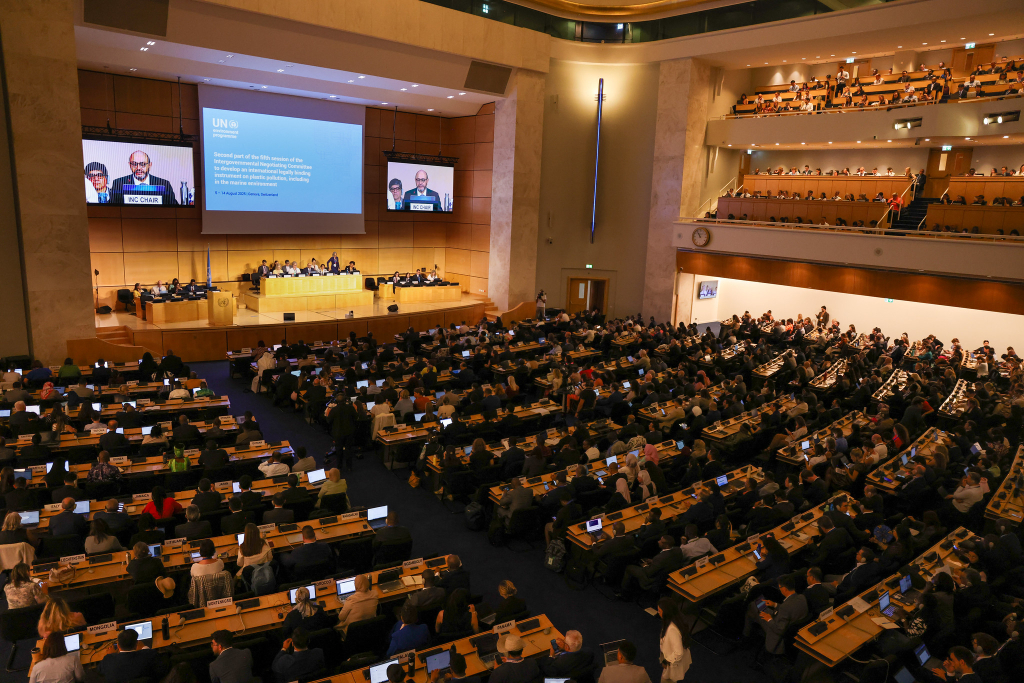
Ms Jyoti Mathur-Filipp, the Executive Secretary of the INC, invoked the symbolic weight of the venue as she urged negotiators to seize this historic moment.
"What was set in motion in Nairobi has weathered complexities, moments of challenge, and hard-won progress—and it is precisely this shared endurance that strengthens our resolve and brings us, determined and forward-looking, to this historic hall today," she said.
"Being hosted at the Palais des Nations situates INC‑5.2 within a long tradition of crucial multilateral negotiations, diplomatic breakthroughs, and international legal frameworks. It is essential that this session now be part of that legacy."
IN-5.2 takes place from 5 – 14 August, follows INC 5, which took place in November/December 2024 in Busan, Republic of Korea. That meeting was preceded by four previous sessions: INC-1, which took place in Punta del Este in November 2022, INC-2, which was held in Paris in June 2023, INC-3, which happened in Nairobi in November 2023, and INC-4, held in Ottawa in April 2024.
The second part of the fifth session of the Intergovernmental Negotiating Committee to develop an international legally binding instrument on plastic pollution, including in the marine environment (INC-5.2), will take place from 5 to 14 August 2025 at the Palais des Nations in Geneva, Switzerland.
The Pacific Islands are represented by the Cook Islands, Federated States of Micronesia, Fiji, Kiribati, Marshall Islands, Nauru, Niue, Palau, Papua New Guinea, Samoa, Solomon Islands, Tonga, Tuvalu and Vanuatu through the support of the Government of Australia through the Pacific Ocean Litter Project (POLP), and the United Nations.
They are supported by the Secretariat of the Pacific Regional Environment Programme (SPREP), working with partners from the Pacific Islands Forum Secretariat (PIFS), Office of the Pacific Ocean Commissioner (OPOC), The Pacific Community (SPC), Forum Fisheries Agency (FFA), Environmental Investigation Agency (EIA), Centre for International Environmental Law (CIEL), University of Wollongong, WWF and Massey University.
Photos: UNEP