

By Inoke Rabonu, Fiji Sun
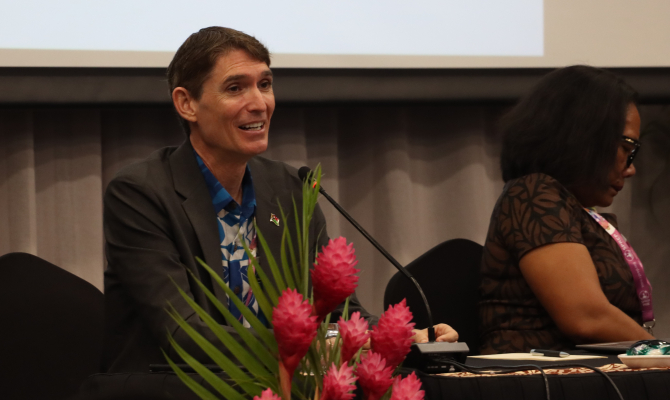
Pacific nations must wield the landmark climate ruling from the International Court of Justice (ICJ) “in every international forum” to hold major polluters accountable, says Vanuatu climate change and marine conservation expert, Dr Christopher Bartlett.
Speaking just weeks after the unanimous ICJ advisory opinion was released on July 23, Dr Bartlett said it provided “one of the most authoritative decisions on international law ever given, and it’s on climate change, loss, and damage.”
Addressing a room full of climate change experts at the Pacific Regional Loss and Damage Dialogue 2025 currently held in Samoa, he said the advisory opinion must be fully utilised for our benefit.
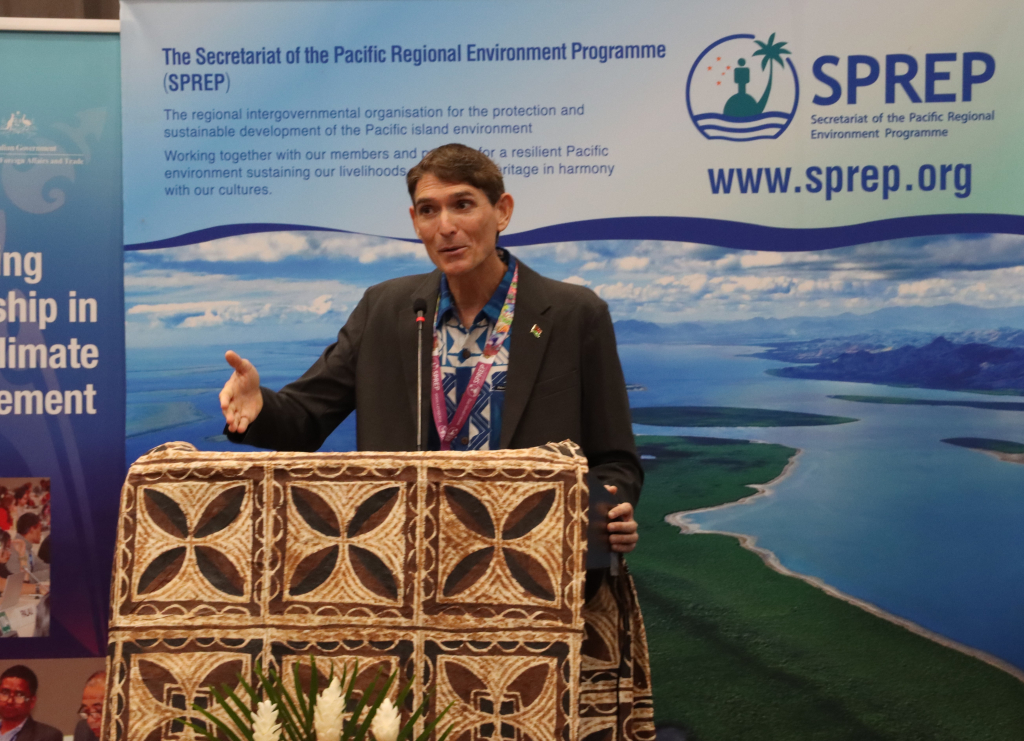
“This advisory opinion is by us, for us, and must be used for the benefit of our Pacific Island people,” Dr Bartlett said.
“Use this advisory opinion, use those words, use that clarity in every international forum that we attend, whether it’s the climate negotiations, the Human Rights Council, or the COPs.”
The ICJ opinion sets new legal ground, declaring that the 1.5°C warming limit was now part of binding international law and warning that failure to act, this is including through fossil fuel production, consumption, exploration licenses, or subsidies.
The advisory opinion states that this “may constitute an internationally wrongful act” attributable to states.
“Does it get clearer than that? Fossil fuels are responsible for loss and damage and states must be held accountable and can be held accountable,” Dr Bartlett stated.
He stressed that the ruling also confirms states cannot submit weak or discretionary Nationally Determined Contributions (NDCs) under the Paris Agreement.
“It makes it clear that any breaches of obligations may give rise to the entire panoply of legal consequences, including reparation, restitution, compensation, and satisfaction.”
Dr Bartlett urged Pacific nations to embed the opinion’s legal clarity into domestic policies, plans, and budgets, and to prepare for both cooperation and, if necessary, litigation.
“What Vanuatu wanted from this advisory opinion was clarity so that people, countries, states are making better decisions. Strategic litigation is a worst-case scenario, but if countries don’t take on board what the advisory opinion says, it remains an option.”
Looking ahead, Dr. Bartlett stated that Pacific leaders should deliver “one of the most ambitious statements the world has ever seen on loss and damage” at this year’s Pacific Islands Forum in Solomon Islands, using the advisory opinion as their foundation.
“If the money is not available, we will continue to lose this battle,” he warned.
“Our communities are depending on us for real actions and new solutions for the impacts they have been facing and that are going to get a lot worse,” he told policymakers.
The Pacific Regional Loss and Damage Dialogue 2025 is held from 11-12 August at Taumeasina Island Resort. It follows the inaugural Pacific Youth Dialogue on Loss and Damage, held from 7- 8 August, at the same venue in Samoa.
The Pacific Regional Loss and Damage Dialogue 2025 and the inaugural Pacific Youth Dialogue on Loss and Damage are made possible with funding support from the Loss and Damage Capability and Capacity (LDCC) Project with the Government of New Zealand.
Hosted by the Secretariat of the Pacific Regional Environment Programme (SPREP), the dialogues bring together Pacific governments, youths, civil society, academia, NGOs, and the private sector to collectively advance the region’s priorities on Loss and damage.
This story was produced by the Pacific Media Team covering the meetings. Their attendance is made possible with funding support from the Loss and Damage Capability and Capacity (LDCC) Project with the Government of New Zealand.
For more information, please contact SPREP Climate Change Adaptation Adviser, Ms Filomena Nelson filomenan@sprep.org , SPREP Climate Change Loss and Damage Officer, Ms Jessica Rodham jessicar@sprep.org or Media and Public Relations Officer, Mr Keni Lesa sosikenil@sprep.org