

13 August 2025, Busan, Republic of Korea – Pacific communities are among the most vulnerable to the ongoing impacts of climate change, finding themselves at the frontlines of climate change-induced severe weather events which threaten their lives and livelihoods.
The need for timely and reliable climate predictions is vital and can aid in preparing Pacific communities for upcoming climate challenges. Pacific National Meteorological and Hydro-logical Services (NMHSs) play a pivotal role in providing these services; however, they face significant challenges due to limited skilled staff, resources, and infrastructure.
The Republic of Korea is once again lending its support to build more resilient Pacific communities in the face of these threats, through a project that will enhance the capacity of Pacific NMHSs to produce and utilise high-quality climate prediction information.
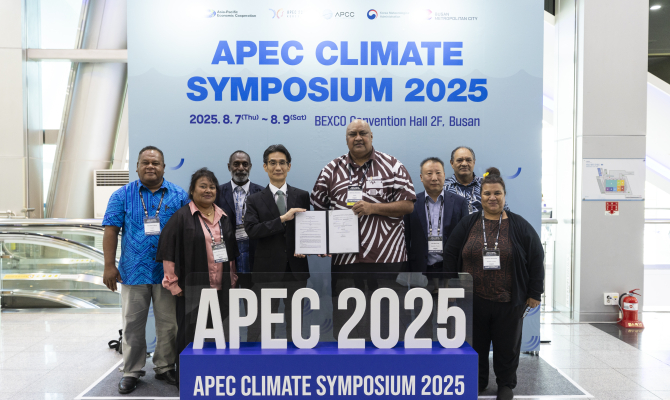
A Letter of Agreement (LoA) for the third phase of the Republic of Korea-Pacific Island Climate Prediction Services (ROK-PI CliPS 3) was signed last week during the APEC Climate Symposium 2025 between the APEC Climate Centre (APCC), Seoul National University (SNU), the Secretariat of the Pacific Regional Environment Programme (SPREP), and the Pacific Islands Forum Secretariat (PIFS).
The ROK-PI CliPS 3 project continues from ROK-PI CliPS 2 which concluded in 2023 and will aim to improve the Pacific Islands Tailored Climate Prediction System (PICASO) to provide more detailed and applied climate prediction information to support national decision-making processes.
SPREP’s Director General, Mr. Sefanaia Nawadra, as well as Directors of Pacific NMHSs were present at the signing in Busan and expressed their sincere appreciation to the Government of the Republic of Korea for their continued allyship to the Pacific, and to PIFS for facilitating this partnership with Pacific island countries. This will complement climate activities delivered through the Climate and Oceans Support Program in the Pacific (COSPPac) supported by SPREP.
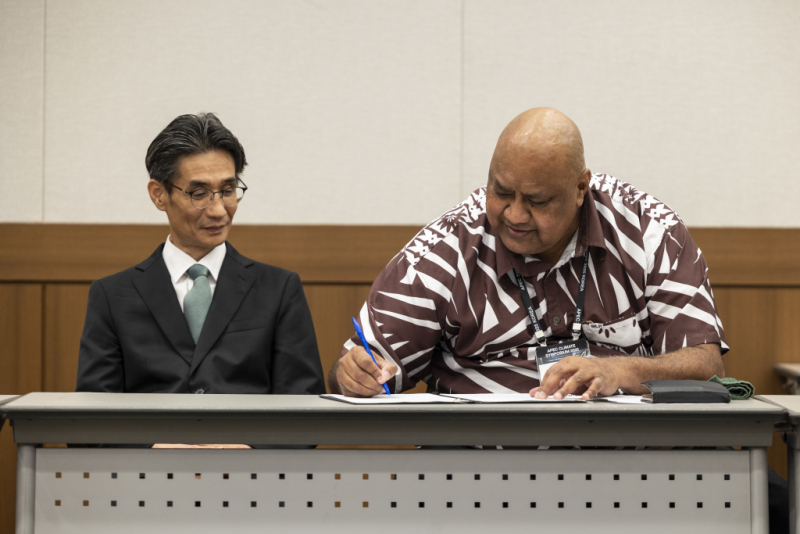
“This work will be key in developing tools that will support the capacity of our Pacific NMHSs to better analyse climate information and will also contribute to the work of the Pacific Regional Climate Centre, of which SPREP is the Secretariat, and APCC is also a member.” Mr. Nawadra said.
“This agreement comes at a most opportune time, as our Pacific Met Directors are meeting to scope the development of the new Pacific Island Meteorological Strategy that will guide their work over the next ten years. This agreement and our continued partnership with the Government of the Republic of Korea, APCC and SNU all contribute to mapping a way forward towards a more resilient Pacific,” he added.
The Project will be implemented over a period of four years by APCC, SNU and SPREP as joint implementing agencies, through funding directed through the Republic of Korea-Pacific Islands Forum Cooperation fund managed by PIFS.
PIFS Secretary General, Mr. Baron Waqa, said, “In alignment with the goals of the Implementation Agreement, this strategic collaboration between APCC, SNU and SPREP is poised to enhance regional capacity and drive forward sustainable climate resilience efforts across the fourteen Pacific islands”
“Together, we are investing in long-term sustainable solutions that empower communities and safeguard the region’s future against climate challenges,” he added.
The Project will directly benefit 14 Pacific island countries, namely Cook Islands, Federated States of Micronesia, Fiji, Kiribati, Republic of Marshall Islands, Nauru, Niue, Palau, Papua New Guinea, Samoa, Solomon Islands, Tonga, Tuvalu, and Vanuatu.
For more information, please contact Mr. Salesa Nihmei, Director – Climate Services and Information Programme, at salesan@sprep.org or media@forumsec.org.