

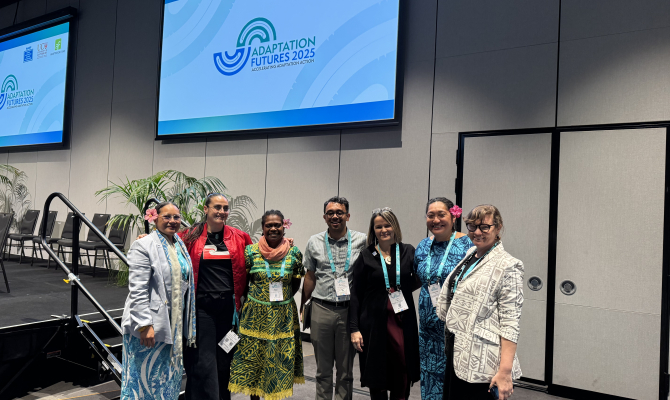
15 October 2025, Christchurch, New Zealand – A key to enhancing climate resilience lies within our Pacific communities, as demonstrated time and again through innovative practices rooted in traditional and cultural knowledge.
This message was at the heart of a Talanoa session hosted by the Climate and Oceans Support Program in the Pacific (COSPPac), Earth Sciences New Zealand, the Secretariat of the Pacific Regional Environment Programme (SPREP), Pattle Delamore Partners Ltd, and the Vanuatu Meteorological and Geohazards Department, held during the Adaptation Futures Conference in Christchurch.
Across the Pacific, countries are turning to ancestral wisdom to adapt to a changing climate. From Aotearoa New Zealand to Niue and Vanuatu, communities are reclaiming traditional knowledge and combining it with modern science to build a stronger, more resilient future.
The COSPPac programme, funded by the Governments of Australia and New Zealand, developed the foundational processes and protocols that many projects have built on to expan on the work on traditional knowledge.
In Vanuatu, the Vanuatu Climate Services for Resilient Development project known in Bislama as Vanuatu Klaemet Infomesen blong Rediness, Adapt mo Protekt (Van-KIRAP) has been instrumental in bringing this vision to life. Managed by SPREP and the Vanuatu Meteorology and Geohazards Department (VMGD), and funded by the Green Climate Fund, Van-KIRAP is leading the way in integrating traditional knowledge into climate and weather observations.
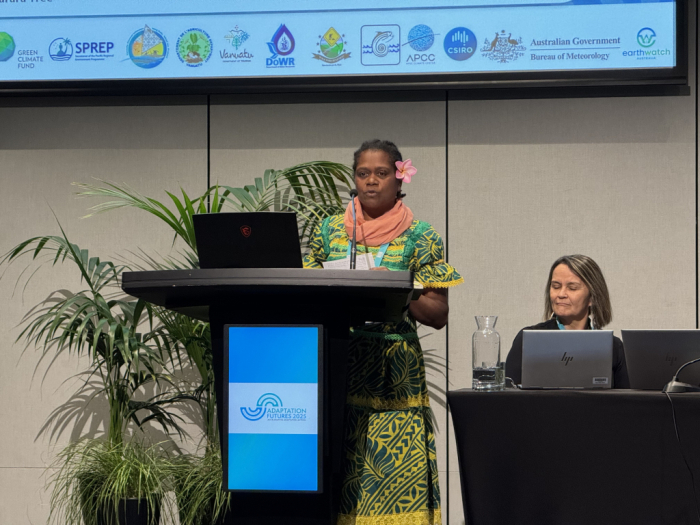
Ms. Moirah Matou, Van-KIRAP Project Manager, shared, “The Van-KIRAP project has given us the opportunity to build on the COSPPac work on traditional knowledge and expand this to all six provinces in Vanuatu, looking through the climate lens at what our ancestors used to do and what our communities are already using to prepare for disasters.”
One example of such knowledge is the nesting behaviour of sea turtles. Ni-Vanuatu communities believe that when turtles lay their eggs further inland, it signals an active cyclone season ahead. Conversely, when eggs are laid closer to the sea, it suggests a quieter season with no tropical cyclones.
Inspired by indicators like this, the project has taken proactive steps to preserve and promote traditional knowledge. Over 50 indicators from across Vanuatu have been compiled into a Traditional Knowledge Indicator Booklet. Additionally, a Vanuatu Traditional Knowledge curriculum has been developed and is currently being piloted in selected schools, with the goal of integrating it into the national curriculum through collaboration with the Department of Education.
“In order to have transformative and adaptable change with our younger generation, we need to go as far as the education system,” Matou said.
In Niue, Ms. Rossy Mitiepo, Director of the Niue Meteorological Service, has adopted a similar approach engaging communities through traditional knowledge to deepen their understanding of weather and climate science. This strategy not only improved comprehension but also strengthened community ownership of climate adaptation efforts.
After receiving feedback that scientific information was too complex and not widely understood, her team shifted their approach. They worked directly with the Niue Girls Brigade, Boys Brigade, and church youth and women’s groups, creating culturally grounded spaces for knowledge exchange. “Once we did that, the communities couldn’t stop talking. They had so many stories to share,” Ms. Mitiepo said.
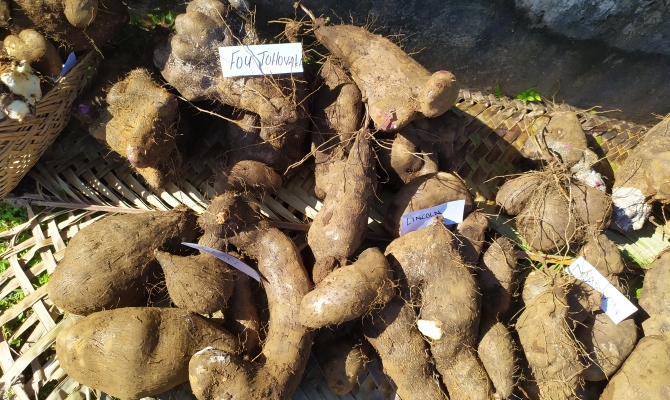
One of the most successful initiatives has been the Yam Project, supported by the Niue Meteorological Service and COSPPac. The brigades planted yam plots and observed vine growth as an indicator of cyclone activity in the upcoming season. This method not only enhanced understanding but also fostered deeper community engagement in climate resilience.
In Aotearoa, Ms. Milly Grant-Mackie, a PhD candidate at the University of Auckland, is researching coastal adaptation and the impacts of sea level rise on her marae and other coastal marae. Hearing about the work of Pacific communities at the conference inspired her to share her own research more widely.
“I created a digital elevation model and flooded it with different sea level rise projections to make maps. When I showed my whanau, they were already aware it was happening. Some have lost land to the sea, others their homes,” she said.
“Now that I’m doing my PhD and being at this conference, talking to other like-minded people about how we can share what we’re doing, I’m inspired to take this mahi outside of my own community and share it with others as well.”
At the conclusion of the session, Ms. Siosinamele Lui reflected, “In the Pacific, we are losing our elders faster than we are recording their wisdom.” Initiatives like those led by Niue and Vanuatu ensure that traditional knowledge is preserved, celebrated, and passed down through generations laying the foundation for a climate-resilient future.
For more information, please contact Ms. Siosinamele Lui at siosinamelel@sprep.org.