

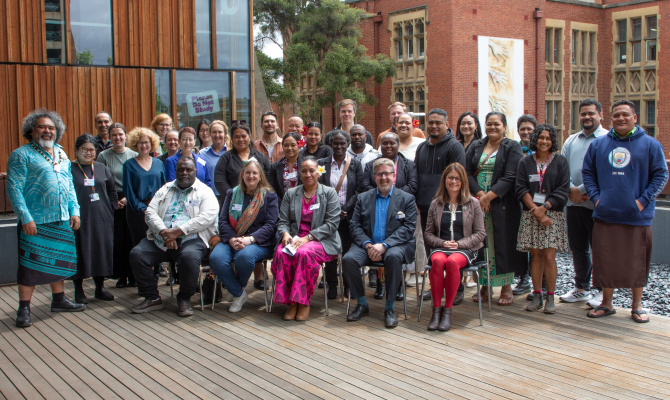
The AUD 4.8 Million PAVE-Health Project – Pacific Action to Enhance the Visibility of Evidence on Health and Climate Impacts was launched in October. The Project is coordinated by the Pacific Climate Change Centre (PCCC) hosted at the Secretariat of the Pacific Regional Environment Programme (SPREP) in partnership with the University of Melbourne in close collaboration with PAVE Project countries - Federated States of Micronesia, Kiribati, Samoa, and the Solomon Islands. PAVE is the first Pacific project funded by the Wellcome Trust, a global charitable trust based in London, UK.
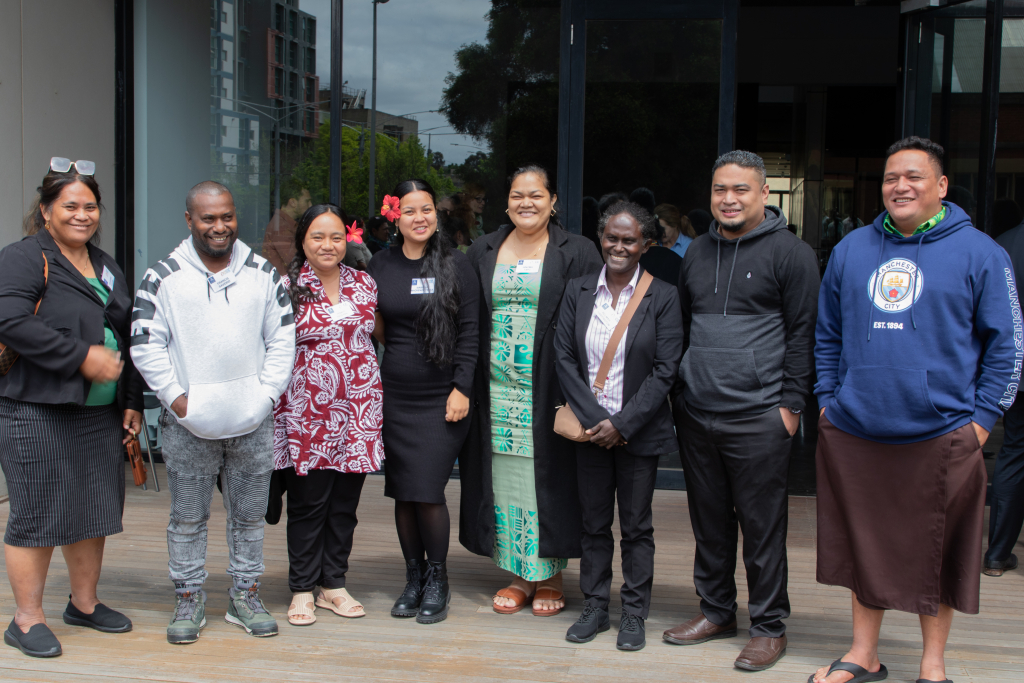
The official launching ceremony of a three-year research project was followed by the commencement of a five-day Training of Trainers for master trainers which was attended by more than 25 guest speakers, experts, and representatives from the four participating countries representing the health, climate change, and research sectors. This will strengthen participants’ capacity to interpret, communicate, and apply scientific evidence on the impacts of climate change on health, and to train others within their respective institutions and countries. It supports sustainable knowledge transfer, promotes collaboration across sectors, and ensures the effective use of data and evidence in national policy and planning processes.
Professor Alastair Sloan, Pro Vice-Chancellor (International) of the University of Melbourne, reaffirmed the University’s commitment to advancing global collaboration in addressing shared challenges. “The University of Melbourne remains dedicated to contributing to collective efforts to address critical global issues such as climate change. Through research partnerships like PAVE-Health, we aim to accelerate the translation of knowledge into policy and practice, and to deliver outcomes that make our world more resilient, inclusive, and sustainable,” said Professor Sloan.
Ms. ‘Ofa Kaisamy, Manager of the PCCC, on behalf of the Director General of SPREP acknowledged the importance of the collaborative approach underpinning the project. “This project provides an opportunity to deepen our collective understanding of the health climate interface and to strengthen regional collaboration. Together, we will review progress across the three work packages of the project, identify opportunities for broader engagement, and chart pathways for sustainable action. The spirit of partnership that defines PAVE-Health will continue to drive meaningful outcomes for Pacific health and climate resilience,” said Ms. Kaisamy.
Professor Kathryn Bowen, Project Lead and climate health expert from the University of Melbourne, underscored the strength and continuity of the partnership between the University and the Pacific Climate Change Centre. “This collaboration reflects a long-term commitment to building capacity and generating evidence in the Pacific. What began as an online training initiative during the COVID-19 pandemic has evolved into a regional partnership that mobilises expertise and supports member countries to respond effectively to climate and health challenges,” said Professor Bowen. Professor Bowen highlighted that the workshop provides a safe and inclusive platform for participants to share experiences, exchange knowledge, and co-design practical interventions aligned with national priorities and local realities.
The PAVE-Health Project addresses a crucial intersection between climate change and health in the Pacific. The region faces an increasing burden of non-communicable diseases, which are exacerbated by climate-induced factors such as rising temperatures, changing food systems, water insecurity, and the increased frequency of extreme weather events. By enhancing the visibility and accessibility of scientific evidence, PAVE-Health seeks to strengthen data-driven decision-making and inform the design of adaptive responses that safeguard Pacific communities.
The launch of the PAVE-Health Project signifies an important milestone in advancing regional cooperation, innovative partnership and evidence-based policy action at the climate health nexus. It reflects a shared vision among partners to strengthen resilience, empower national institutions, and ensure that Pacific-led solutions remain at the forefront of global climate and health dialogues.