

6 November 2025, Belem Brazil - COP30, billed as the “COP of truth” by host country Brazil, must be a space for the world to assess where we are, recommit to achieve the Paris Agreement’s temperature goal of 1.5, and develop a plan to ramp up action to address climate change.
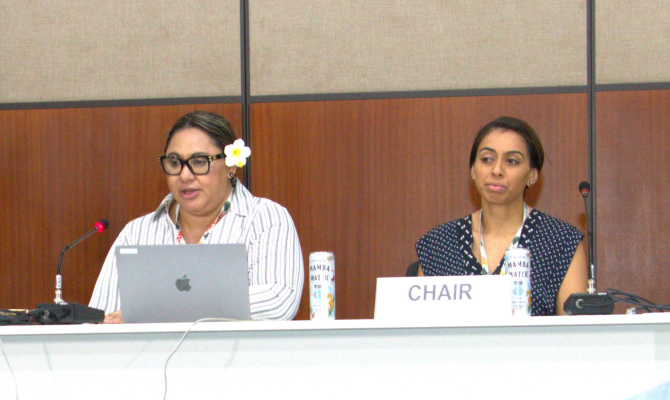
As climate negotiators converge on Belem, a city on the northwest of Brazil considered the gateway to the Amazon region for COP30, the Alliance of Small Island States (AOSIS) made the point on the first day of the Small Island Developing States (SIDS) Preparatory Meeting, facilitated by AOSIS, currently chaired by the Government of Palau.
“The fact that in 2024 global warming reached 1.5oC is a warning. We are dangerously close to overshoot unless deep rapid cuts to emissions are made quickly,” said Ms Galumalemana Anne Rasmussen, AOSIS Lead Climate Negotiator.
“To remain as close as possible to the 1.5 °C limit, emissions must fall by roughly 45–50% by 2030, reaching net-zero around 2050.
“The importance of the 1.5C limit is reinforced by the International Court of Justice’s Advisory Opinion on Climate Change (ICJ AO) which also outlines the obligations of states to align their policies and actions with the Paris Agreement's 1.5°C limit.
“Any overshoot of 1.5°C, even temporary, is catastrophic for us. It pushes us closer to tipping points that science says we may never return from. Every fraction of a degree of warming counts.”
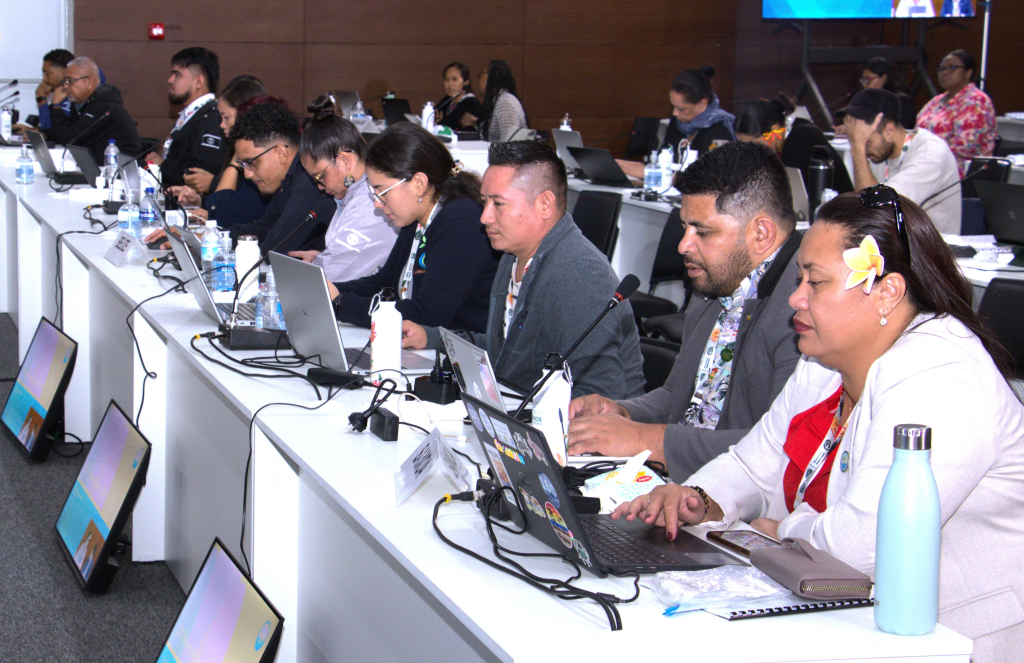
Pacific delegations are amongst leaders, climate change negotiators, government officials, scientists, and civil society gathering in Belém, Brazil, to discuss priority actions to tackle climate change. The meeting from 10-21 November focusses on efforts needed to limit the global temperature increase to 1.5°C, the presentation of new national action plans (NDCs) and the progress on the finance pledges made at COP29.
“We expect to make progress across the agenda on mitigation, adaptation, and loss and damage, along with the necessary finance, technology, and capacity building. We have a number of mandated discussions that we need to take forward,” added Ms Rasmussen.
“We remain optimistic and look forward to convincing our colleagues in Belém of the necessity of creating a space on NDCs.”
Since 1990, AOSIS has represented the interests of the 39 small island and low-lying coastal developing states in international climate change, sustainable development negotiations and processes. As a voice for the vulnerable, its mandate is more than amplifying marginalised voices as it also advocates for these countries’ interests. At COP30, AOSIS vowed to continue this work.
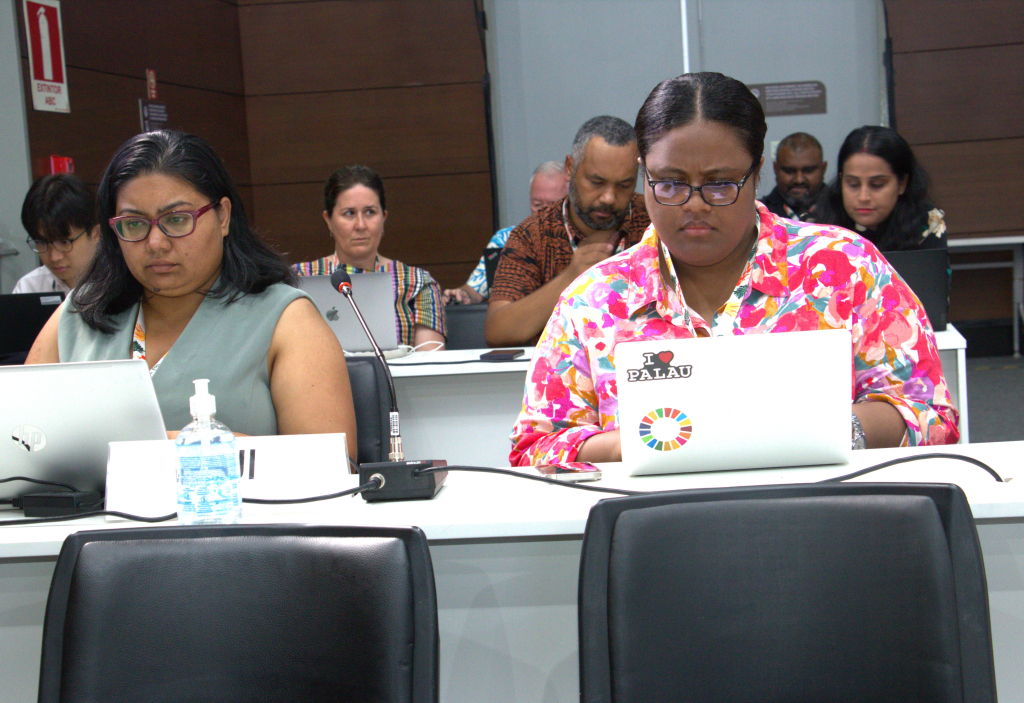
On the first day of the two-day meeting, AOSIS leads on different priority thematic areas provided updates for the membership, as they look to finalise positions and areas of convergence on the eve of two weeks of climate change negotiations.
The AOSIS membership also heard from the office of the COP30 Presidency, who assured the delegates of their intention to support the fight to keep 1.5 alive.
While SIDS gathered at the Hangar Convention Center, Belem, on the other side of town at the Parque da Cidade, heads of state and government, ministers, and leaders of international organisations met to discuss pressing climate change challenges and commitments.
Convened by Brazilian President, Luiz Inácio Lula da Silva, UN Secretary-General, Mr Antonio Guterres, used the opportunity echo the call that even a temporary overshoot of 1.5 will have dramatic consequences.
“President Lula, you have called this the COP of truth,” said Mr Guterres. “I could not agree more. The hard truth is that we have failed to ensure we remain below 1.5 degrees.
“Science now tells us that a temporary overshoot beyond the 1.5 limit – starting at the latest in the early 2030s – is inevitable. We need a paradigm shift to limit this overshoot’s magnitude and duration and quickly drive it down. Even a temporary overshoot will have dramatic consequences.
“It could push ecosystems past irreversible tipping points, expose billions to unlivable conditions, and amplify threats to peace and security.
“Every fraction of a degree means more hunger, displacement, and loss – especially for those least responsible. This is moral failure – and deadly negligence.”
COP30, Mr Guterres said, COP30 must ignite a decade of acceleration and delivery.
President Luiz Inácio Lula da Silva, agrees.
“If we fail to move beyond speeches into real action, our societies will lose faith – not only in the Cops, but in multilateralism and international politics more broadly,” he said.
“That is why I have summoned leaders to the Amazon: to make this the “Cop of truth”, the moment we demonstrate the seriousness of our shared commitment to the planet.
“Humanity has shown its ability to overcome great challenges when it acts together and is guided by science. We protected the ozone layer. The global response to the Covid-19 pandemic proved that the world can act decisively when there is courage and political will.”
he 30th Conference of the Parties to the UN Framework Convention on Climate Change (UNFCCC) is taking place from 10-21 November 2025 in Belem, Brazil.
It is being attended by Pacific leaders and their delegations, who are advocating for the survival of Pacific communities who continue to be at the forefront of climate change impacts.
Support for our Pacific Islands at COP30 from members of the Council of Regional Organisations of the Pacific (CROP) is through the One CROP mechanism led by the Secretariat of the Pacific Regional Environment Programme.
Members of one CROP include: The Secretariat of the Pacific Regional Environment Programme (SPREP) – Lead, Pacific Islands Development Program, Pacific Islands Forum Fisheries Agency, Pacific Island Forum Secretariat, Pacific Community.
A key part of amplifying the One Pacific Voice at COP30 is the Moana Blue Pacific Pavilion and the Pacific Delegation Office. The Moana Blue Pacific Pavilion at COP30 is a Pacific partnership with the Governments of Australia and New Zealand managed by the Secretariat of the Pacific Regional Environment Programme (SPREP).
The Pacific Delegation Office at COP30 is a Pacific partnership with the New Zealand Government managed by the Secretariat of the Pacific Regional Environment Programme (SPREP).
To learn more about the Pacific at COP30 please visit: https://www.sprep.org/cop30
PHOTO CREDIT: AOSIS/Anderson Liburd