

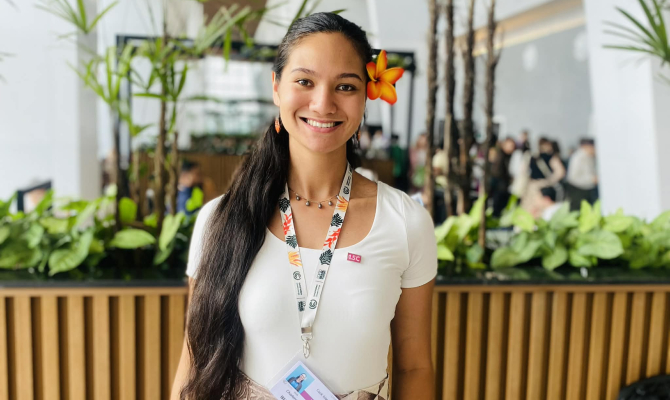
15 November 2025, Belem - The glow of the Conference of the Parties to the UN Framework Convention on Climate Change (UNFCCC) and the complexity of various agenda items can be overwhelming and confusing, even for officials who have been in this space for a long time.
For a young climate change negotiator from Tutakimoa, Avarua, in the Cook Islands, learning the diversity and intricacies of the process, so she can represent her people and community to the best of her ability, is a journey she is happy to embrace.
“I want to ensure my future and that of my family and country is protected and secured.”
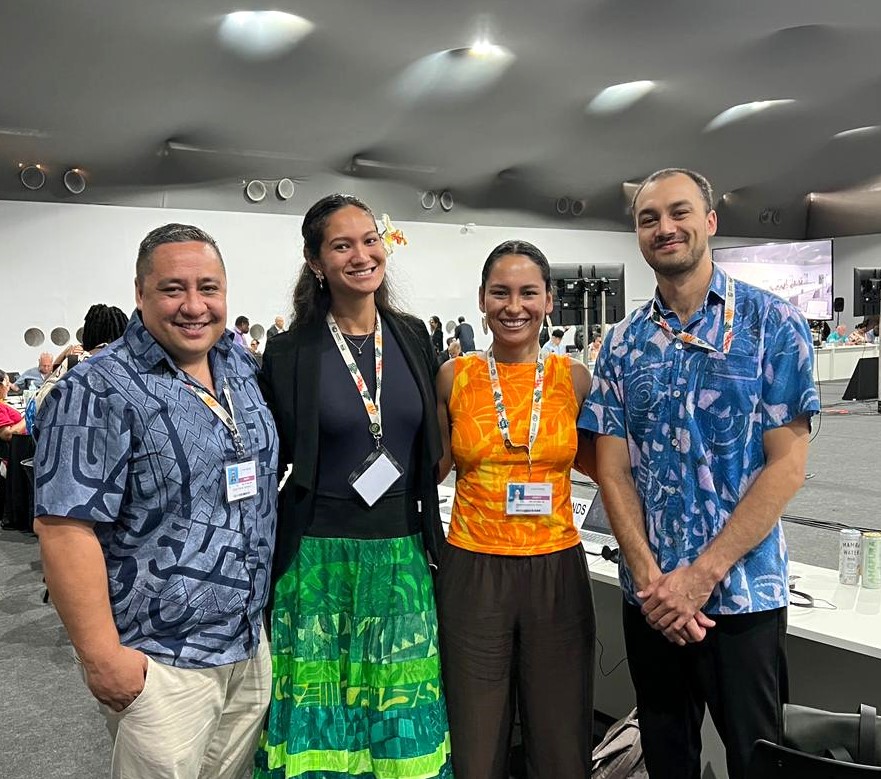
Ms Charlene Akaruru works as the Climate Change Youth Ambassador in the Climate Change Division of the Office of the Prime Minister in the Cook Islands. COP30 in Belem is her second COP, having been introduced to the multilateral process in Baku, Azerbaijan, last year.
“Baku was quite overwhelming for me,” she said. “As a young person, even though this is my second COP, I have come to accept that this is a very complex space where you’ll need some time to get your head around how things work.
“And it’s a journey I’m happy to embrace.”
The 21-year-old, who is a national boxing champion, represents her country in environmental and cultural spaces follows the Adaptation Work stream. A key expectation in Belem is for parties to reach agreement on indicators for measuring progress towards the Global Goal on Adaptation (GGA) that was established in the Paris Agreement. This would be the culmination of a process meant to narrow down a set of 100 indicators that match the 11 targets of the 2023 GGA Framework.
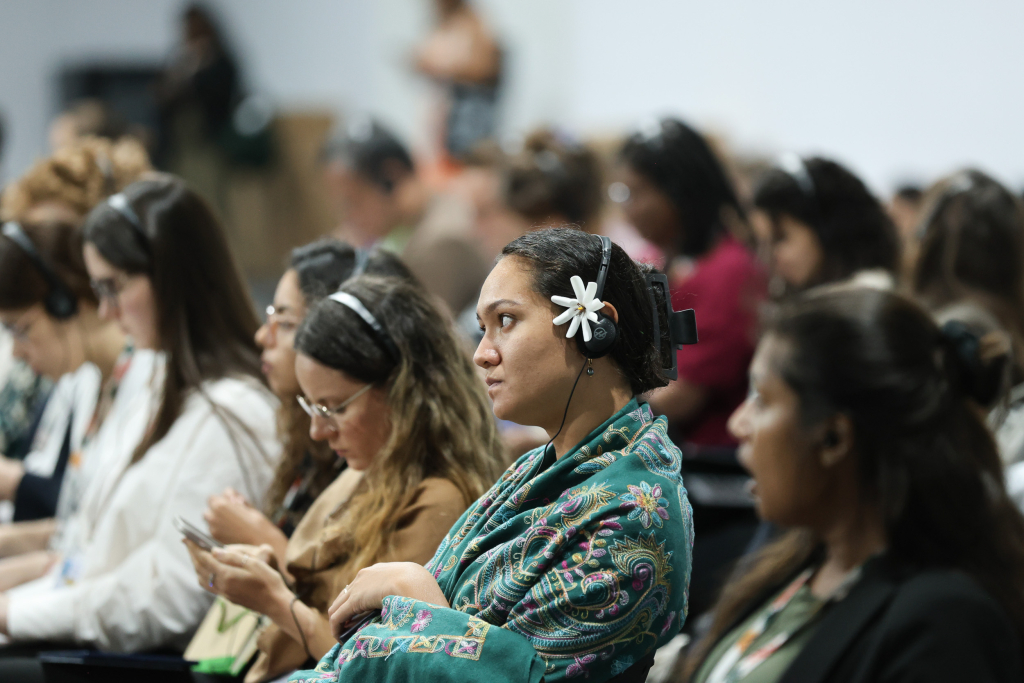
“The challenge is understanding the language of the text, every word has an impact and every letter is negotiated. The details matter in this process and that is a challenge to try and understand the history of the process,” she said.
“But it’s a great opportunity to build my capacity, great exposure to the global stage in terms of negotiations. I have to remind myself that we negotiate in our everyday lives, this is just at a different level.
“I’m enjoying learning and working alongside some of our Pacific negotiators who have been in this space for such a long time and they have so much experience.”
Back home on Rarotonga, Ms Akaruru said they deal with lived reality of climate change daily.
“The impacts of climate change in the Cook Islands are very visible now. We see it on our shorelines being eaten away by rising sea levels, our beaches are becoming smaller, we feel it in the change of temperature, we experience extreme weather events on a more frequent basis now,” she said.
“So coming to this COP space, our job is to share our stories and let these developed and larger countries who are mostly responsible for what is happening know that they have a greater responsibility to help fix this mess. We want to hold them accountable, we want them to feel our vulnerability, and we want them commit to work with us to resolve these issues as our lives are not negotiable.”
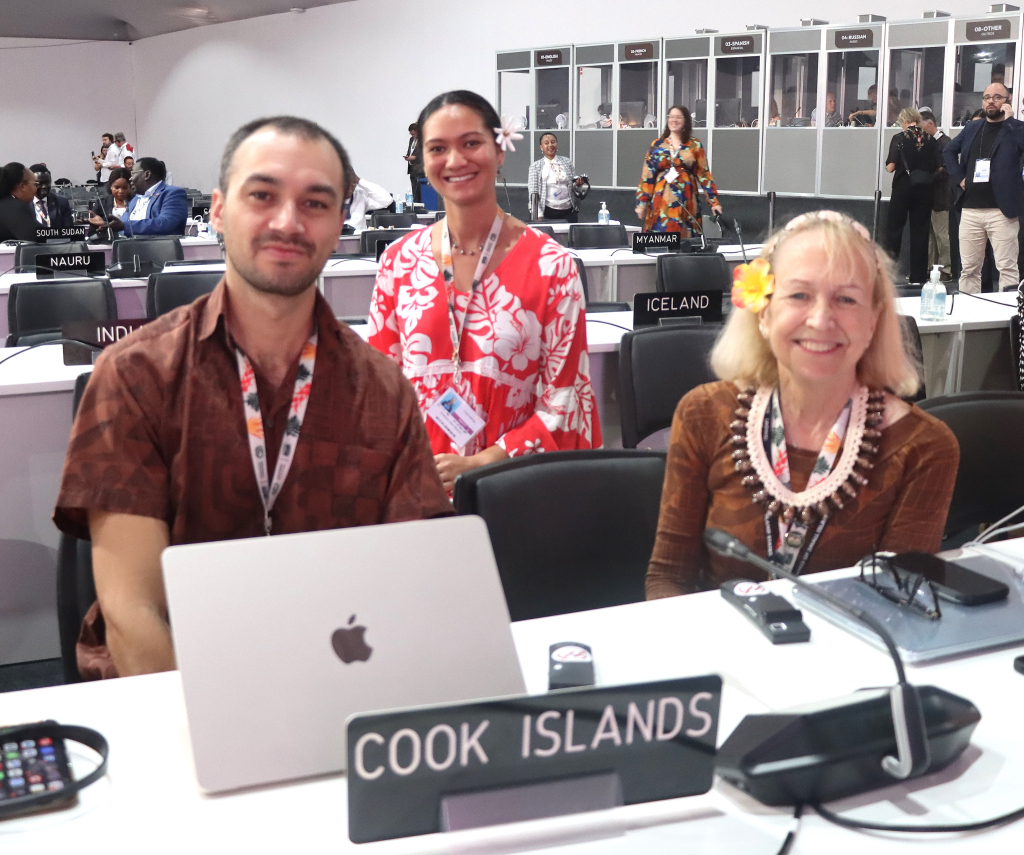
Nationally, and in her role as Climate Change Youth Ambassador, Ms Akaruru and their Division do a lot of work within and driven by the community.
“At the grassroots level back home we try to assist our communities address the impacts of climate change, we focus a lot on implementation of projects, and we raise a lot of awareness to ensure our communities understand these issues.”
On the global stage, Ms Akaruru is committed to building her capacity and working her way to more senior roles in this space.
“My goal in this space is to try and understand it better, then I want to work on how we can get the best outcomes for our Cook Islands community,” she added.
“Further down the line, I’d really like to contribute to ways where we can simplify these processes. It looks and feels so complex to the point where it appears to be creating more problems”.
“I also want to encourage the voice of youth and young people in the environment space, build the capacity of future climate change champions to advocate for us and our priorities nationally, regionally and globally.”
The 30th Conference of the Parties to the UN Framework Convention on Climate Change (UNFCCC) is taking place from 10-21 November 2025 in Belem, Brazil.
It is being attended by Pacific leaders and their delegations, who are advocating for the survival of Pacific communities who continue to be at the forefront of climate change impacts.
Support for our Pacific Islands at COP30 from members of the Council of Regional Organisations of the Pacific (CROP) is through the One CROP mechanism led by the Secretariat of the Pacific Regional Environment Programme.
Members of one CROP include: The Secretariat of the Pacific Regional Environment Programme (SPREP) – Lead, Pacific Islands Development Program, Pacific Islands Forum Fisheries Agency, Pacific Island Forum Secretariat, Pacific Community.
A key part of amplifying the One Pacific Voice at COP30 is the Moana Blue Pacific Pavilion and the Pacific Delegation Office. The Moana Blue Pacific Pavilion at COP30 is a Pacific partnership with the Governments of Australia and New Zealand managed by the Secretariat of the Pacific Regional Environment Programme (SPREP).
The Pacific Delegation Office at COP30 is a Pacific partnership with the New Zealand Government managed by the Secretariat of the Pacific Regional Environment Programme (SPREP).
To learn more about the Pacific at COP30 please visit: https://www.sprep.org/cop30