

18 November 2025, Belem - Pacific island countries might be amongst the hardest hit by climate change impacts but Pacific communities are not lying down.
Tuvalu, one of the smallest Pacific nations, facing the risk of being buried by sea level rise caused by the climate crisis, is showing the way by championing the Pacific’s leadership in climate action and ambition, on the global stage at COP30.
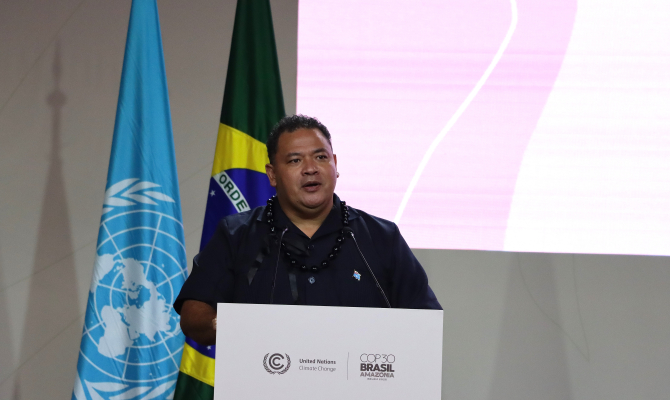
Speaking to world leaders and delegates during the High-Level segment of COP30 in Belem Brazil, Hon. Maina Talia, Tuvalu’s Minister for Home Affairs, Climate Change, and Environment, said the Pacific region continues to come up with innovative solutions to protect our lands, Ocean and people.
Vanuatu's leadership in asking the International Court of Justice (ICJ) for an advisory opinion on climate change, which resulted in a landmark ruling in July 2025, is one example.
“As the recent ICJ Advisory Opinion has shown us, the 1.5 target is not just a political aspiration, but a legal obligation, informed by the best available science from the IPCC,” said Hon. Talia.
“Unless countries NDC targets and real-world action are substantially improved, significant overshoot of 1.5°C will become inevitable with widespread and destructive consequences particularly for the most vulnerable countries and peoples everywhere, including and especially for PSIDS.”
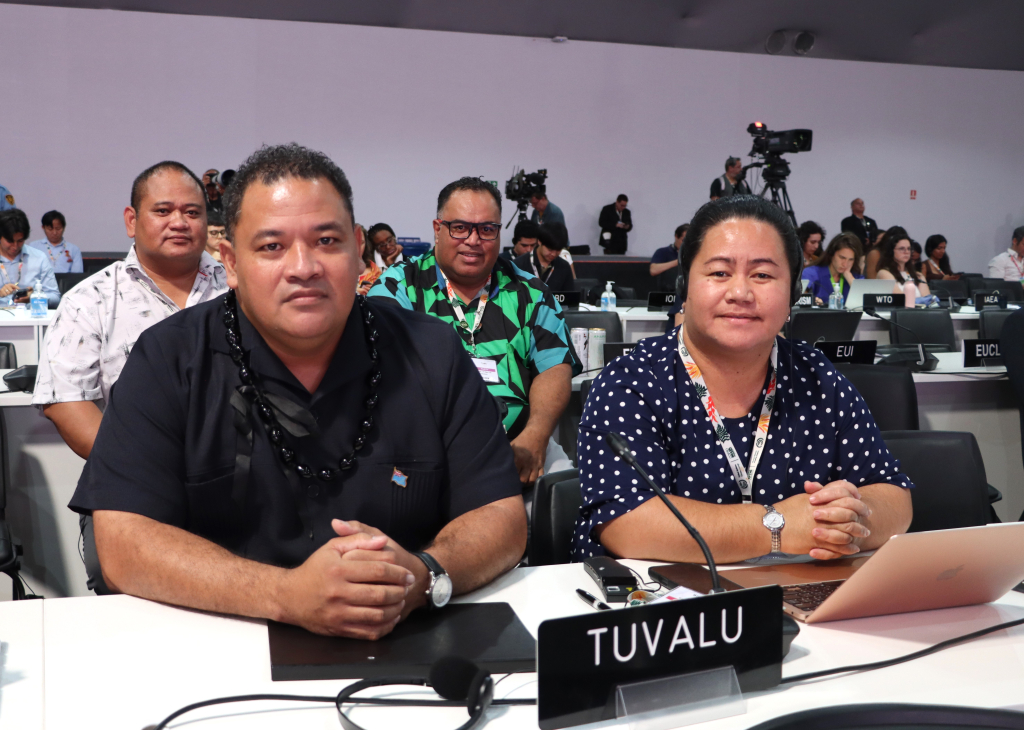
Tuvalu, as the Chair of the Pacific Small Island Developing States (PSIDS) group, delivered the statement on behalf of its 14 members.
COP30 is taking place after another year of record heat and extreme weather around the globe. At the same time, energy demand is rising and some of the world’s biggest economies are rapidly shifting their climate policies.
Pacific leaders, climate change negotiators and officials from Pacific countries have made the long journey to Belem to advocate for the survival of their communities, who have been unfairly placed at the forefront of climate change impacts.
Minister Maina and his delegation, working with the Secretariat of the Pacific Regional Environment Programme (SPREP) and One CROP, to coordinate the Pacific’s response, have followed the negotiations closely during the past eight days. One of the concerns expressed at COP30 is that an NDC Response Plan is an exercise in “pointing fingers” at certain countries.
“This is absolutely not the case,” he said. “It is about ensuring that we all work to respond collectively now to the climate crisis, the greatest threat we all face together.”
To deliver the necessary lift in ambition, developing countries need to urgently see a significant scale-up in new, accessible and predictable grant-based finance to enable climate action.
“To ensure this, we must deliver the necessary changes to the global fiscal landscape,” Minister Maina said. “While last year’s NCQG opened the door for other sources of funding including private finance; the binding duty of developed countries is to provide public climate finance — This is grounded in Article 9.1 of the Paris Agreement and reinforced by the ICJ Advisory Opinion which recognises this as a matter of duty, equity, and justice.”
Pacific countries have have only accessed 2.4% of total climate finance to date through the operating entities of the Financial Mechanism.
Tuvalu called for a reform of the financial architecture within the COP process, one that focusses on enhancing operating entities to address SIDS structural and capacity constraints through further simplified access, and transparency.
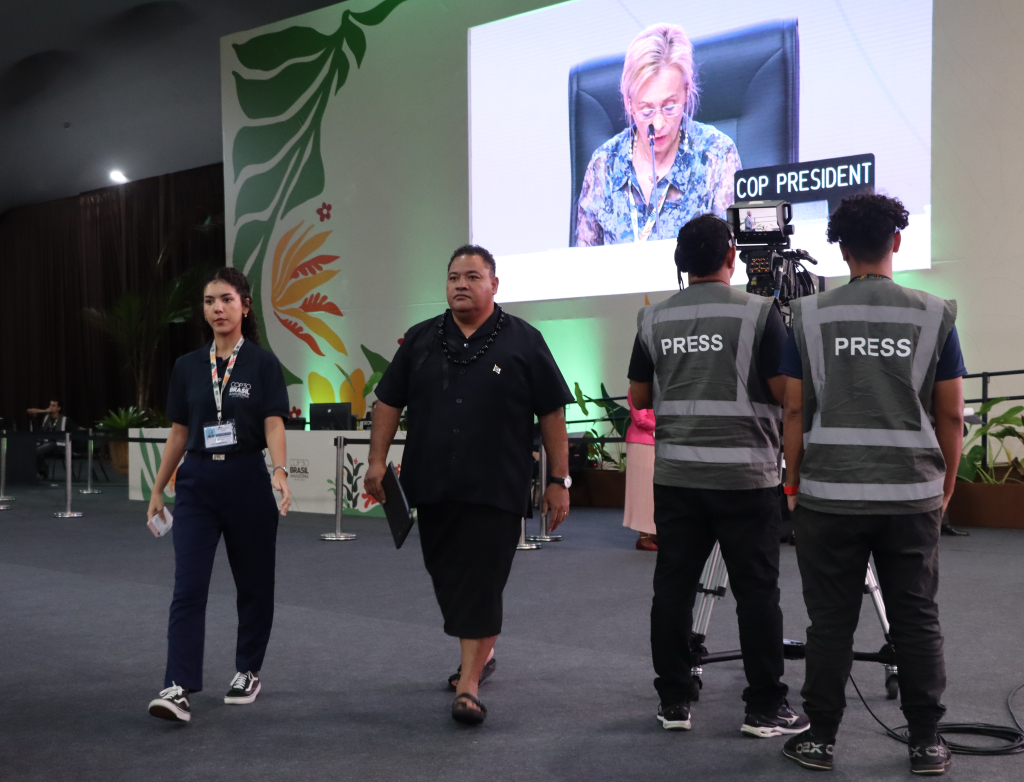
The Chair of PSIDS also highlighted the importance of the Ocean.
“For Small Island Developing States, the Ocean is our lifeblood. It sustains our economies, nourishes communities, and shapes cultures. It is also our first line of defence against the climate crisis,” said Hon. Talia.
“We welcome the inclusion of ocean-based actions in submitted NDCs of Parties and encourage support for their implementation, underpinned by environmental integrity and safeguards to align with the 1.5C temperature limit goal of the Paris Agreement.”
PSIDS also expressed its disappointment that the International Maritime Organisation (IMO) did not adopt the Net Zero Framework during its recent meeting, and echoes the call to continue work towards implementing this framework, to ensure a just and equitable transition to zero emission shipping for developing countries.
Described by the Brazilian President Lula as the “COP of truth”, Tuvalu challenged the notion as negotiations switches gear in the final week of COP30.
“The real Moment of Truth for all countries attending this COP is that we must leave Belem with a package that keeps the 1.5 degree target within reach - through a genuine response plan for closing the NDC ambition gap by strengthening mitigation action in line with the GST1 outcomes and advancing the phaseout of fossil fuels.”
The 30th Conference of the Parties to the UN Framework Convention on Climate Change (UNFCCC) is taking place from 10-21 November 2025 in Belem, Brazil.
It is being attended by Pacific leaders and their delegations, who are advocating for the survival of Pacific communities who continue to be at the forefront of climate change impacts.
Support for our Pacific Islands at COP30 from members of the Council of Regional Organisations of the Pacific (CROP) is through the One CROP mechanism led by the Secretariat of the Pacific Regional Environment Programme.
Members of one CROP include: The Secretariat of the Pacific Regional Environment Programme (SPREP) – Lead, Pacific Islands Development Program, Pacific Islands Forum Fisheries Agency, Pacific Island Forum Secretariat, Pacific Community.
A key part of amplifying the One Pacific Voice at COP30 is the Moana Blue Pacific Pavilion and the Pacific Delegation Office. The Moana Blue Pacific Pavilion at COP30 is a Pacific partnership with the Governments of Australia and New Zealand managed by the Secretariat of the Pacific Regional Environment Programme (SPREP).
The Pacific Delegation Office at COP30 is a Pacific partnership with the New Zealand Government managed by the Secretariat of the Pacific Regional Environment Programme (SPREP).
To learn more about the Pacific at COP30 please visit: https://www.sprep.org/cop30