

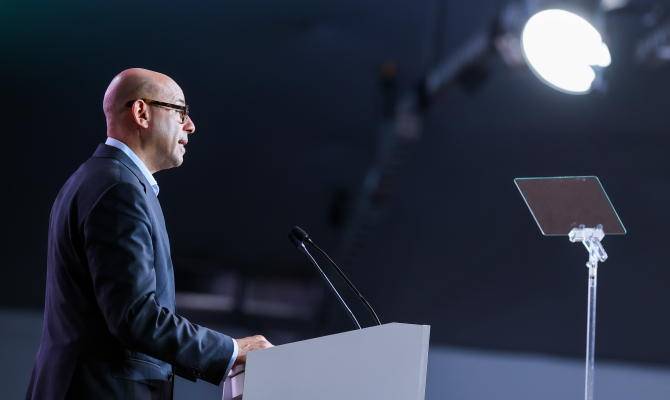
3 December 2025, Belem - The global community is not winning the climate fight, but it is undeniably still in it with a firm resolve to hold the line on a 1.5C world, and keep it within reach.
With those fighting words from the UN Climate Change Executive Secretary, Mr Simon Stiell, the curtain was drawn on the 30th Conference of the Parties to the UN Framework Convention on Climate Change (UNFCCC), held from 10-21 November 2025 in Belem, Brazil.
COP30 convened against a difficult backdrop with geopolitical tensions around the world reaching new levels and 2024 confirmed to be the warmest year on record at about 1.5°C above pre-industrial levels.
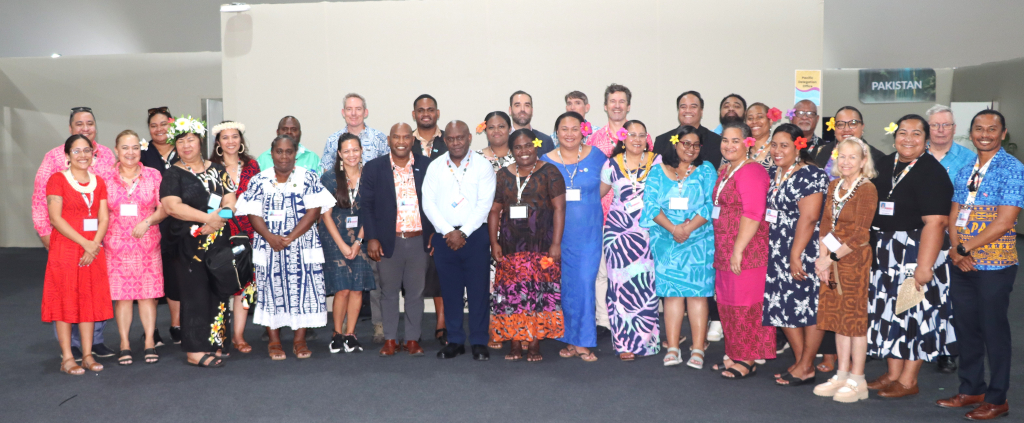
But amidst the gale-force of political headwinds, Pacific countries were amongst 194 parties who stood firm in solidarity in support of climate cooperation.
COP30 delivered new tools, clearer expectations and new cooperative spaces, in adopting a bundle of decisions now referred to as the Belém Political Package.
Top of the list is countries indicating that adaptation finance should increase threefold by 2035. While this is not yet a binding commitment, it is a major political signal.
In an effort to bridge the gap between current climate targets and the 1.5°C goal, the Baku-Belém Political Package established two initiatives designed to support nations in strengthening and achieving their commitments. The "Belém Mission to 1.5" aims to encourage higher ambition in national climate plans (NDCs) by fostering dialogue on the necessary international cooperation and investment. This is complemented by the "Global Implementation Accelerator," a voluntary and cooperative platform intended to assist countries in moving from planning to action, facilitating the practical delivery of mitigation and adaptation measures needed to meet these goals.
One of COP30’s most significant outcomes was the creation of a just transition mechanism. The new Belém Action Mechanism (BAM) will serve as a platform to coordinate assistance, share best practices, mobilise resources and track progress. Its establishment means that fairness in the global shift toward sustainable economies is no longer only a political slogan but now has a formal home within the UN climate system.
COP30 also finally produced an agreed set of indicators for the Global Goal on Adaptation (GGA). These will help evaluate improvements in areas such as water security, food systems, infrastructure resilience, the reach of early warning systems and access to adaptation finance.
The adoption of the new Gender Action Plan 2025-2034, which expands on previous plans by explicitly including care work, women's health, and violence against women, was another key COP30 outcome.
Parties also operationalised the Technology Implementation Programme; launched new work on finance flow alignment (Paris Agreement Article 2.1(c); updated the type of information to consider in ex ante climate finance reporting (Paris Agreement Article 9.5); concluded the review of the Warsaw International Mechanism on loss and damage amongst other decisions.
On the host country for next year’s conference, a formal agreement was reached for COP31 to be hosted by Türkiye in Antalya, with the Pacific’s interests advanced by Australia assuming the role of President of Negotiations in the lead up to and at the meeting.
Australia will have “exclusive authority in relation to the negotiations”, to shape and guide global decision making in support of the multilateral system and global trade and investment in clean energy industries.
The Pacific will host a special pre-COP for leaders and others, bringing attention to the existential threat climate change poses to the region. This will give Australia and the Pacific unprecedented influence over multilateral deliberations and actions of the global community in 2026.
Ethiopia’s offer to host COP 32 in 2027 was accepted. It will be the first time the governing bodies meet in a least developed country.
Billed as the ‘COP of truth’ by the Brazilian Presidency, COP30 will be remembered as a COP of all the elements. It had flooding, thunderstorms and several indigenous protests, one of them resulting in a scuffle between protestors and security.
A fire evacuated the negotiations, ending the COP Presidency’s hopes of finishing the meeting on time.
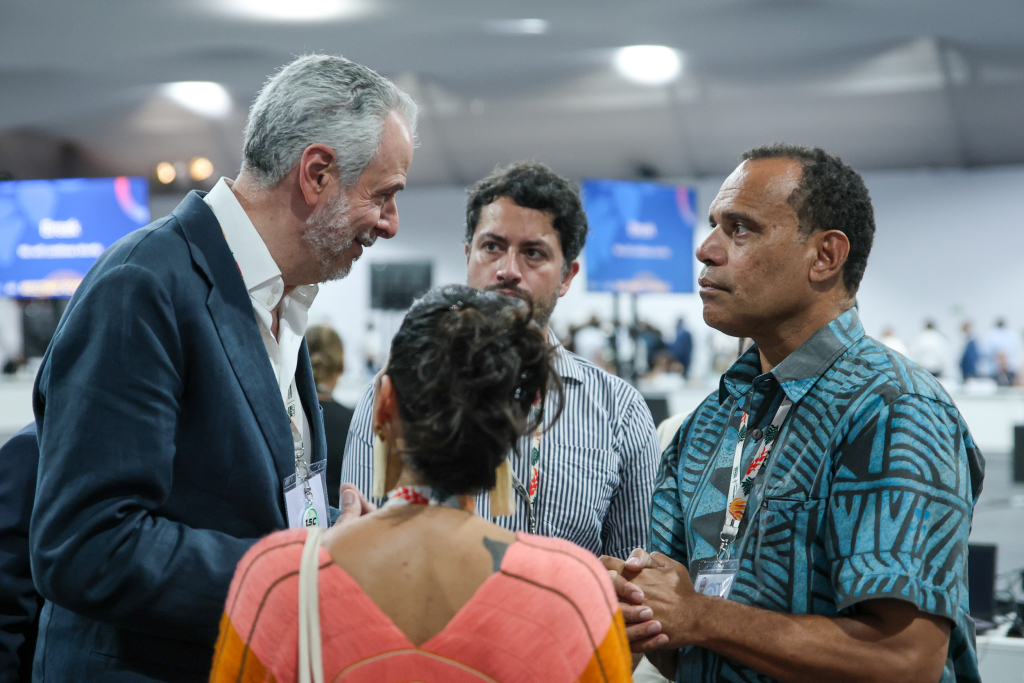
Pacific leaders, climate change negotiators and officials were in the thick of the action, from high level plenaries, negotiation rooms, pavilion spaces and at countless side events and media conferences, advocating for the survival of Pacific communities whose lived daily reality is that of climate change impacts.
“We are not here to renegotiate the Paris Agreement. We are here to implement it—with urgency and integrity,” said Hon, Maina Talia, Tuvalu’s Minister of Home Affairs, Climate Change and Environment. Tuvalu was instrumental in raising the one Pacific Voice at COP30, as Chair of Pacific Small Island Developing States (PSIDS).
Speaking on behalf of Pacific Islands, Caribbean, African, Indian and South China Seas States, who are members of the Alliance of Small Island States (AOSIS), Hon. Steven Victor, Palau’s Minister of Agriculture, Fisheries and Environment, said the multilateral process must do more to achieve our Paris Agreement temperature goal of 1.5C.
“The truth is that we are dangerously close to a 1.5C global warming overshoot, driven by the actions of bigger countries and unless we push forward on the path of course correction as we advance from COP30, leaders are dooming our world to disaster,” he said. “The truth is that countries agreed on the Paris Agreement text in clear terms, yet many commitments have not been kept.”
Fourteen Pacific Islands Parties to the UNFCCC, who are also signatories to the Paris Agreement, are Cook Islands, Federated States of Micronesia (FSM), Fiji, Kiribati, Marshall Islands, Nauru, Niue, Palau, Papua New Guinea (PNG), Samoa, Solomon Islands, Tonga, Tuvalu and Vanuatu. All are members of AOSIS and PSIDS.
The Secretariat of the Pacific Regional Environment Programme (SPREP) with the mandate as coordinator of Pacific climate change action led the work on enhancing Pacific engagement at COP30. Members of one CROP include SPREP, Pacific Islands Development Programme (PIDP), Pacific Islands Forum Fisheries Agency (FFA), Pacific Island Forum Secretariat (PIFS) and the Pacific Community (SPC).
SPREP’s Head of Delegation at COP30 and Director of Climate Change Resilience, Ms Tagaloa Cooper, acknowledged the hard work by Pacific leaders, climate change negotiators, all the officials, as well as the support from all partners and One CROP.
“COP30 as we expected came with its challenges but our Pacific countries stood up once more and represented the Pacific with dedication and tenacity.” said Ms Cooper.
“The signs and the daily lived reality we see in the Pacific when it comes to the climate crisis are alarming but we cannot give up. We know achieving a 1.5 world is still attainable.
“We must continue to represent , and taking the outcomes from COP30 we must continue to push for course correction to ensure a resilient Pacific environment for our generations of today and tomorrow.”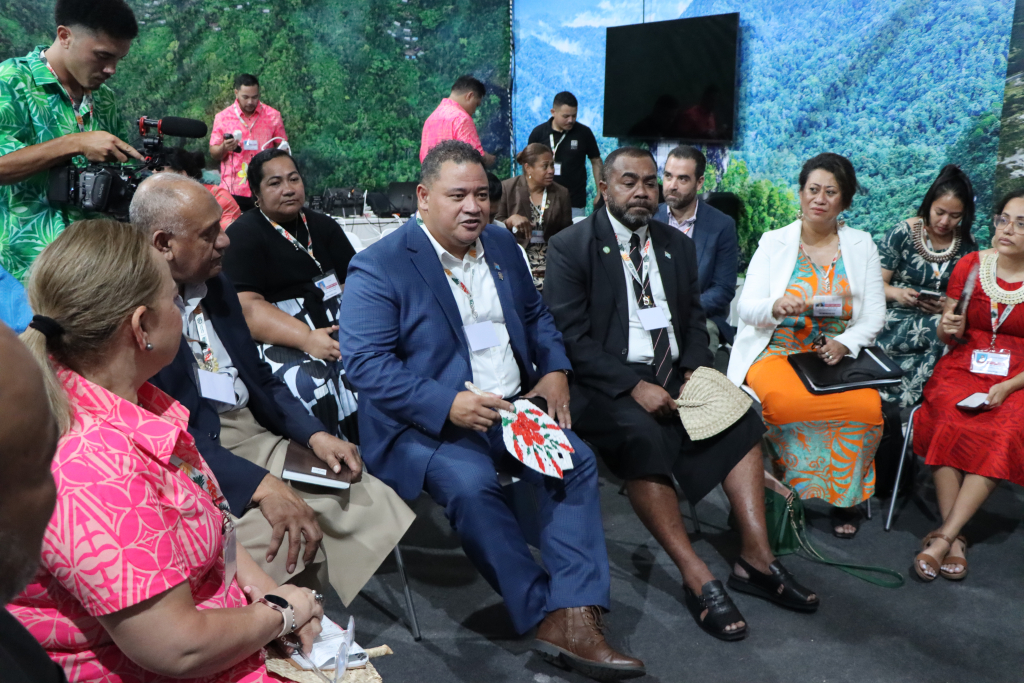
A key part of amplifying the One Pacific Voice at COP30 was the Moana Blue Pacific Pavilion, a partnership between SPREP and the Governments of Australia and New Zealand, and the Pacific Delegation Office, a partnership between SPREP and the New Zealand Government.
The spaces are considered an oasis and a home away from home for Pacific delegations in the heat of negotiations.
Assistant Minister for Climate Change and Energy for Australia, Hon. Joshua Wilson, said: “The Pacific climate leadership stands out because it leads with heart, strength and unity. Qualities the world needs now more than it has ever needed before.
“I am honoured to continue Australia’s longstanding support for the Moana Pavilion again this year in partnership with our friends from New Zealand”.
Head of Delegation and Chief Negotiator for New Zealand at COP30, Mr Todd Croad, echoed similar sentiments, adding: “The Moana Blue Pacific Pavilion is one of the most vibrant, dynamic and powerful spaces at each and every COP. New Zealand is proud to have supported the Pavilion for many years and thank Australia and SPREP for their collaboration.”
Pacific delegations were amongst more 56,118 people registered for on-site attendance, including 23,509 delegates from Parties, 13,402 observers, 3,920 members of the media, and 13,948 support and Secretariat staff.
The 30th Conference of the Parties to the UN Framework Convention on Climate Change (UNFCCC) is taking place from 10-21 November 2025 in Belem, Brazil.
It is being attended by Pacific leaders and their delegations, who are advocating for the survival of Pacific communities who continue to be at the forefront of climate change impacts.
Support for our Pacific Islands at COP30 from members of the Council of Regional Organisations of the Pacific (CROP) is through the One CROP mechanism led by the Secretariat of the Pacific Regional Environment Programme.
Members of one CROP include: The Secretariat of the Pacific Regional Environment Programme (SPREP) – Lead, Pacific Islands Development Program, Pacific Islands Forum Fisheries Agency, Pacific Island Forum Secretariat, Pacific Community.
A key part of amplifying the One Pacific Voice at COP30 is the Moana Blue Pacific Pavilion and the Pacific Delegation Office. The Moana Blue Pacific Pavilion at COP30 is a Pacific partnership with the Governments of Australia and New Zealand managed by the Secretariat of the Pacific Regional Environment Programme (SPREP).
The Pacific Delegation Office at COP30 is a Pacific partnership with the New Zealand Government managed by the Secretariat of the Pacific Regional Environment Programme (SPREP).
To learn more about the Pacific at COP30 please visit: https://www.sprep.org/cop30
Main photo credit: IISD/ENB | Mike Muzurakis IISD/ENB | Mike Muzurakis