


Strengthening the use of Nature-Based Solutions in Fiji’s Forestry and Coastal sectors saw stakeholders gather in November this year to review an assessment on Fiji’s national policies in these two areas.
The Stakeholder Validation Workshop for the National Policy Assessment for the Forestry and Coastal Resilience sectors was coordinated by the Government of Fiji in partnership with the Secretariat of the Pacific Regional Environment Programme (SPREP) on 21 November 2025 in Suva.
This activity is part of the Promoting Pacific Island Nature-based Solutions (PPIN) Project under the New Zealand Ministry of Foreign Affairs and Trade’s Resilient Ecosystems for Climate Change Adaptation programme, jointly implemented by International Union for the Conservation of Nature Oceania, SPREP, the Pacific Community and the Global Green Growth Institute.
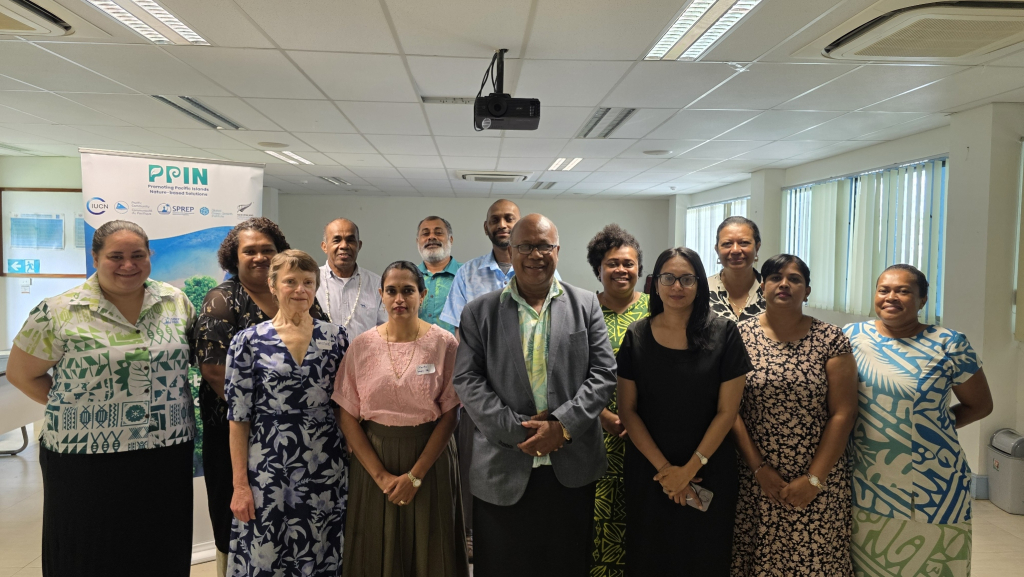
In Fiji, SPREP is supporting national efforts to strengthen the integration of Nature-based Solutions (NbS) across key sectors that are central to the country’s environmental resilience. NbS are actions that protect, restore and sustainably manage natural ecosystems to benefit both our biodiversity and our people.
“Fiji’s coastal and forest systems are fundamental to the country’s environmental security, cultural identity and community livelihoods,” said Mr Amena Yavouli, the Director of Biodiversity and Conservation of SPREP.
“Around ninety percent of Fiji’s population lives along the coast and depends on mangroves, seagrass beds and inshore fisheries for protection and daily subsistence, which exist within a governance system shaped by State ownership of the foreshore and iTaukei customary rights. This makes clear and inclusive policy frameworks essential and that this assessment is both timely and necessary.”
The draft findings of the National Policy Framework Assessment undertaken by the PPIN project were presented at the workshop. This assessment reviewed Fiji’s legislation, policies, regulations and strategic documents for the forestry and coastal resilience sectors to determine how effectively NbS concepts are integrated.
Participants engaged in group discussions and technical sessions to validate the analysis, identify gaps and opportunities, and support stronger policy alignment and cross-sector coordination.
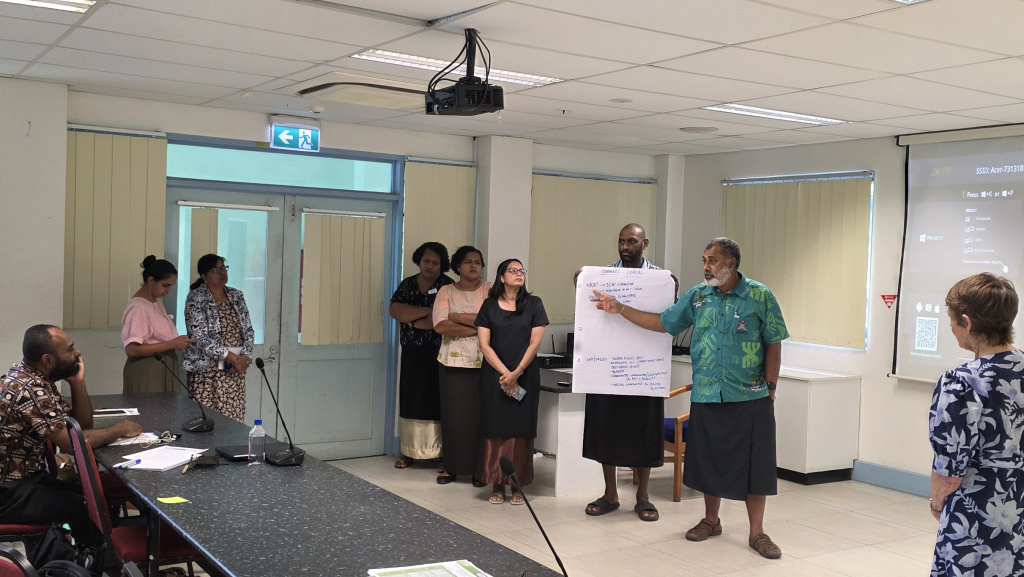
The workshop was delivered in collaboration with the PEBACC Plus Project, which supports ecosystem-based adaptation and the application of Nature-based Solutions across the region. The Director acknowledged that the strength of the final assessment will rely on the insights provided by stakeholders across the forestry, environment, climate, fisheries, land and customary sectors and emphasised that their contributions directly support Fiji’s long-term resilience and the wellbeing of its people.
Feedback from the workshop will inform the Final Policy Assessment Report, including refined recommendations and a strategic roadmap for integrating NbS into national and sectoral planning.
The report will also contribute to ongoing forestry legislative reforms and national efforts to strengthen coastal protection, blue carbon management and community-based adaptation.
The Fiji forestry sector is undergoing major reform as the Government advances the Draft Forest Bill 2025.
“Fiji is moving toward a modern forestry framework that recognises forests as biodiversity sanctuaries, cultural heritage, carbon sinks and vital Nature-based Solutions, and this assessment provides an opportunity to ensure alignment between NbS principles and evolving national legislation,” said Mr Yavouli.
The Stakeholder Validation Workshop for the National Policy Assessment for the Forestry and Coastal Resilience was held on 21 November 2025 in Fiji delivered in partnership with The Pacific Ecosystem-based Adaptation to Climate Change Plus. It was supported by the Promoting Pacific Island Nature-based Solutions (PPIN) project which is funded by New Zealand’s Ministry of Foreign Affairs and Trade (MFAT). PPIN seeks to support the development of policy and legislation for Nature-based Solutions (NbS), build regional awareness and capacity, and strengthen regional cooperation amongst Pacific Island countries on NbS. PPIN is managed by IUCN in partnership with the Pacific Community (SPC), the Secretariat of the Pacific Regional Environment Programme (SPREP) and Global Green Growth Institute (GGGI).
Main image: Nakorotubu Coastline, Ra, Fiji. Photo © Stuart Chape.