

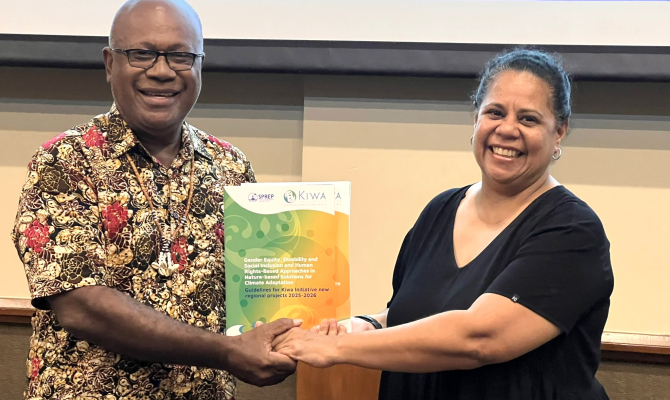
16 December Suva, Fiji - The Kiwa Initiative’s regional partners came together online and in Suva, for a milestone Gender Equity, Disability and Social Inclusion (GEDSI) Community of Practice (CoP) event, marking three years of continued engagement and support towards inclusive and fair Nature-based Solutions projects and initiatives.
The hybrid event invited Kiwa funded projects, government agencies, NGOs, community-based organisations, and technical partners, reaffirming the region’s shared commitment to more inclusive and equitable Nature-based Solutions (NbS).
Established in 2023, the Kiwa GEDSI CoP serves as a space for practitioners to learn and access GEDSI tools and resources, share project lessons learned, and strengthen human-rights-based and people-centred approaches in NbS design and delivery. The 2025 session highlighted a new GEDSI resource, a guideline for new projects providing templates and safeguards resources developed by Talanoa Consulting, is now available for download here. Participants used the opportunity to ask questions and to better understand as practitioners how to apply GEDSI principles in real project contexts.
“The Kiwa Initiative is pleased to see Kiwa projects strengthening inclusive and people-centred approaches across Nature-based Solutions in the Pacific supported effectively by its implementing partners SPREP and SPC. We also congratulate the Kiwa GEDSI Community of Practice for its commitment to learning, exchanging knowledge, and better serving Pacific communities,” said Ms Sarah Lagente, Deputy Technical Coordinator and GEDSI specialist at the Kiwa Initiative Secretariat.
The new GEDSI guidelines, developed with Talanoa Consulting in addition to the existing Kiwa GEDSI resources, provide guidance notes and checklists to support ongoing and upcoming NbS projects. This consolidated resource equips project teams with clear, actionable steps for integrating human-rights based approaches within NbS from the very beginning of project design.
The guide covers six interconnected areas: Free and Prior Informed Consent (FPIC), grievance resolution, child safeguarding, stakeholder engagement, GEDSI analysis, and GEDSI-integrated work planning. These tools help ensure that community voices and rights shape project decisions in transparent and inclusive ways and recognise that FPIC is the essential first step in any community-based NbS project. Enabling communities to fully understand and consider potential impacts on their land, resources, and livelihoods before giving consent, should be at the forefront of all NbS projects. As projects progress, the guidance helps teams adapt stakeholder engagement, safeguarding, and accountability mechanisms to local contexts while upholding Kiwa’s commitment to Human Rights and GEDSI as fundamental to sustainable climate resilience.
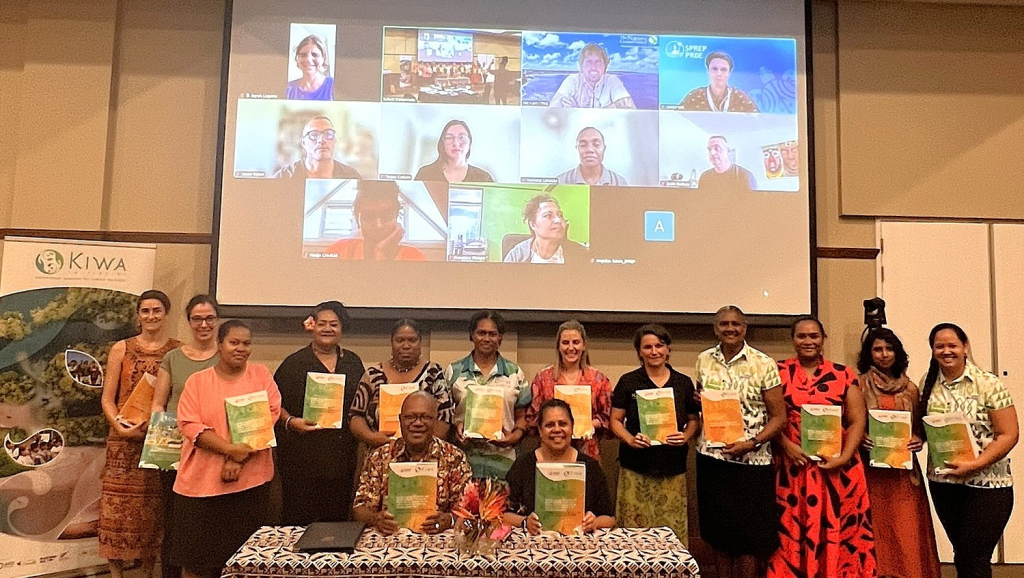
“As a technical and scientific organisation in the Pacific, SPC strives to ensure that our services truly meet the needs of our people. We are humbled and proud to collaborate with SPREP on the technical assistance and capacity-building component of Kiwa Initiative, building on the success of the GEDSI Community of Practice and deepening our collaboration with SPREP, governments, civil society, and communities,” said Ms Rhonda Robinson, SPC’s Acting Deputy Director-General Science and Capability.
For new projects entering the Kiwa portfolio, these resources are especially important. NbS outcomes can only be effective and equitable when all people, women, men, youth, persons with disabilities, and vulnerable groups, are meaningfully included in planning, implementation, and monitoring.
Mr Amenatave Yauvoli, SPREP Director of Biodiversity Conservation Programme, acknowledged the long-standing partnership between the two CROP agencies in regional environmental support, and most recently in delivering key GEDSI and technical assistance to governments, NGOs, and communities. This support, he noted, could not have been achieved without instrumental partners such as Talanoa Consulting, who provided the expertise in the development of the GEDSI training resources and tools.
“One of the real strengths of the Kiwa regional technical assistance has been the way our CROP agencies have come together, combining our expertise, our networks, and our technical support to help Pacific partners design and deliver high-quality, inclusive NbS projects,” said Mr Yauvoli.
The six guidance areas within the GEDSI guidelines work together to strengthen trust, clarify responsibilities, and establish transparent relationships between project teams as duty-bearers and communities as rights-holders. By embedding GEDSI and human-rights considerations into environmental and social management systems from the outset, project teams are better equipped to anticipate challenges, prevent harm, and co-design solutions with communities. Ultimately, these processes foster accountability, safeguard wellbeing, and support the long-term success of NbS projects across the Pacific.
The event included reflections on the challenges and opportunities ahead, such as ensuring meaningful engagement from field-based staff and strengthening peer-to-peer learning pathways across the Pacific region. The GEDSI CoPs have laid the foundation for supporting projects move beyond compliance and towards meaningful engagement of women, youth, persons with disabilities, and vulnerable groups in NbS planning and implementation.
About the Kiwa Initiative
The Kiwa Initiative – Nature-based Solutions (NbS) for Climate Resilience aims at strengthening the climate change resilience of Pacific Islands ecosystems, communities and economies through Nature-based Solutions (NbS), by protecting, sustainably managing and restoring biodiversity. It is based on an easier access to funding for climate change adaptation and NbS for local, national authorities, civil society and regional organisations of Pacific Island Countries and Territories including the three French overseas territories. The Initiative is funded by the European Union, Agence Française de Développement, Global Affairs Canada, Australian Government Department of Foreign Affairs and Trade (DFAT) and New Zealand Ministry of Foreign Affairs and Trade (MFAT). The Kiwa Initiative has established partnerships with the Pacific Community (SPC), the Secretariat of the Pacific Regional Environment Programme (SPREP) and the regional office of the International Union for Conservation of Nature.
For more information visit www.kiwainitiative.org or contact our team: Josephine Kalsuak, Team Leader Mainstreaming and Capacity Building at SPC’s Human Rights and Social Development - josephinek@spc.int Angelica Salele-Sefo, SPREP Kiwa Project Development Coordinator - angelicas@sprep.org Margot Bantegny, Kiwa Initiative Secretariat Communications Officer - bantegnym.ext@afd.fr