


19 February 2026, Apia, Samoa – The Samoa Meteorological Service (SMS) is reviving its work in the collection, monitoring and verification, and integration of traditional knowledge into climate and weather forecasting systems with the support of the Climate and Oceans Support Program in the Pacific (COSPPac) Phase 3 Project implemented by the Secretariat of the Pacific Regional Environment Programme (SPREP).
The process of rebuilding and reprogramming the Samoan Traditional Knowledge programme kicked off with the convening of a three-day workshop that aims to strengthen the understanding of SMS climate and weather officers on traditional knowledge processes and protocols for climate and weather and highlight the value that traditional knowledge adds to climate and weather forecasts.
With the support of the COSPPac3 project, SMS is hoping to breathe new life into its traditional knowledge programme, with Director Afaese Luteru Tauvale recognising that there have always been linkages between traditional knowledge indicators and scientific knowledge of changing climate and weather patterns.
“Even though we now have access to state-of-the-art technologies and the latest science, it is important that we also continue to use traditional knowledge indicators that were used by our forefathers,” he said.
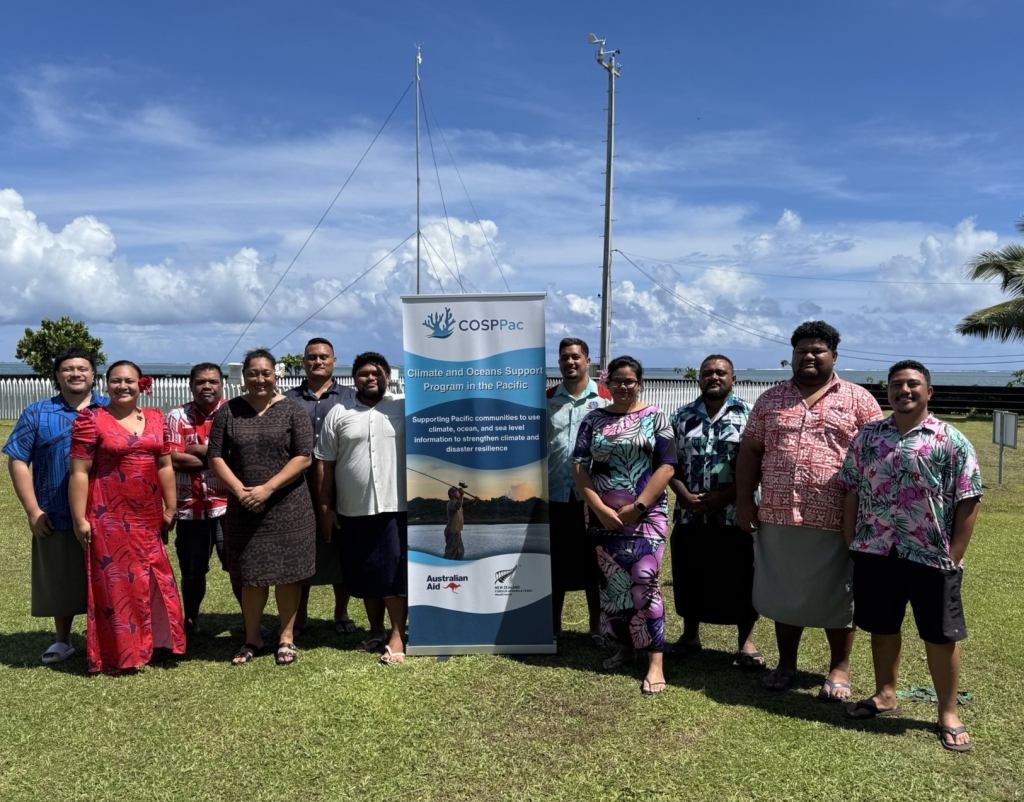
Traditional knowledge indicators are natural signs and signals in the environment that local communities have learned to read over many generations to understand what is happening or about to happen. Repeated patterns of behaviour of things in the environment such as plants, birds, and animals that have been observed for years and used by communities are referred to as indicators.
“There are many indicators that have been used by farmers and fishermen for many years, passed down from generation to generation, that can be backed by science. An example of this is the observed behaviour of the frigate bird or the ‘atafa, which is often said to be an indicator of strong winds,” Dr. Tauvale added.
According to Afaese, his long-term vision for reviving the traditional knowledge programme for SMS is to ensure that early warnings are effective and efficient. He believes that traditional knowledge can complement the science, and provide any other information that may be missing which will help people to better understand and respond to warnings.
Ms. Siosinamele Lui, COSPPac 3 Traditional Knowledge Adviser, stated that one of the biggest challenges for Pacific National Meteorological and Hydrological Services (NMHSs) is the limited uptake of warnings by communities.
“When the Met Service issues forecasts or warnings, not everyone can contextualise the information or understand the terminologies that are being used,” Ms. Lui said.
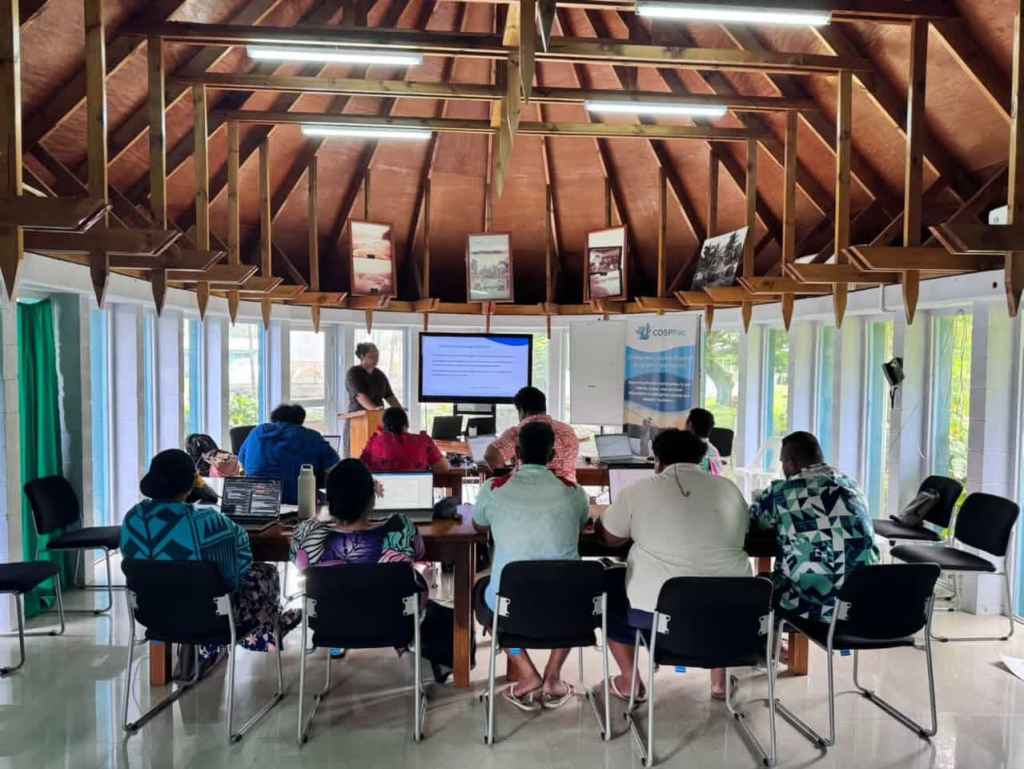
“Traditional knowledge was introduced towards the end of the first phase of COSPPac, during a time when a lot of extreme weather events were occurring and we recognised that the NMHSs were issuing warnings, but people were not responding in time,” she added.
Mr. Kotoni Fa’asau, Principal Scientific Officer, stated, “As a seasonal forecast scientist, traditional knowledge simplifies the methodologies that we use to generate climate outlooks.”
“From my experience in communicating these outlooks to the community, we get more attention and response when we use traditional knowledge in our communications,” he added.
Through the traditional knowledge component of the project, support was rendered to the Met Services to document and collect traditional knowledge from local communities, identifying indicators for climate and weather, and begin the process of monitoring and verifying that the behaviours of these indicators coincide with certain climate and weather patterns and events.
Such support is also being made available to SMS from the COSPPac3 project, to help get their traditional knowledge activities off the ground.
The Climate and Oceans Support Program in the Pacific Phase 3 (COSPPac3) project is a four-year project funded by the Australian Government Department of Foreign Affairs and Trade (DFAT) and the Government of New Zealand’s Ministry of Foreign Affairs and Trade (MFAT), which aims to support Pacific National Meteorological and Hydrological Services to deliver climate and ocean information services that are useful, usable, and used, enabling all Pacific peoples to remain resilient to the impacts of climate change and disasters. It is jointly implemented by the Australian Bureau of Meteorology, Earth Sciences New Zelaand, Geoscience Australia, the Pacific Community, and SPREP.
For more information, please contact Ms. Siosinamele Lui, at siosinamelel@sprep.org.