

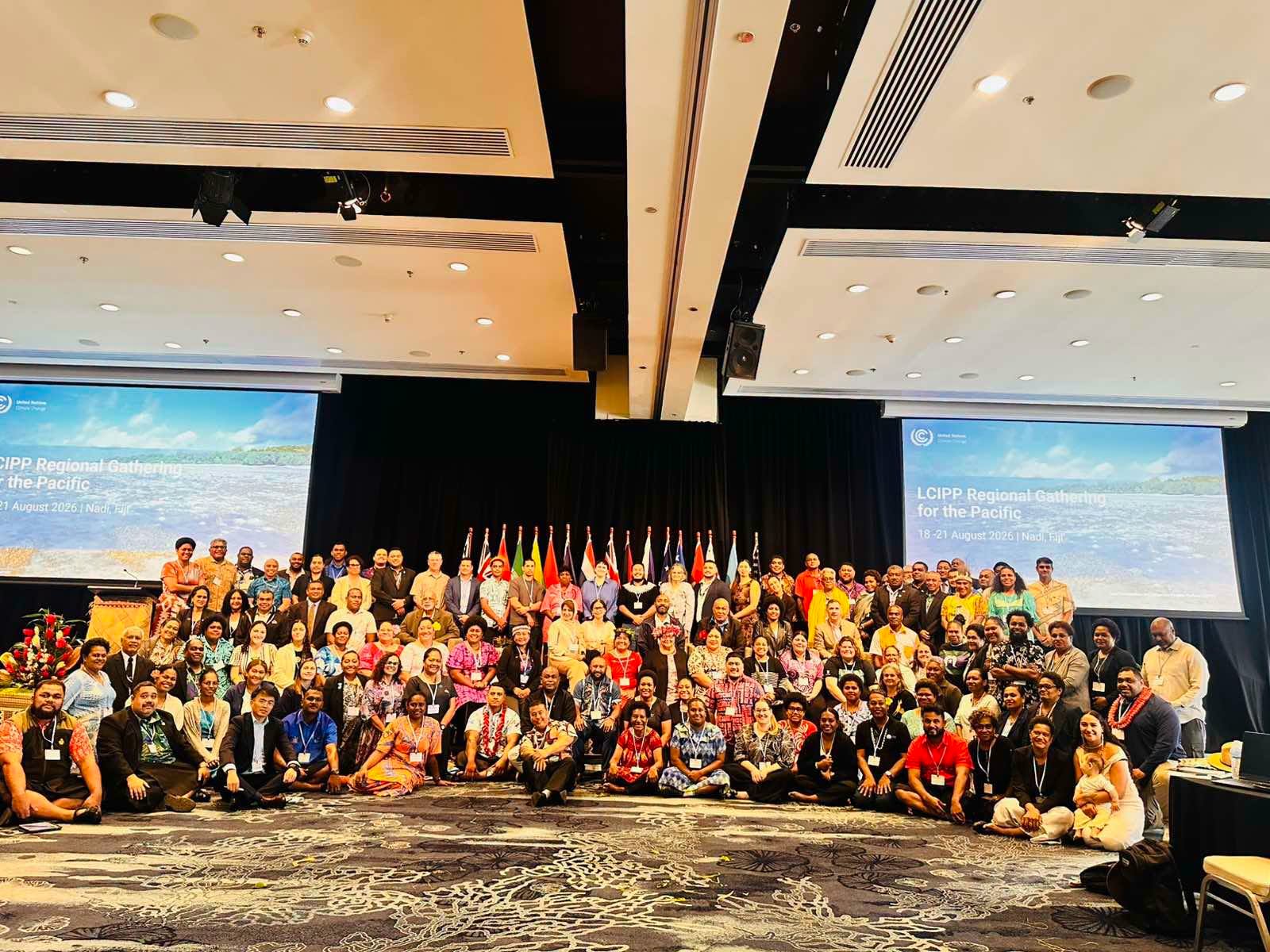
27 August 2026, Nadi – Pacific and First Nations indigenous peoples, local communities, and regional partners gathered in Nadi, Fiji to advance dialogue on climate action, traditional knowledge, community resilience, and sustainable development ahead of the 31st Meeting of the Conference of the Parties to the UN Framework Convention on Climate Change (UNFCCC COP31) in Türkiye later this year.
The Pacific gathering, held at the Sofitel Fiji Resort from 18 to 21 August 2026, was the second convening of the Local Communities and Indigenous Peoples Platform (LCIPP) in the Pacific, bringing together highly respected experts and practitioners from across the region to share their expertise in indigenous knowledge systems, community-based adaptation, environmental governance, and regional climate polity to help shape Pacific priorities and recommendations ahead of COP31.

SPREP was given the opportunity to showcase key SPREP-led initiatives during the regional gathering, including the continued support provided by the Secretariat to integrate indigenous and local knowledge into climate action through programmes such as the Climate and Oceans Support Program in the Pacific (COSPPac).
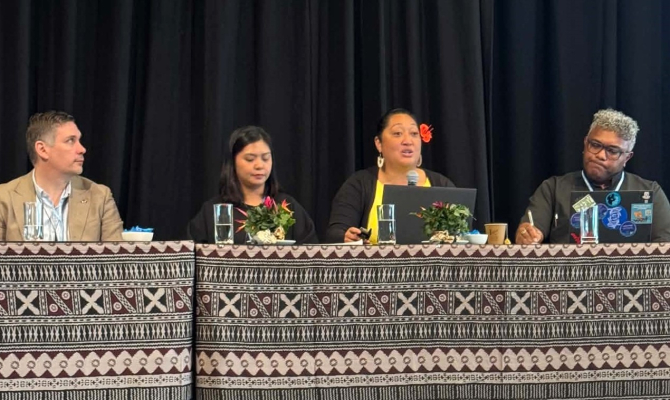
Ms. Siosinamele Lui, COSPPac Traditional Knowledge Adviser, provided an overview of SPREP-led programmes, initiatives, and regional networks that create practical opportunities to connect Indigenous and local knowledge systems with broader regional and global climate action.
“Initiatives such as COSPPac’s traditional knowledge programme provides support to ensure the ethical and equitable integration of Indigenous Peoples' and local communities' knowledge, experiences, and solutions into national, regional, and UNFCCC processes,” Ms. Lui said.
Ms. Lui also highlighted SPREP’s efforts to strengthen climate services and early warning systems in the region through the integration of traditional knowledge into climate and weather observation under the COSPPac programme, as well as community-based early warning systems supported through the Green Climate Fund-funded Vanuatu Climate Information Services for Resilient Development (Van-KIRAP) project.
The LCIPP has three key functions that support Indigenous Peoples and local communities strengthen their representation in the UNFCCC Agenda: knowledge, capacity for engagement, and the integration of traditional knowledge and Indigenous perspectives into climate change policies and actions. These functions align closely with the core functions of SPREP’s Pacific Climate Change Centre (PCCC), particularly in knowledge brokerage, capacity building, innovation, and applied research.
Pacific communities continue to face challenges in engaging effectively at the international level due to their geographical isolation, political and institutional environments and limited access to the knowledge, skills, resources and networks needed to confidently navigate international climate processes.
SPREP plays an important role in strengthening these pathways by supporting Pacific Island governments through establishing and facilitating national and regional focal points and networks.
Key initiatives such as Pacific Climate Innovation Lounge, the Pacific Innovation Forum on Climate and Environment (PIFCE), the Pacific Climate Change Centre's E-Learning Platform, and capacity-building support made available to Pacific island countries through the PCCC were highlighted during the regional meeting.
Mr. Tuileva Tuileva, PCCC Senior Project Officer, said, “The LCIPP provided a wider audience to present the work of the PCCC in the traditional knowledge space, particularly Pacific-owned and led climate solutions showcased in the Innovation Forum.
“It also allowed us to highlight the PCCC’s coordination role to improve Pacific authors’ engagement in the Intergovernmental Panel on Climate Change process, especially those who are undertaking research capturing traditional knowledge in the Pacific,” he added.
The LCIPP Regional Gathering concluded with a clear way forward for indigenous Pacific peoples on priorities and recommendations they want to put forth at COP31 in November for the betterment of Pacific communities.