

Traditional knowledge, science, storytelling and innovation will converge in Fiji next week as Pacific nations and global partners gather to strengthen collaborative conservation efforts for whales and dolphins across the Western Pacific.
A Pacific partnership between the International Whaling Commission (IWC), the Secretariat of the Pacific Regional Environment Programme (SPREP) and WWF has resulted in a series of three workshops to be held across six days to help save our Pacific whales and dolphins.
Identifying and conserving blue corridors
The Blue Corridors workshop will be held from 23-25 February. It will examine cultural perspectives and local knowledge alongside the latest science, assess regional challenges, and identify critical knowledge gaps.
The Blue Corridors Initiative is a global collaboration of more than 60 partners from the marine mammal science and conservation community, including WWF, working to advance whale conservation through data-driven insights, compelling visual storytelling, and science-based solutions.
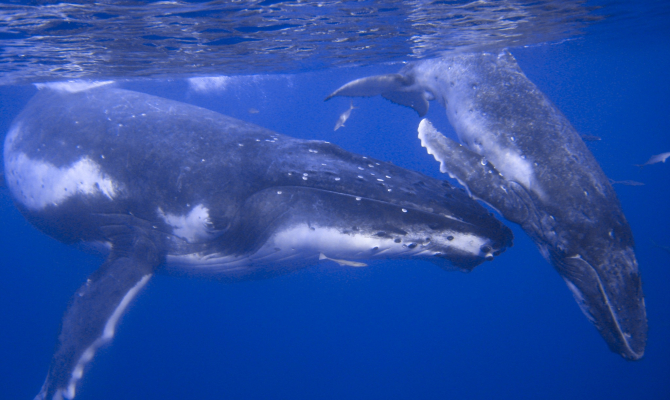
The routes whales travel, known as “blue corridors,” increasingly overlap with hazards such as growing risks from fisheries bycatch, busy shipping lanes, ocean pollution and climate change.
The recommendations from this workshop will be presented at the Pacific Islands Leaders Forum in Palau in September to help guide coordinated regional action.
“Protecting whale migration routes through the Western Pacific Blue Corridors is vital for Pacific Island countries as we work to advance our shared global commitments under the Kunming–Montreal Global Biodiversity Framework, the Sustainable Development Goals, and the Paris Agreement,” said Mr Alfred Ralifo, WWF-Pacific Pacific Conservation Director, stressing that safeguarding whale migration routes is essential to the region’s sustainable future.
“By bringing together innovation, science, traditional and local knowledge, community leadership and meaningful collaboration across ocean sectors, we can strengthen regional stewardship and drive a truly People and Nature-Positive Pacific.”
Identifying solutions for growing risks of fisheries bycatch
From 25 – 26 February follows the Bycatch Mitigation Opportunities Workshop led by the IWC Bycatch Mitigation Initiative and SPREP and contributes directly to the GEF-FAO Common Oceans Tuna Project.
Bycatch has been assessed as one of the greatest threats to cetaceans in the Pacific. The Common Oceans project will help assess cetacean bycatch and data gaps, build regional capacity and awareness and collaboratively develop recommendations to address cetacean bycatch in the Western Central Pacific Ocean.
“The cetacean bycatch problem in the region has received little attention until a recent assessment by SPREP which suggests it is a key threat deserving of focused attention by our Members and partners to develop solutions,” said Mr Amena Yavouli, the Biodiversity and Conservation Programme Director of SPREP.
The Bycatch Mitigation workshop aims to equip attendees with an overview of bycatch mitigation options in the region, and an opportunity to share models for solutions through regional case studies. It will also identify key gaps for mitigating bycatch and map opportunities for future bycatch mitigation projects.
The agenda includes presentations and collaborative discussion on the current state of knowledge on cetacean bycatch in the region; opportunities and incentives for reporting bycatch, including reporting requirements and the Regional Observer Programme; mitigation methods and depredation; and the identification of needs and future opportunities: setting the stage for ongoing work.
The bycatch mitigation workshop and brings together those directly involved in the fishing industry: including government representatives, researchers and traditional knowledge holders.
In the Pacific Islands region, the deep connections between whales and communities are embedded in culture, spirituality and traditional environmental knowledge. The IWC recognises the importance of human traditional ecological and cultural knowledge to better understand the population status of Pacific whale and dolphin populations and the threats they face today.
Whale and Dolphin Species Assessment
As part of IWC’s workplan for this region, the third workshop of this weeklong series will focus on ’blackfish’, a group of species that are similar in appearance and behaviour. Four ‘blackfish’ are currently undergoing an IWC review; false and pygmy killer whales, short and long-finned pilot whales, as well as the rough-toothed dolphin.
“Sometimes scientists can be confusing”, quips Dr Lindsay Porter OBE, Chair of the IWC Scientific Committee. “Strictly speaking, these species belong to the dolphin family, but we commonly refer to them as ’whales’ when we speak of them individually but then call them ‘blackfish’ when we discuss them as a group.”
Porter continues. “What is clear though, is that these species are frequently injured or bycaught in commercial fishing operations. High levels of injury and mortality are of great concern, particularly in an area such as the South Pacific, where so little is known of the health and status of these populations”.
This final workshop will blend Traditional Ecological Knowledge and current scientific knowledge to better understand this group of cetaceans. The development of a collaborative network of traditional knowledge holders and the expertise of the IWC Scientific Committee will be explored with the aim of enhancing academic research and achieving more effective whale conservation and co-management strategies within the South Pacific region.
This activity is the culmination of a Pacific partnership between the International Whaling Commission (IWC), the Secretariat of the Pacific Regional Environment Programme (SPREP) and WWF
The Blue Corridors Workshop, Bycatch Mitigation Workshop and Regional Cetacean Species Assessment for Blackfish will be held in Nadi, Fiji on 23-25, 25- 26, and 26-28 February 2026 respectively. Workshop participants from Australia, Fiji, Kiribati, Marshall Islands, New Caledonia, New Zealand, Niue, Papua New Guinea, Tonga, Tuvalu and Wallis and Futuna will be in attendance along with a broad geographical spread of expertise and stakeholders.
Image courtesy of Niue Tourism Office