

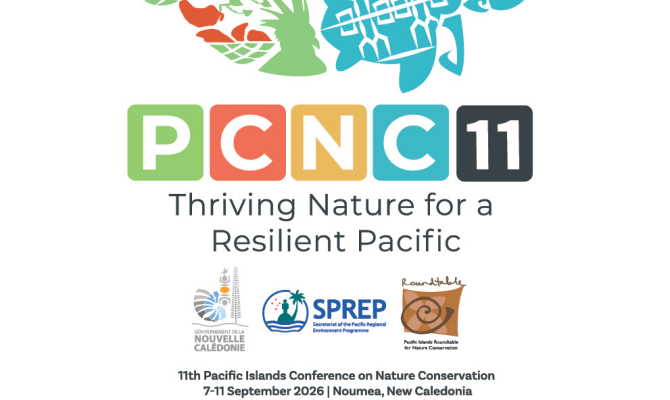
6 August 2026, Noumea - The unveiling of the logo for the 11 Pacific Conference on Nature Conservation this week marks a new milestone in the preparations for the event to be hosted in New Caledonia from 7-11 September this year.
Featuring the much-loved dugong as its core element, the logo was co-designed by the host country, New Caledonia and members of the Pacific Islands Roundtable for Nature Conservation (PIRT).
“This logo reflects the incredible diversity of our Pacific islands – not just our natural heritage, but our traditions and cultures, our people and our spiritual connections with the land and sea,” said PIRT Chair, Ms. Jacqui Evans.
“It reminds us of the purpose of the conference – to bring together our diverse perspectives and knowledge, build connections and together develop the solutions we need to address the planetary crises.”
The dugong is regarded as sacred across many Pacific cultures, symbolising hope, maternal love, balance, and harmony, reflecting the conference's theme; People, Nature, Culture, which is grounded on Pacific-led actions for nature in tackling the triple planetary crisis of biodiversity loss, climate change and pollution.
The species is listed as Vulnerable on the IUCN Red List of Threatened Species, highlighting the importance of regional efforts to protect its remaining populations and habitats.
Government of New Caledonia representative, Jérémie Katidjo-Monnier said, “The logo serves as our touchpoint – its symbolism expresses our common goals, and acknowledges the strength that is ours, as peoples of the Pacific, when we connect across the diversity of our cultures, our knowledge, and our commitments.”
SPREP Director of Biodiversity and Conservation, Mr Amenatave Yauvoli, commended the logo.
“The logo features iconic symbols of the cagou, the yam basket and shoots, reflective of the unique nature and culture of the conference host country, New Caledonia,” he said.
“The endemic cagou reminds us of why we are convening this conference – this flightless bird, found only in parts of New Caledonia, is quietly fighting a host of threats to its very existence.
“We celebrate it but we are reminded also of our responsibility to develop and strengthen systems that will halt the loss of habitats, reverse the trends of species loss, and build resilience of our islands and our communities.”
The woven yam basket and young shoots symbolise the observation of the yam cycle by the indigenous communities of New Caledonia and other Pacific countries representing life cycles, renewal, intergenerational connections and collective decision making.

The Enata symbol, representing people, reminds us that communities are vital to environmental protection and the turtle highlights sea-land connection and longevity. The whale’s tail, the wave and fish hook highlight the intricate relationships that humans have with the land and sea.
Preparations for the conference are ongoing, with registrations open until 7 August and organising teams curating a series of interactive dialogue and learning sessions, which will include field-based activities. The conference venue is the Tjibaou Cultural Centre in Noumea, New Caledonia.
For information on the conference, and to learn more about the background to the logo, visit https://www.pacificislandsroundtable.com/pacific-nature-conference
The 11th Pacific Islands Conference for Nature Conservation and Protected Areas is organised by New Caledonia, Secretariat of the Pacific Regional Environment Programme, and the Pacific Islands Roundtable for Nature Conservation.