

The PacWastePlus programme's webpage is currently live, but will be closed late 2025. All core documents are locted in the SPREP Virtual Library, and key information on the Programme can be found on these pages.
https://pacwasteplus.org/
ABOUT THE PACWASTEPLUS PROGRAMME
The impact of waste and pollution on sustainable development in the Pacific is taking its toll on the health of communities, degrading natural ecosystems, threatening food security, impeding resilience to climate change and adversely impacting on social and economic development. The Pacific – European Union (EU) Waste Management Programme, PacWastePlus , will generate improved economic, social, health and environmental benefits by enhancing existing activities and building capacity and sustainability into waste management practices
What waste streams did PacWastePlus address?
Priority waste streams were:
hazardous wastes (specifically asbestos, e-waste and healthcare waste),
solid wastes (specifically recyclables, organic waste, disaster waste and bulky waste) and
In which countries will PacWastePlus operate?
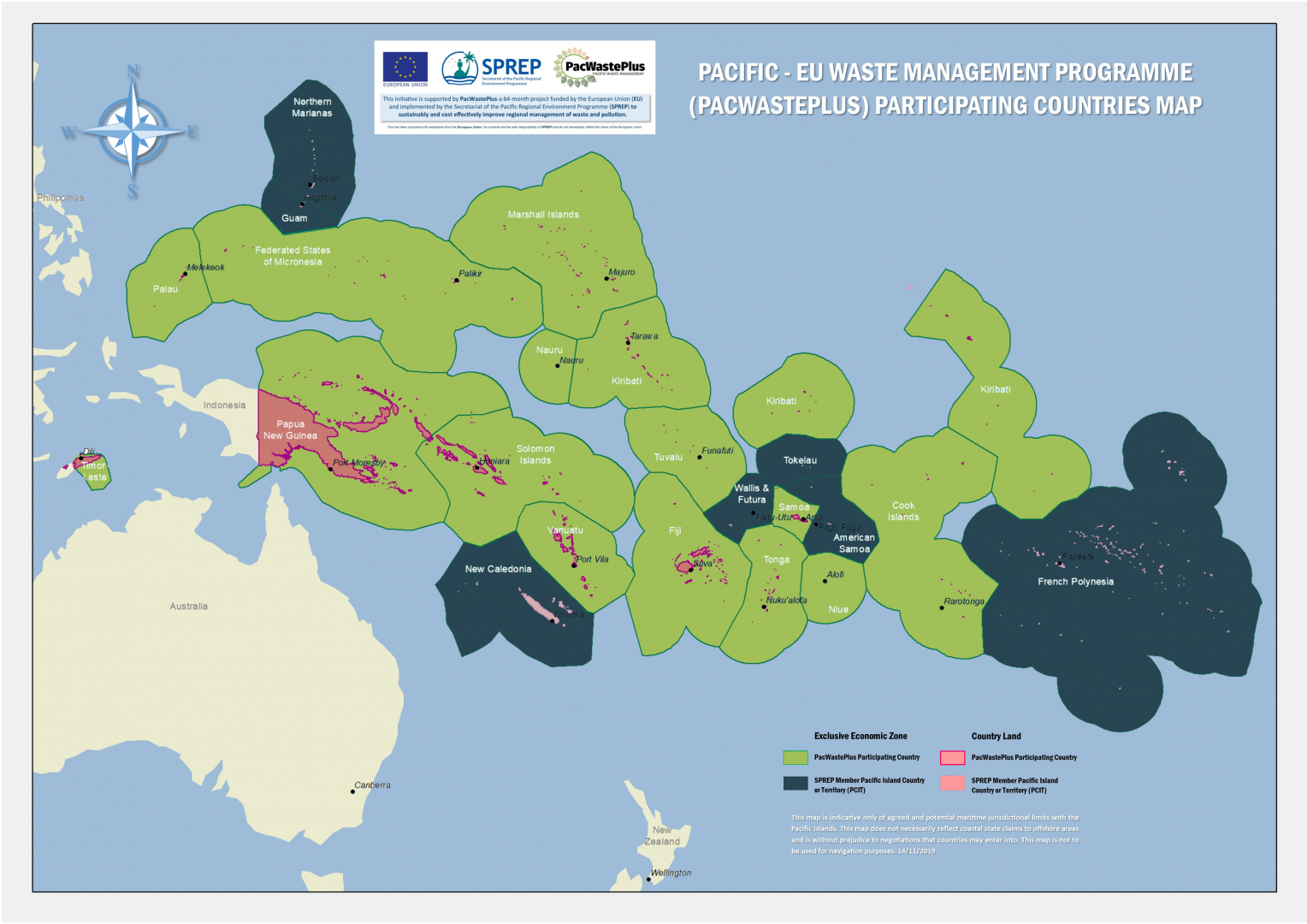
The programme was implemented in 15 countries: Cook Islands, Federated States of Micronesia, Fiji, Kiribati, Nauru, Niue, Palau, Papua New Guinea, Republic of the Marshall Islands, Samoa, Solomon Islands, Timor-Leste, Tonga, Tuvalu and Vanuatu.
The activities were tailored to address the specific needs of each country based on their identified priorities.
PacWastePlus Participating Countries Map
PacWastePlus Objectives and Key Result Areas
The overall objective of PacWastePlus was “to generate improved economic, social, health and environmental benefits arising from stronger regional economic integration and the sustainable management of natural resources and the environment”.
The specific objective was “to ensure the safe and sustainable management of waste with due regard for the conservation of biodiversity, health and wellbeing of Pacific island communities and climate change mitigation and adaptation requirements”.
The four key result areas of PacWastePlus were:
Improved data collection, information sharing, and education and awareness,
Policies and regulatory frameworks developed and implemented,
Best practices including enhanced private sector engagement and infrastructure development implemented, and
Enhanced human capacity.
How did SPREP seek to facilitate PacWastePlus?
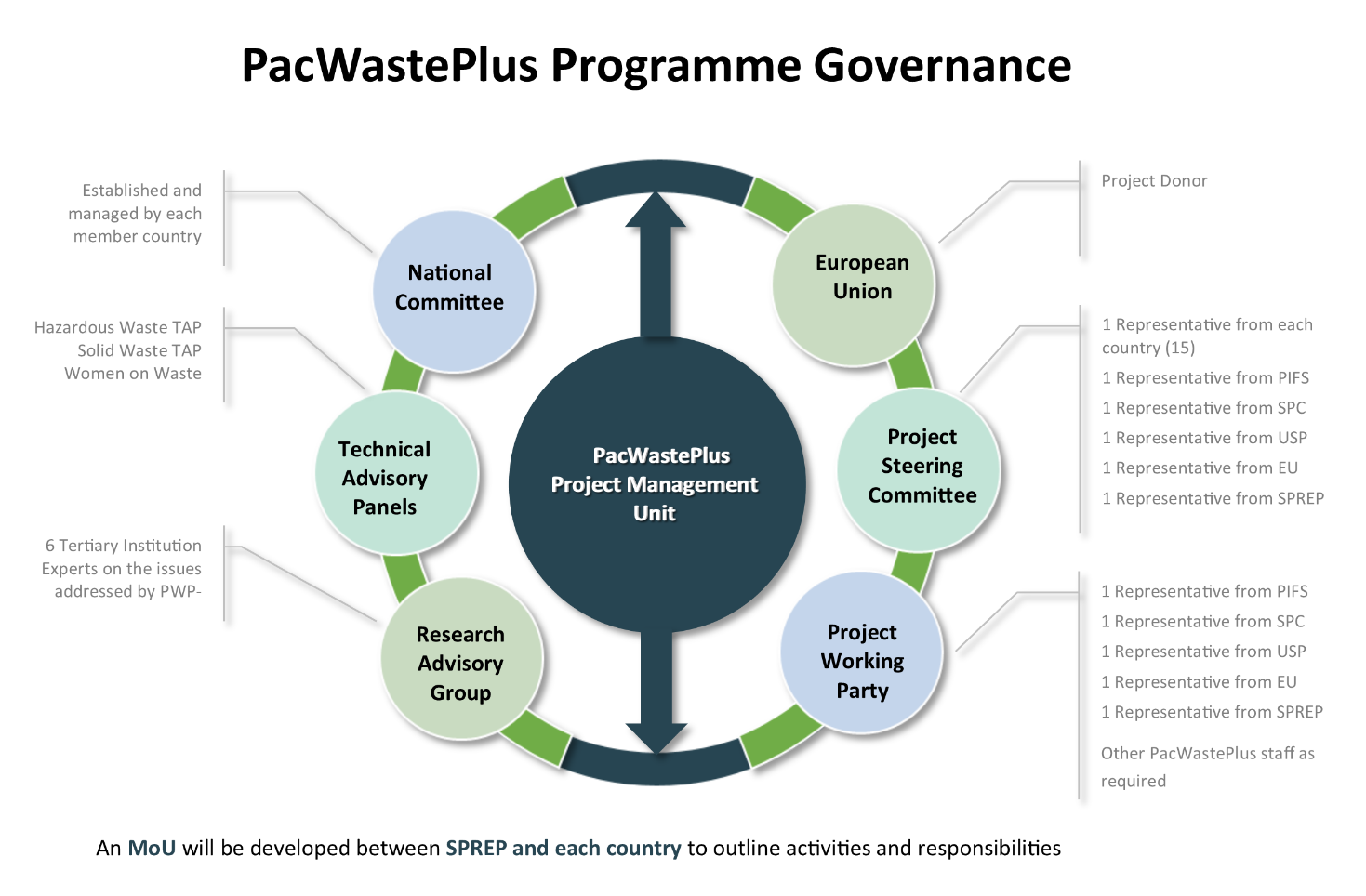
The programme brought together key organisations supporting waste and pollution sector in the region, with SPREP as the entrusted implementation agency. The Pacific Community (SPC) and the University of the South Pacific (USP) were implementing partners contracted by SPREP for specific activities in line with their core expertise and responsibility. Additionally, PWP partnered with numerous other development partners operating waste management projects in the region, to ensure no duplication of efforts or wasted resources.
Please explore the following pages for details of the Country projects, and regional projects implemented by the Programme. All resources are availabel from the SPREP Virtual Library